
UBTech Walker Tienkung Embodied Intelligence Humanoid Robot
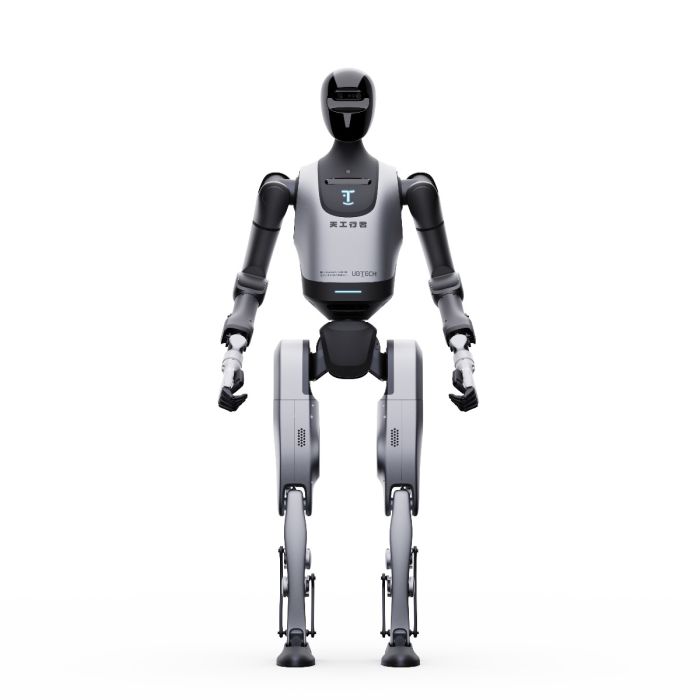
In stock
- BRAND:
- UBTECH
- MODEL:
- WALKER TIENKUNG EI
- ORIGIN:
- China
- AVAILABILITY:
- SUBJECT TO AVAILABILITY
- SKU:
- UBTECH-Walker-Tienkung-EI
UBTech Walker Tienkung Embodied Intelligence Humanoid Robot
Most humanoid robots are built to be watched. The UBTech Walker Tienkung Embodied Intelligence Humanoid Robot is built to be worked on: a full-size, fully electric platform whose joints and sensors are open to the people who buy it. For a university lab, a training center or an engineering team in the Caribbean, that difference decides whether a humanoid becomes a research instrument or an expensive display piece.
This product is available through this page, by quotation.
Background
The company and its lineage
UBTECH is a robotics company known for humanoid platforms across several fields, from service and reception robots to industrial and research machines. Its Walker line is the family where that humanoid work is concentrated, and you can browse the wider range in the UBTECH Walker category.
The Walker Tienkung series came from a partnership. It was jointly developed by UBTECH Robotics Corp., Ltd. and Beijing Humanoid Robotics Innovation Center Co., Ltd. The series is made up of full-size, fully electric, humanoid running robots. It comes in three versions: Walker Tienkung, Walker Tienkung · Voice & Vision, and Walker Tienkung · Embodied Intelligence, which is the one on this page.
Positioning and key technology
The series is positioned as a general-purpose humanoid robot platform, designed for use in scientific research and educational scenarios. That is the first thing a buyer should understand. This is not a finished product for a shop floor or a reception desk. It is a base on which a team builds its own work.
Several technical choices support that role. The robots can be equipped with up to 42 degrees of freedom. Each arm can be configured with a 7-DoF robotic arm, and the wrist can be fitted with a high-precision six-axis force sensor and dexterous five-finger hands. Powerful joint actuators, a high-precision IMU and a dual-battery quick-swap system together allow a continuous operating time of more than 3.5 hours. On the Voice & Vision and Embodied Intelligence versions, the overall computing power can reach up to 550 TOPS.
The most important feature for research is openness. The entire series provides open interfaces for all joints and sensors, which allows industry-specific secondary development in research, education and other scenarios. High-fidelity URDF models and open-source training frameworks are part of the offer as well, so simulation work and real-robot work can start from the same description of the machine.
Technical Specifications
| Specification | Value |
|---|---|
| Product | UBTech Walker Tienkung Embodied Intelligence Humanoid Robot |
| Developers | UBTECH Robotics Corp., Ltd. and Beijing Humanoid Robotics Innovation Center Co., Ltd. |
| Type | Full-size, fully electric humanoid running robot |
| Degrees of freedom | Up to 42 |
| Arms | Each arm can be configured with a 7-DoF robotic arm |
| Wrist and hands | High-precision six-axis force sensor and dexterous five-finger hands can be fitted |
| Continuous operating time | More than 3.5 hours |
| Battery system | Dual-battery quick-swap |
| Computing power (Voice & Vision and Embodied Intelligence versions) | Up to 550 TOPS overall |
| Interfaces | Open interfaces for all joints and sensors |
| Development resources | High-fidelity URDF models and open-source training frameworks |
| Intended use | Scientific research and educational scenarios |
Specifications as published by the manufacturer; confirmed against the datasheet at quotation.
The manufacturer has not published the dimensions, the battery capacity of the Embodied Intelligence version, the IP rating, the payload, the operating temperature or the power adapter rating; they are confirmed at quotation.
What makes the Embodied Intelligence version different from the base Walker Tienkung?
The three versions share the same foundation: the full-size electric body, the joint actuators, the IMU, the quick-swap batteries and the open interfaces. The figure tied to the upper versions is computing power. The overall computing power of up to 550 TOPS belongs to the Voice & Vision and Embodied Intelligence versions.
That matters because embodied intelligence work is computationally hungry. A team that wants to run perception, planning and learned control models on the robot itself needs headroom on board, rather than a cable to a server in the corner of the lab. The Embodied Intelligence version is the one named for exactly that kind of work.
If your project centers on spoken interaction and camera-based perception, the UBTech Walker Tienkung Voice and Vision Humanoid Robot is the sibling to compare.
Why do open interfaces matter on a research humanoid?
A closed humanoid can walk and wave, but a lab cannot change how it thinks. Open interfaces for all joints and sensors mean your researchers can read the state of the machine and send their own commands. They can replace stock behaviors with their own controllers and test new ideas on real hardware.
The URDF models and open-source training frameworks shorten the road from idea to experiment. A team can train a behavior in simulation using a faithful description of the robot, then move it to the physical platform. The up-to-42 degrees of freedom, the 7-DoF arm option and the force sensor and five-finger hand options give that work a rich body to act through, especially for manipulation studies.
Run time matters as well. More than 3.5 hours of continuous operation, with dual batteries that can be swapped quickly, means a lab session does not end each time a battery runs low. For teaching, where a class shares one robot, that is a practical advantage.
Who is the Walker Tienkung Embodied Intelligence Humanoid Robot for?
Universities and research institutes. Groups studying locomotion, whole-body control, manipulation or learning-based control get a full-size platform with open access to every joint and sensor. You can browse related machines in the Research Robots category.
Engineering and technical schools. Programs that teach robotics with real hardware benefit from a humanoid that students can program at a deep level, not only operate through a fixed app.
Corporate R&D teams. Companies exploring humanoid applications can build and test prototypes of their own software before committing to a product direction.
Developers of embodied AI. Teams working on models that connect perception, planning and physical action need onboard computing and a body they can control fully. This version is aimed at that group.
If your priority is spoken and visual interaction rather than intelligence research, the Voice and Vision version may fit better. If you need a robot for commercial reception or industrial duty, UBTECH's other Walker models are better matched, since this series is intended for research and education.
What is the Walker Tienkung Embodied Intelligence Humanoid Robot used for?
- Embodied intelligence research. Test how learned models turn perception into physical action on a full-size body.
- Locomotion and balance studies. Develop and compare walking and running controllers on a fully electric biped.
- Manipulation experiments. Use the 7-DoF arm option, six-axis force sensor and five-finger hands for dexterous tasks.
- Simulation-to-real training. Start from the high-fidelity URDF models and open-source training frameworks, then move to the real robot.
- University teaching. Give students hands-on access to a humanoid whose joints and sensors are open.
- Industry-specific secondary development. Build custom applications on the open interfaces for research and other scenarios.
Pricing and Availability
We do not publish prices for this humanoid. Request a quotation and we will prepare it for the version and the documentation you need. Delivery, customs and support are arranged with the quotation, so the whole process is handled in one place for your institution. The Walker Tienkung Embodied Intelligence Humanoid Robot is available on this page.
Frequently Asked Questions
Is this robot meant for commercial work?
No. It is designed for use in scientific research and educational scenarios.
How many degrees of freedom does it have?
The robots can be equipped with up to 42 degrees of freedom. Each arm can be configured with a 7-DoF robotic arm.
How long can it run on a charge?
The series reaches a continuous operating time of more than 3.5 hours. A dual-battery quick-swap system supports longer sessions.
How much computing power does it have?
On the Voice & Vision and Embodied Intelligence versions, the overall computing power can reach up to 550 TOPS.
Can my team write its own software for it?
Yes. The entire series provides open interfaces for all joints and sensors, and high-fidelity URDF models and open-source training frameworks are available.
Which details are still open?
Dimensions, IP rating, payload and operating temperature are the points buyers ask about most. You receive them with the quotation.
Where can I buy the UBTech Walker Tienkung Embodied Intelligence Humanoid Robot and what does it cost?
You can request it through this page. The cost is given in a quotation prepared for your configuration and destination.
Summary
The UBTech Walker Tienkung Embodied Intelligence Humanoid Robot is a humanoid made to be worked on, not only watched. Its full-size electric body, up to 42 degrees of freedom, long run time with quick-swap batteries, computing power of up to 550 TOPS and open interfaces for every joint and sensor give research and teaching teams a platform they can truly make their own. For a quotation on this robot, this page is the starting point.


