
Unitree H2 Plus ULTIMATE-N Humanoid Robot
In stock
- BRAND:
- UNITREE ROBOTICS
- MODEL:
- H2-PLUS-ULTIMATE-N
- PART #:
- H2-PLUS-ULTIMATE-N
- ORIGIN:
- China
- Warranty:
- 12 MONTHS
- AVAILABILITY:
- SUBJECT TO AVAILABILITY
- SKU:
- Unitree-H2-PLUS-ULTIMATE-N
Unitree H2 Plus ULTIMATE-N Humanoid Robot
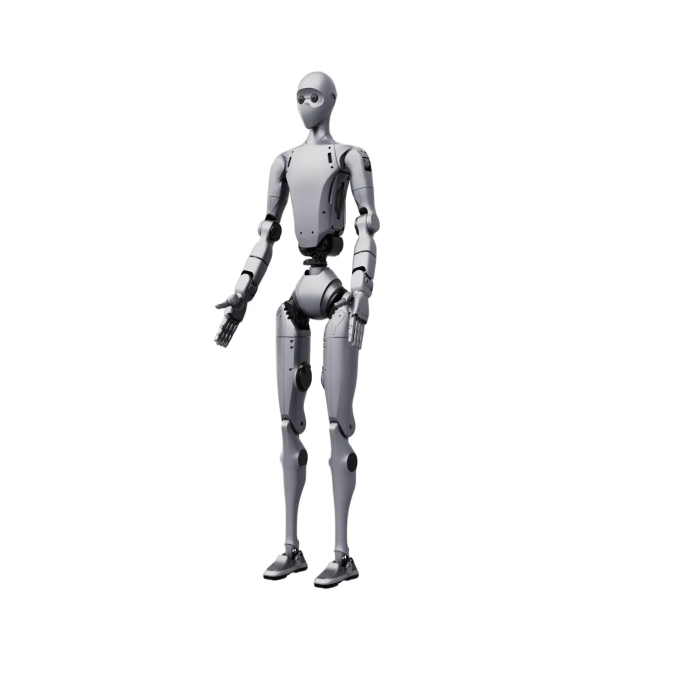
Every humanoid body eventually meets the same question: what will it have at the end of its arms? Unitree answers that question in a dozen ways across the H2 Plus range, and the Unitree H2 Plus ULTIMATE-N Humanoid Robot is the answer that chooses the Sharpa Wave hand. The body is full size and built for work. The hands are where the configuration earns its name.
The product is available through this page, by quotation.
Background
Unitree Robotics and the H2 lineage
Unitree Robotics is the manufacturer behind the H2 family, and its founder and CEO is Xingxing Wang. His view is that developers want humanoid robots that are ready to build on. The H2 Plus range follows that idea. Instead of one fixed machine, the company offers a shared body with a ladder of configurations, each named by a letter and a hand option.
The versions named are: H2 PLUS SMART; ULTIMATE A DEX1-1 Plus; ULTIMATE B DEX3-1; ULTIMATE C DEX3-1 Tactile; ULTIMATE D DEX5-1; ULTIMATE E DEX5-1P Tactile; ULTIMATE F Revo 2 Basic; ULTIMATE G Revo 2 Touch; ULTIMATE H Inspire DFQ; ULTIMATE I Inspire E2 Tactile; ULTIMATE J Revo 3 U21; and ULTIMATE N Sharpa Wave. The letter tells you which hand is fitted. Buyers who want to compare can look at the Unitree H2 Plus category.
Positioning and key technology
The ULTIMATE-N sits at the dexterous end of the range. Its body carries 31 degrees of freedom: 6 per leg, 7 per arm, 3 at the waist and 2 in the head. Joint torque reaches up to 120 Nm in the arms and 360 Nm in the legs. The main materials are aerospace-grade aluminium, titanium alloy and high-strength engineering plastics.
The Sharpa Wave hands add 22 DoF per hand. Together with the body, the robot reaches 75 total body-and-hand DOF for advanced dexterous manipulation. On the software side, the robot is built on NVIDIA Isaac GR00T. The workflow covers NVIDIA Isaac Teleop, the Isaac GR00T open foundation models, Isaac Sim, Isaac Lab and Isaac ROS. These support humanoid reasoning, learning and multitask behavior, so a team can move from simulation to hardware inside one ecosystem.
Technical Specifications
| Specification | Value |
|---|---|
| Standing dimensions | 1820 × 456 × 218 mm |
| Weight with battery | Approximately 70 kg, excluding hand configuration |
| Body degrees of freedom | 31 (6 per leg, 7 per arm, 3 waist, 2 head) |
| Total degrees of freedom | 75 body-and-hand DOF |
| Maximum joint torque | 120 Nm (arms); 360 Nm (legs) |
| Hands (ULTIMATE N Sharpa Wave) | 22 DoF per hand, 1.3 kg |
| Fingertip sensing (Sharpa Wave) | More than 1,000 tactile pixels per fingertip, 0.005 N sensitivity |
| Grip force (Sharpa Wave) | 150 N |
| Rated load (Sharpa Wave) | Up to 30 kg per hand |
| Memory | 128 GB LPDDR5X, 256-bit bus, 273 GB/s |
| Base computing | Intel Core i5 for platform functions + Intel Core i7 for user development |
| Head stereo camera | HFOV 140° ±3°, VFOV 102° ±3°, global shutter, depth of field from 0.4 m to infinity |
| Interfaces | USB 3.0 ×3, USB + DisplayPort ×3, GMSL ×4, Gigabit Ethernet ×4, USB 2.0 ×2, RS-485 ×4, CAN ×2 |
| Wireless connectivity | Wi-Fi 6 and Bluetooth 5.2 |
| Battery | 15 Ah, 0.972 kWh, removable smart battery |
| Runtime | Approximately 3 hours |
| Main materials | Aerospace-grade aluminium, titanium alloy, high-strength engineering plastics |
| Safety | On-remote emergency stop function |
| Software platform | Built on NVIDIA Isaac GR00T |
Specifications as published by the manufacturer; confirmed against the datasheet at quotation.
The manufacturer has not published the top speed, the IP rating, the charging time, the operating system, whether a lidar is fitted, or the package contents; they are confirmed at quotation.
What makes the ULTIMATE-N different from the other H2 Plus versions?
The body is shared across the range, so the difference is the hand. Versions A through J pair the H2 Plus with hands from the DEX, Revo and Inspire families. Several of those are marked Tactile, which means touch sensing is part of the choice. The ULTIMATE-N instead carries the Sharpa Wave, with 22 DoF per hand, more than 1,000 tactile pixels per fingertip and a sensitivity of 0.005 N.
That combination changes what a research team can attempt. A hand with many joints can form many postures. A fingertip that registers very light contact can tell the controller when a part has been touched, when it slips, and when it is seated. The grip force of 150 N and the rated load of up to 30 kg per hand show that the hand is meant for real objects as well as delicate ones.
Each hand weighs 1.3 kg. The 70 kg body weight is given excluding the hand configuration, so the hands are additional to that figure. Teams planning balance, transport or lab-floor logistics should take that into account when requesting the quotation.
How does the ULTIMATE-N compare with a simpler H2 Plus?
A team starting with locomotion, teleoperation or basic demonstrations may not need a hand with this much sensing. The Unitree H2 Plus SMART and the Unitree H2 Plus Standard are listed as separate pages for that kind of work. The Unitree H2 Plus ULTIMATE A keeps the Ultimate tier but fits a different hand.
The ULTIMATE-N is the choice when hand research is the project itself. If the question is how a humanoid should grasp, feel and adjust, the hand is the experiment, and the body is the stable platform that carries it.
Who is the Unitree H2 Plus ULTIMATE-N for?
University and corporate laboratories are the clearest segment. Embodied-AI groups need a body that matches the software stack they already use, and the Isaac workflow listed for this robot is the one many such groups train in. With 128 GB of memory and two Intel processors, one for platform functions and one for user development, the robot separates its own housekeeping from the code a team writes.
System integrators are a second segment. They can use the interfaces, including GMSL, Ethernet, RS-485 and CAN, to connect sensors and tools to the robot. Teams exploring manipulation of tools, parts or containers will value the load rating and the tactile fingertips.
Human-robot interaction researchers form a third group. The head camera, with a 140° horizontal field of view and global shutter, gives them a wide and clean view of the person in front of the robot. Buyers who are not yet sure they need the Sharpa Wave should compare the Unitree H2 Plus Humanoid Robot before deciding.
What is the Unitree H2 Plus ULTIMATE-N used for?
- Dexterous manipulation research. The 22 DoF hands and tactile fingertips let teams study grasping, regrasping and in-hand motion.
- Imitation learning and teleoperation. The Isaac Teleop tools in the workflow let an operator demonstrate a task and let the robot learn from it.
- Simulation to hardware transfer. Isaac Sim and Isaac Lab let a team train a policy virtually and then test it on the robot.
- Foundation-model experiments. Isaac GR00T open foundation models support humanoid reasoning, learning and multitask behavior.
- Human-robot interaction studies. The wide-angle stereo head camera and the human-scale body suit tests in shared spaces.
- Integration and prototyping. The varied interfaces allow integrators to attach sensors and custom hardware while they test a humanoid workflow.
Pricing and Availability
This page shows no prices. Pricing is given by quotation, and the quotation can be matched to the ULTIMATE-N configuration you need. Delivery, customs and support are arranged with the quotation. Send your request, and the Unitree H2 Plus ULTIMATE-N Humanoid Robot is available on this page.
Frequently Asked Questions
What hands does the ULTIMATE-N use?
It uses the Sharpa Wave hand, with 22 DoF per hand. Each hand weighs 1.3 kg and has more than 1,000 tactile pixels per fingertip.
How many degrees of freedom does the robot have?
The body has 31 degrees of freedom: 6 per leg, 7 per arm, 3 at the waist and 2 in the head. With the hands, the total is 75 body-and-hand DOF.
How long does the battery last?
The runtime is approximately 3 hours. The battery is a removable smart battery rated at 15 Ah and 0.972 kWh.
What software does it run?
It is built on NVIDIA Isaac GR00T. The workflow includes Isaac Teleop, Isaac GR00T open foundation models, Isaac Sim, Isaac Lab and Isaac ROS.
What can the hands carry?
The Sharpa Wave hand has a grip force of 150 N and a rated load of up to 30 kg per hand.
Does the robot have an emergency stop?
Yes. It has an on-remote emergency stop function for quickly disengaging the robot safely.
Where can I buy the Unitree H2 Plus ULTIMATE-N and what does it cost?
You can buy it through this page by requesting a quotation. Prices are not listed here; the quotation sets out the cost for your configuration, with delivery, customs and support.
Summary
The H2 Plus range shares one body and offers many hands, and the ULTIMATE-N chooses the most sensitive of them. It combines a 1820 mm standing frame, up to 360 Nm of leg torque, 22 DoF per hand and an Isaac-based software workflow. It suits teams for whom the hand is the research question. For a quotation on the Unitree H2 Plus ULTIMATE-N Humanoid Robot, this page is the starting point.


