
Unitree H2 Plus Standard Humanoid Robot
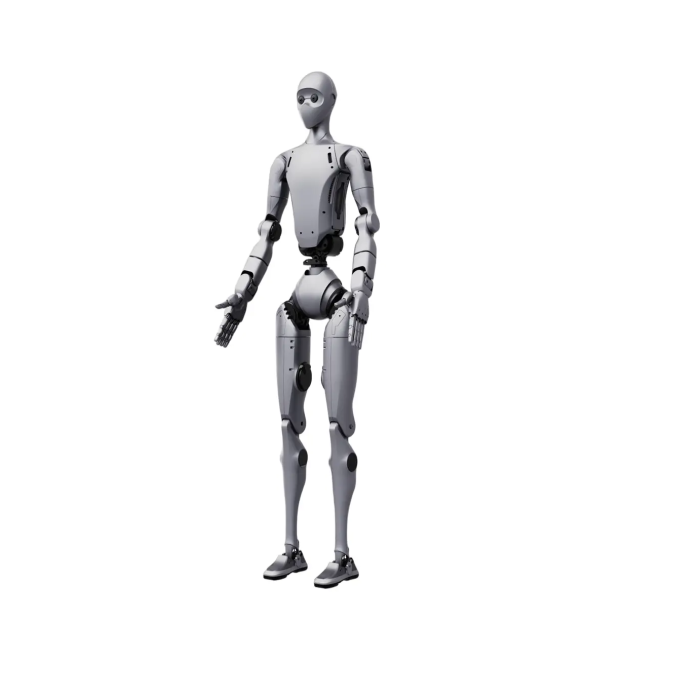
In stock
- BRAND:
- UNITREE ROBOTICS
- MODEL:
- H2-PLUS-Standard
- PART #:
- H2-PLUS-Standard
- ORIGIN:
- China
- Warranty:
- 12 MONTHS
- AVAILABILITY:
- SUBJECT TO AVAILABILITY
- SKU:
- Unitree-H2-PLUS-Standard
Unitree H2 Plus Standard Humanoid Robot
A humanoid earns its place not when it walks across a room, but when it reaches the shelf, lifts the load and keeps working after the demonstration is over. The Unitree H2 Plus Standard Humanoid Robot is built for that second half of the job, with a full-height frame, strong arms and legs, and a computer that can think on board.
This product is available through this page, by quotation.
Background
Unitree Robotics and the H2 Plus line
Unitree Robotics is a maker of legged and humanoid robots, and the H2 Plus is one of its full-size humanoid families. The sources name three versions: the H2 Plus, the H2 Plus Standard and the H2 Plus Ultimate, with the Ultimate versions distinguished by their hand configurations. The Standard version covered here is the one this page quotes. You can browse the wider family in the Unitree H2 Plus category.
The body is the common thread across the family: a standing frame of 1820 x 456 x 218mm, built from aerospace-grade aluminum, titanium alloy and high-strength engineering plastics. It weighs about 70kg with its battery and is cooled by air.
Positioning and key technology
The H2 Plus Standard is a development platform. Its 31 joint motors give it six degrees of freedom in each leg and seven in each arm, and the joints are strong: the maximum arm joint peak torque is 120N.m and the maximum leg joint peak torque is 360N.m. The arms carry a rated payload of 7 kilograms and a peak payload of 15 kilograms, which suits grasping and reaching work that asks for more than a light touch.
The thinking happens on board. The compute module has a Blackwell GPU delivering 2,070 FP4 TFLOPS, a 14-core Arm CPU, 128GB of unified memory and a configurable 40W to 130W power range for real-time sensor processing and robot inference. Alongside it, the base computing is split in two: PC1 is an Intel Core i5 for platform functions and PC2 is an Intel Core i7 for user development. That separation keeps the robot's own functions apart from your code.
Software support follows the same direction. The platform can be built on Isaac GR00T, which comes with open foundation models, simulation frameworks and validated reference workflows from data to deployment. The listed tools are Isaac TeleOp, Isaac GR00T open foundation models, Isaac Sim and Isaac Lab, and Isaac ROS middleware. Smart OTA upgrades and secondary development are both supported.
Technical Specifications
| Specification | Value |
|---|---|
| Dimensions (standing, height x width x depth) | 1820 x 456 x 218mm |
| Weight with battery | About 70kg |
| Degrees of freedom (joint motors) | 31 |
| Degrees of freedom per leg | 6 |
| Degrees of freedom per arm | 7 |
| Maximum arm joint peak torque | 120N.m |
| Maximum leg joint peak torque | 360N.m |
| Arm payload | Rated 7 kilograms; peak 15 kilograms |
| Battery | 15Ah, 0.972 kWh, about 3 hours of battery life |
| Battery maximum voltage | 75.6V |
| AI performance | 2070 TFLOPS (FP4, sparse) |
| Onboard compute | Blackwell GPU, 14-core Arm CPU, 128GB unified memory, 40W to 130W configurable power range |
| Base computing | PC1: Intel Core i5 (platform functions); PC2: Intel Core i7 (user development) |
| External interfaces | USB3.0 x 3; USB+DP x 3; GMSL x 4; Gigabit Ethernet x 4; USB2.0 x 2; RS485 x 4; CAN x 2 |
| Power outputs | 12V x 1; 24V x 2; BAT x 1 |
| Connectivity | Ethernet, Wi-Fi 6, Bluetooth 5.2, USB |
| Head binocular camera | Horizontal FOV 140°±3; vertical FOV 102°±3; aperture 2.0; focal length 2.67mm; depth of field 0.4m to infinity; global shutter |
| Wrist cameras (optional) | 3MP ultra-wide-angle, HFOV 196°, VFOV 154°, global shutter |
| Sharpa Wave hand (optional): grip force | 150N |
| Sharpa Wave hand (optional): active DOF per hand | 22 |
| Total body-and-hand DOF with dual Sharpa Wave hands | 75 |
| Main body materials | Aerospace-grade aluminum, titanium alloy, high-strength engineering plastics |
| Cooling system | Air cooling |
| Included | Smart Battery (quick release), charger, handheld remote controller |
| Smart OTA upgrade | Yes |
| Secondary development | Yes |
Specifications as published by the manufacturer; confirmed against the datasheet at quotation.
The manufacturer has not published the maximum walking speed, the IP rating, the operating system, the charging time, the operating temperature range, the handheld controller details or the hand configuration of the Standard trim; they are confirmed at quotation.
What makes the H2 Plus Standard different from the Ultimate versions?
The difference sits at the hands. The Ultimate versions are named for their hand configurations, while the Standard is the version quoted on this page. The body, the joints, the cameras and the compute described above belong to the H2 Plus platform, so a team that already knows what it wants in the way of hands will find the versions close cousins. If dexterous manipulation is the main goal, look at the Unitree H2 Plus ULTIMATE-L or the Unitree H2 Plus ULTIMATE A, and ask us which hands each one carries.
The Sharpa Wave hand is listed as an option, with 150N of grip force and 22 active degrees of freedom per hand. With two of them, the robot reaches 75 total body-and-hand degrees of freedom.
Why does the onboard computing matter?
Many humanoid projects stall because the robot depends on a remote machine for every decision. Here the Blackwell compute module, rated at 2070 TFLOPS (FP4, sparse), handles sensor processing and inference on the robot itself. The head binocular camera has a 140° horizontal field of view with a global shutter, and the optional wrist cameras reach 196° horizontally, so the software has a wide, undistorted view of the work area.
The interfaces support that work. Four GMSL ports take cameras, four Gigabit Ethernet ports and four RS485 ports take other equipment, and three power rails (12V, 24V and BAT) feed what you mount. A team can add sensors and tools without building a separate power system.
Who is the Unitree H2 Plus Standard Humanoid Robot for?
University and corporate research labs are the clearest fit. They get a full-size humanoid with a development computer, open simulation tools and an interface set that invites modification. Robotics integrators can use it to prove a manipulation concept before committing to a larger program, and AI teams training foundation models can collect data and deploy policies on the same platform.
Training institutes and demonstration centers will value the quick-release smart battery and the remote emergency stop, which shuts the robot down rapidly and safely from a distance. Buyers who want to compare the whole family should look at the Unitree H2 Plus Humanoid Robot page or the Unitree H2 Plus SMART before they decide.
What is the Unitree H2 Plus Standard used for?
- Embodied AI research: train and test policies on a robot with a full-size body and onboard inference.
- Manipulation development: use the 7-degree-of-freedom arms and the 7 kilogram rated payload for grasping and reaching studies.
- Teleoperation and data collection: Isaac TeleOp support helps build the demonstration data that learning methods need.
- Simulation to deployment: work in Isaac Sim and Isaac Lab, then move validated behavior to the real machine.
- Perception projects: use the wide-angle head camera, and the optional wrist cameras, for navigation and object work.
- Teaching and demonstration: show students and visitors what a modern humanoid platform can do.
Pricing and Availability
No price is printed on this page. Quotation is the way to buy: tell us the configuration you need, including the hands and the optional wrist cameras, and we respond with a quote. Delivery, customs and support are arranged with the quotation. Everything you need to begin is available on this page.
Frequently Asked Questions
How many degrees of freedom does the H2 Plus Standard have?
It has 31 joint motors, with six degrees of freedom in each leg and seven in each arm. Adding two Sharpa Wave hands brings the total to 75 body-and-hand degrees of freedom.
How long does the battery last?
The 15Ah, 0.972 kWh smart battery gives approximately 3 hours of battery life. It is quick release, and a charger is included.
What can the arms carry?
The rated arm payload is 7 kilograms and the peak payload is 15 kilograms.
What computing does it have?
The compute module has a Blackwell GPU with 2,070 FP4 TFLOPS, a 14-core Arm CPU and 128GB of unified memory. Separate Intel Core i5 and Intel Core i7 computers handle platform functions and user development.
Can I develop my own software on it?
Yes. Secondary development and smart OTA upgrades are supported, and the platform works with Isaac TeleOp, Isaac GR00T, Isaac Sim, Isaac Lab and Isaac ROS.
What comes in the box?
The smart battery with quick release, a charger and a handheld remote controller are included.
Where can I buy the Unitree H2 Plus Standard Humanoid Robot and what does it cost?
You can buy it through this page by requesting a quotation. The cost depends on the configuration you choose, and we give it in the quote.
Summary
The Unitree H2 Plus Standard Humanoid Robot is a platform for teams who care about what the robot does once it arrives at the work: strong joints, arms rated for real loads, wide-angle vision, serious onboard AI and open tools for development. Its hand configuration is the point to settle first when you ask for your quote. If that matches your project, this page is the starting point.


