
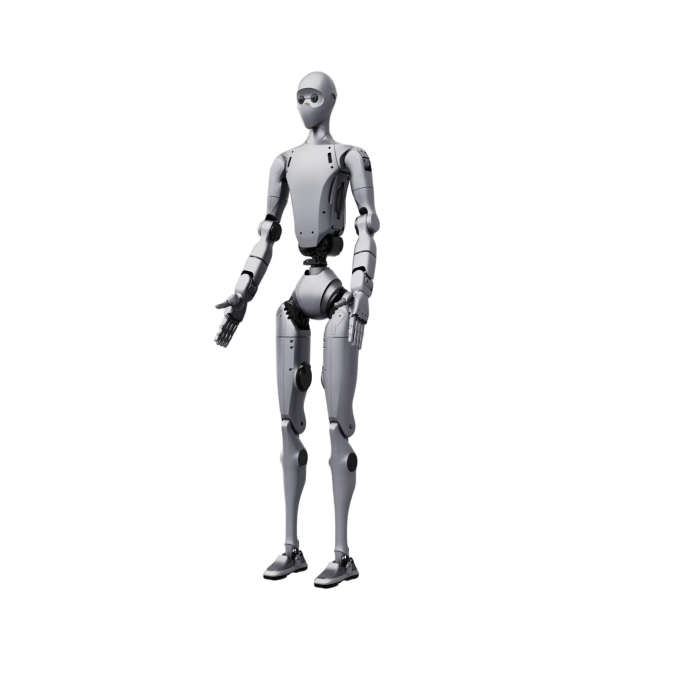
Unitree H2 Plus ULTIMATE-G Humanoid Robot
In stock
- BRAND:
- UNITREE ROBOTICS
- MODEL:
- H2-PLUS-ULTIMATE-G
- PART #:
- H2-PLUS-ULTIMATE-G
- ORIGIN:
- China
- Warranty:
- 12 MONTHS
- AVAILABILITY:
- SUBJECT TO AVAILABILITY
- SKU:
- Unitree-H2-PLUS-ULTIMATE-G
Unitree H2 Plus ULTIMATE-G Humanoid Robot
Most humanoid robots are admired for how they walk; the Unitree H2 Plus ULTIMATE-G Humanoid Robot is meant to be judged by what it does once its hands close around something. Walking gets a robot into the room. Touch, vision and a capable onboard computer decide whether it is any use once it is there. This configuration is built around that second half of the job.
The product is available through this page, by quotation.
Background
Unitree and the H2 Plus lineage
Unitree Robotics is known for bringing legged and humanoid machines out of the showcase and into laboratories, universities and integrator workshops. The H2 Plus is a full-size humanoid line, and the line is sold in several configurations that share one body and differ mainly in the computing and the hands fitted to it. The line includes the H2 PLUS SMART, the H2 PLUS ULTIMATE A to N, and the H2 PLUS ULTIMATE-G described here. You can see the whole family on the Unitree H2 Plus category page.
Keeping the body common across configurations matters to a research group. Locomotion work, calibration routines and safety procedures can carry from one configuration to another, while the choice of hand and compute is made according to the project. The ULTIMATE-G is the configuration that pairs the platform with tactile hands.
Positioning and key technology
The ULTIMATE-G is built on NVIDIA Isaac GROOT, the NVIDIA platform for humanoid robot foundation models. Its compute is NVIDIA Jetson Thor, with 128 GB of LPDDR5X memory on a 256-bit bus at 273 GB/s. For teams working on embodied AI, that means perception and policy inference can run on the robot instead of depending on a tethered workstation.
The hands are what set this version apart. It carries 2 × BrainCo Revo 2 Touch hands, each with five fingers, 6 DoF and a mass of 383 g. Each hand reports tactile feedback in four forms: pressure, friction, direction and proximity. Wrist RGB cameras sit with the hands, so the robot sees the object at close range while it feels it. Together with 31 body degrees of freedom, the total comes to 43.
Technical Specifications
| Specification | Value |
|---|---|
| Platform | Built on NVIDIA Isaac GROOT |
| Computing | NVIDIA Jetson Thor |
| Memory | 128 GB LPDDR5X, 256-bit bus, 273 GB/s |
| Total degrees of freedom | 43 |
| Body degrees of freedom | 31 |
| Maximum leg joint torque | 360 Nm |
| Standing dimensions | 1820 × 456 × 218 mm |
| Weight with battery | Approximately 70 kg, excluding hand configuration |
| Hands | 2 × BrainCo Revo 2 Touch, five fingers, wrist RGB cameras |
| Hand specification | 6 DoF per hand, 383 g, tactile feedback: pressure, friction, direction and proximity |
| Sensors | Head-mounted stereo camera with wide field of view, wrist cameras and an IMU |
| Head stereo camera | HFOV 140° ±3°, VFOV 102° ±3°, global shutter, depth of field from 0.4 m to infinity |
| Battery | 15 Ah, 0.972 kWh, removable smart battery |
| Runtime | Approximately 3 hours |
| Wireless connectivity | Wi-Fi 6 and Bluetooth 5.2 |
| Interfaces | USB 3.0 ×3, USB + DisplayPort ×3, GMSL ×4, Gigabit Ethernet ×4, USB 2.0 ×2, RS-485 ×4, and CAN ×2 |
| Main materials | Aerospace-grade aluminum, titanium alloy, and high-strength engineering plastics |
| Emergency stop | Remote emergency stop |
| Secondary development | Yes |
Specifications as published by the manufacturer; confirmed against the datasheet at quotation.
The manufacturer has not published the top speed, the IP rating, the operating system or the full box contents; they are confirmed at quotation.
What makes the ULTIMATE-G different from the other H2 Plus versions?
The difference is in the hands and in the sensing that goes with them. Many humanoid platforms can grip an object; far fewer can report how hard they are gripping it, whether it is slipping, which way a force is pushing, or whether something is about to touch the fingertips. The Revo 2 Touch hands report exactly those four things, and the wrist RGB cameras add a close view of the grasp. A manipulation researcher gets vision and contact from the same hand.
Other configurations in the family put their emphasis elsewhere. The Unitree H2 Plus SMART Humanoid Robot and the Unitree H2 Plus ULTIMATE A Humanoid Robot are separate pages with their own specifications, and the figures on this page belong to the ULTIMATE-G alone. If your project does not depend on tactile hands, compare those pages before you request a quotation. The Unitree H2 Plus Standard Humanoid Robot is the other configuration listed in the family.
What does the onboard computer change in practice?
Learning-based control and vision-language policies are hungry for compute and for memory bandwidth. The Jetson Thor with 128 GB of LPDDR5X lets a team run large models next to the robot's own control loops. With four Gigabit Ethernet ports, four GMSL ports, CAN and RS-485 on the interface list, there is also room to add cameras, sensors and custom hardware without a hub on the robot's back. Because secondary development is supported, the platform is meant to be modified, not just operated.
Who is the Unitree H2 Plus ULTIMATE-G for?
University and corporate research labs are the natural buyers. A group studying dexterous manipulation, imitation learning or contact-rich tasks will use the tactile data directly, and one studying human-robot interaction will value a full-size body with a wide-view head camera.
System integrators and innovation centers form the second group. They need a platform to test whether a humanoid can handle a real workflow, such as picking, handing over or inspecting, before committing to a larger program. The open interfaces and secondary development support suit that kind of evaluation.
Teams that mainly need a body for locomotion or general perception work may be better served by another configuration. In that case start from the Unitree H2 Plus category page and compare the versions side by side.
What is the Unitree H2 Plus ULTIMATE-G used for?
- Dexterous manipulation research. Five-finger hands with tactile feedback let teams study grasping, in-hand adjustment and slip detection.
- Embodied AI development. The NVIDIA Isaac GROOT foundation and Jetson Thor compute support training and running physical AI policies.
- Imitation and teleoperation studies. Wrist cameras and touch data give rich recordings of how a human performs a task.
- Human-robot interaction. A full-size body and a wide-angle head camera suit handover, guidance and shared-workspace experiments.
- Integration pilots. Integrators can test a humanoid against a real process using the available USB, Ethernet, CAN and RS-485 ports.
- Teaching and demonstration. Universities and technology centers can show students what a modern humanoid with a sense of touch can do.
Pricing and Availability
Pricing is arranged by quotation and is not listed here. Send us your configuration requirements, your quantity and your destination, and we will respond with a quotation. Delivery, customs and support are arranged together with the quotation. The Unitree H2 Plus ULTIMATE-G Humanoid Robot is available on this page.
Frequently Asked Questions
How many degrees of freedom does the ULTIMATE-G have?
It has 43 degrees of freedom in total. Of these, 31 belong to the body, and each of the two hands adds 6.
Which hands does this version use?
It uses 2 × BrainCo Revo 2 Touch hands with five fingers and wrist RGB cameras. Each hand weighs 383 g and reports pressure, friction, direction and proximity.
What computer does it run on?
It runs on NVIDIA Jetson Thor with 128 GB of LPDDR5X memory. The platform is built on NVIDIA Isaac GROOT.
How long does the battery last?
Runtime is approximately 3 hours from the 15 Ah, 0.972 kWh removable smart battery. Because the battery is removable, a spare pack can be swapped in.
Can I develop my own software for it?
Yes, secondary development is supported. The robot also offers USB, Gigabit Ethernet, GMSL, CAN and RS-485 interfaces for connecting your own hardware.
What can the head camera see?
The head stereo camera has a horizontal field of view of 140° ±3° and a vertical field of view of 102° ±3°. It uses a global shutter and works from 0.4 m to infinity.
Where can I buy the Unitree H2 Plus ULTIMATE-G Humanoid Robot and what does it cost?
You can request it through this page, by quotation. The cost depends on configuration, quantity and destination, and we will send the details with the quotation.
Summary
The Unitree H2 Plus ULTIMATE-G Humanoid Robot answers a simple question: what happens after the robot reaches the object? With tactile five-finger hands, wrist cameras, a wide-view head camera, Jetson Thor compute and 43 degrees of freedom on a full-size body, it is built for teams who want to work on contact, not only on motion. For a quotation on this configuration, this page is the starting point.


