
Deep Robotics Lite3 Basic Quadruped Robot Dog
In stock
- BRAND:
- DEEP ROBOTICS
- PART #:
- Lite3
- ORIGIN:
- China
- AVAILABILITY:
- ALLOW 2-4 WEEKS FOR DELIVERY
- SKU:
- Deep-Robotics-Lite3-Basic
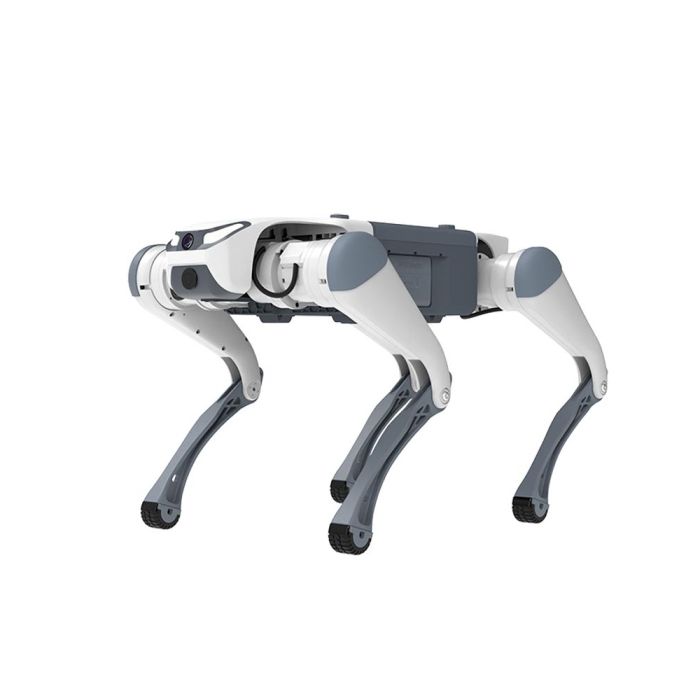
Deep Robotics Lite3 Basic Quadruped Robot Dog
Most laboratories do not need the most capable legged robot on the market; they need the first one that students can actually put their hands on. The Deep Robotics Lite3 Basic Quadruped Robot Dog is the entry point of the Lite3 family, built for classrooms, research benches and early development work, where the goal is to learn how a walking machine thinks before moving on to heavier hardware.
The product is available through this page, by quotation.
Background
Deep Robotics and the Lite3 lineage
DEEP Robotics builds quadruped robots, and the Lite3 is the platform it aims at academic research, reinforcement learning experiments and robotics education. The family is presented in several versions: Basic, Basic AI, Venture, Pro and LiDAR. Larger machines from the same maker, such as the Deep Robotics X30 Industrial Quadruped Robot Dog, serve industrial work. The Lite3 sits at the other end, where teaching and experimentation come first.
Within the Lite3 family, the Basic version is positioned for entry-level robotics education and motion control learning. It keeps the core of the platform, which is the legs, the motion controller and the open software access, and leaves out the heavier perception hardware found on the higher versions. For a department buying its first legged robot, that is a sensible place to start.
Key technology: torque, modularity and open software
The Lite3 platform delivers joint torque up 50%, faster response bandwidth and precise motion control. Those are the qualities a gait researcher notices first, because a robot that answers commands quickly and holds its stance under load is easier to reason about when a new controller misbehaves.
The design is modular and supports a wide range of additional functional modules, so a lab can adapt the robot to a project instead of the other way round. On the software side, the Lite3 supports Ubuntu 20.04 and works with both ROS1 (Noetic) and ROS2 (Foxy). An open SDK and API allow secondary motion and perception development on both ROS1 and ROS2. The motion host is an RK3588 ARM-architecture processor.
One safety behavior is worth knowing about: with overtemperature protection, the robot automatically stops and lies down if its motors overheat. During long teaching sessions, that is a quiet but welcome safeguard.
Technical Specifications
| Specification | Lite3 Basic |
|---|---|
| Standing dimensions (L × W × H) | 610 × 370 × 406 mm |
| Weight | 12 kg |
| Payload capacity | 5 kg |
| Maximum slope | 40° |
| Obstacle clearance | 18 cm |
| Continuous operation | 1.5 – 2 hours |
| Maximum range | 5 km |
| Perception features | Front/rear obstacle stop; visual following |
| Motion host processor | RK3588 ARM-architecture processor |
| Operating system | Ubuntu 20.04 |
| ROS compatibility | ROS1 (Noetic) and ROS2 (Foxy) |
| Development access | Open SDK and API |
Specifications as published by the manufacturer; confirmed against the datasheet at quotation.
The manufacturer has not published the maximum speed, the battery capacity, the charging time, the IP rating, the operating temperature, the contents of the box, the degrees of freedom or the wireless connectivity; they are confirmed at quotation.
What makes the Lite3 Basic different from the higher Lite3 versions?
The difference is in what the robot senses, not in what it is. The Basic version offers front and rear obstacle stop and visual following, and its hardware interfaces are listed as N/A. That keeps the platform simple, and for teaching a simple platform is an advantage: students deal with locomotion and middleware without a stack of sensors to configure first.
The higher versions go further. The Lite3 perception host, an NVIDIA Jetson Xavier NX, is listed for the Pro and LiDAR versions. If your project depends on onboard perception computing, look at the Deep Robotics Lite3 Pro Quadruped Robot Dog or the Deep Robotics Lite3 LIDAR Quadruped Robot Dog. The Deep Robotics Lite3 Venture Quadruped Robot Dog is another step in the family for teams that want more than the entry configuration.
Is the Lite3 Basic a good fit for reinforcement learning work?
The platform is described as designed for reinforcement learning experiments, and the facts support that. The open SDK and API let researchers develop their own motion and perception code on ROS1 or ROS2, and the response bandwidth and torque of the joints give a trained policy a physical machine that can follow it. A robot of 12 kg can be carried to the test area by one person, which shortens the loop between simulation and the real floor.
Teams should describe their controller and networking needs when they request a quotation, so that the offer fits the experiment they have in mind.
Who is the Lite3 Basic for?
Universities and technical schools are the clearest buyers. A teaching lab gets a legged robot that supports Ubuntu 20.04 and both ROS generations, so lessons can follow the software students already know. Research groups starting with gait testing or motion control will find the open SDK and API a practical base for their own code.
Training centers and robotics clubs also fit, particularly where the aim is introductory middleware work without advanced autonomy sensors. Organizations that need onboard perception computing from day one are better served by the Pro or LiDAR versions linked above. Buyers comparing the wider range can browse the Standard Quadrupeds category.
What is the Lite3 Basic used for?
- Robotics education. Students see real legged motion and learn to command it through ROS.
- Motion control learning. The platform is positioned for entry-level study of how a quadruped is controlled.
- Reinforcement learning experiments. Trained gait policies can be tried on a physical robot.
- Secondary development. The open SDK and API support new motion and perception code on ROS1 and ROS2.
- Terrain testing. The robot handles slopes up to 40° and obstacles of 18 cm.
- Payload and module trials. The modular design and the 5 kg payload capacity allow additional functional modules to be tested.
Pricing and Availability
This page does not print prices. A quotation is how you proceed: tell us your application, your quantity and your location, and we prepare an offer for the Lite3 Basic. Delivery, customs and support are arranged together with the quotation, so there are no surprises later. The Deep Robotics Lite3 Basic Quadruped Robot Dog is available on this page.
Frequently Asked Questions
What software does the Lite3 Basic support?
It supports Ubuntu 20.04 and is compatible with ROS1 (Noetic) and ROS2 (Foxy). An open SDK and API are provided for secondary development.
How long can it run on one charge?
Continuous operation is 1.5 – 2 hours, and the maximum range is 5 km.
How much can it carry?
The payload capacity is 5 kg. The robot itself weighs 12 kg.
What terrain can it handle?
The maximum slope is 40° and the obstacle clearance is 18 cm.
What happens if the motors get too hot?
With overtemperature protection, the robot automatically stops and lies down if its motors overheat.
Does the Basic version include the Jetson perception host?
No. The NVIDIA Jetson Xavier NX perception host is listed for the Pro and LiDAR versions. The Basic version uses an RK3588 ARM-architecture processor for its motion host.
Where can I buy the Lite3 Basic and what does it cost?
It is available through this page, by quotation. Send a request and we prepare an offer, with delivery, customs and support arranged alongside it.
Summary
The Deep Robotics Lite3 Basic Quadruped Robot Dog is the first step on a staircase, not the whole climb. It offers real legged motion, open ROS1 and ROS2 access, a modular design and a carry-it-yourself weight, while leaving advanced perception to the higher Lite3 versions. For a lab, a classroom or a research group beginning with quadrupeds, this page is the starting point.
Specifications
General
Physical
Performance
Software
Battery + Power
What's included
Downloads
Related Products
Out of stock


