
Unitree L1 Rm Lidar (Remote Measurement) (LIDAR-L1-PM-RM)
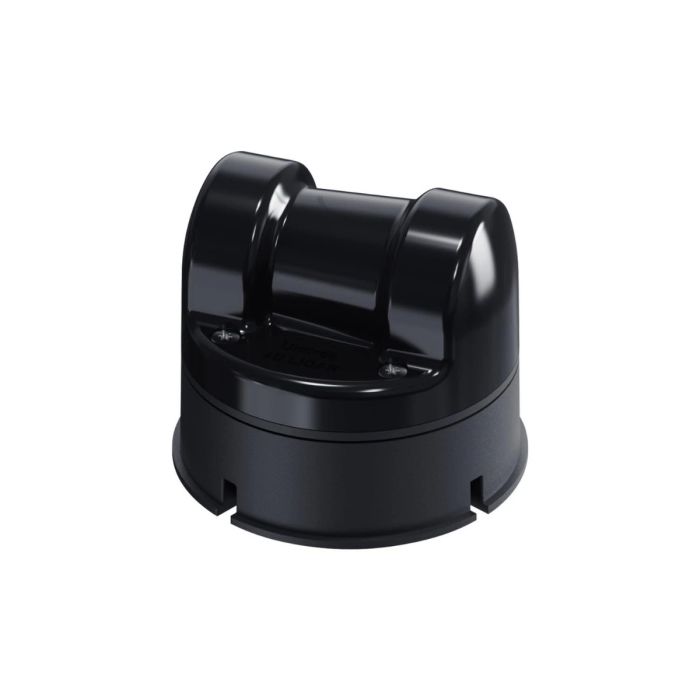
In stock
- BRAND:
- UNITREE ROBOTICS
- PART #:
- LIDAR-L1-PM-RM
- ORIGIN:
- China
- AVAILABILITY:
- SUBJECT TO AVAILABILITY
- SKU:
- Unitree-LIDAR-L1-PM-RM
Unitree L1 Rm Lidar (Remote Measurement) (LIDAR-L1-PM-RM)
A robot that sees only what is nearby stops short of the doorway, and a robot that sees only far away trips over the table leg. The Unitree L1 Rm Lidar (Remote Measurement) (LIDAR-L1-PM-RM) is the long-reach member of a compact two-version family. It is built for teams that want their machine to read a wide space without giving up the close-in view.
This product is available through this page, by quotation.
Background
The brand and the L1 family
Unitree Robotics is the brand behind this sensor, and the store lists it with the other Unitree perception parts in the Unitree Lidar category. The L1 comes in two versions, named in the sources as L1 PM (Precision Measurement) and L1 RM (Remote Measurement). The names say what each one is tuned for: the PM leans toward fine measurement, and the RM leans toward distance.
This page covers the RM. Where a figure belongs to one version, it is kept with that version here, so nothing from the PM is credited to the RM.
What kind of sensor this is
The L1 is a compact lidar that scans with a 905nm laser and is rated Class 1 for eye safety under IEC60825-1:2014. It scans at 11Hz azimuthally and 180Hz vertically, with an effective sampling frequency of 21,600 points per second. It also carries a built-in IMU with a 3-axis accelerometer and a 3-axis gyroscope, pushing data at 250Hz. That pairing of laser and motion data is what mapping and positioning software wants from a single small housing.
The sources describe it as suitable for general robot environment scanning, positioning, mapping, navigation and obstacle avoidance. An open-source SLAM solution is available for it, which gives integrators a starting point instead of a blank page.
Technical Specifications
| Specification | Value |
|---|---|
| Version | L1 RM (Remote Measurement) |
| Max range at 90% reflectivity | 30M (L1 RM) |
| Max range at 10% reflectivity | 15M (L1 RM) |
| Minimum detection distance | 0.05m |
| Azimuthal scanning frequency | 11Hz |
| Vertical scanning frequency | 180Hz |
| Effective sampling frequency | 21,600 points/second |
| IMU | 3-axis acceleration and 3-axis gyroscope, 250Hz push frequency |
| Laser wavelength | 905nm |
| Eye safety | Class 1 (IEC60825-1:2014) |
| Ambient light | Stable ranging under 100Klux outdoor light |
| Size | 75×75×65mm |
| Weight | 230 grams |
| Mounting | Four M3 holes, 6mm deep |
| Connector | GH1.25mm 4PIN serial port socket |
| Storage temperature | -20℃~60℃ |
| Software | Unilidar, Windows® (64-bit) |
| In the package | Adapter module, power adapter, data cable |
Specifications as published by the manufacturer; confirmed against the datasheet at quotation.
The manufacturer has not published the cable length, the shock and vibration rating, the point cloud output rate in frames, or the connector pinout for the RM beyond the series manual; these are confirmed at quotation.
What makes the L1 RM different from the L1 PM?
The difference is reach. The sources give the L1 PM a maximum range of 20M on a 90% reflective surface and 10M on a 10% reflective surface. The L1 RM reaches 30M and 15M on the same two surfaces. The RM therefore sees half again as far, whether the target is bright or dark.
Reflectivity matters because real sites are not made of white walls. A dark door, a matte vehicle or a shadowed corner returns far less light than a pale wall, and the 10% figure tells you how far the sensor still reads such surfaces. For the RM that figure is 15M. If your robot works in open halls, yards or long corridors, the extra distance gives the navigation stack more warning and a larger picture of its surroundings.
If your work is closer in and finer in detail, the sibling Unitree L1 Pm Lidar (Precision Measurement) (LIDAR-L1-PM) deserves a look first.
How does the L1 RM handle close objects and bright sun?
Two situations trouble many small lidars: objects almost touching the sensor, and strong outdoor light. The L1 addresses both in its published figures. The minimum detection distance is as low as 0.05m, so something resting against the robot's body can still be detected and recognized. The sources describe the near blind zone as ultra-low.
For daylight, the sources state that the L1 achieves stable ranging and high-accuracy map building under 100Klux outdoor light. For a Caribbean buyer, that is a practical point, since many projects run outdoors under strong sun, on docks, farms, campuses and open lots.
Size and weight help too. At 75×75×65mm and 230 grams, the unit can ride on a small robot without upsetting its balance. Four M3 mounting holes, 6mm deep, sit on the bottom of the housing for fixing it in place.
Who is the Unitree L1 RM for?
Robotics researchers and university labs will find a sensor small enough for a student platform and open enough, with the open-source SLAM solution, to build mapping experiments on. Integrators who add perception to mobile robots will value the 30M reach and the 0.05m near view in one body.
Teams surveying large indoor or outdoor spaces, such as warehouses, yards or long facilities, benefit from the longer range. Educators can use it to teach navigation and obstacle avoidance with real data. Buyers who care most about fine measurement at shorter distances may be better served by the L1 PM version. Those who need a different sensor class can browse the Unitree Lidar category or the wider Accessories category.
What is the Unitree L1 RM used for?
- Environment scanning. The unit sweeps its surroundings and returns a point cloud of the space around the robot.
- Positioning. Laser data and the 250Hz IMU feed together into software that tracks where the robot is.
- Mapping. The open-source SLAM solution gives teams a route to building maps of a site.
- Navigation. A longer view lets a mobile robot plan its path with more of the route in sight.
- Obstacle avoidance. The 0.05m minimum detection distance helps the robot notice things right beside it.
- Research and teaching. The small size, included accessories and Unilidar software on Windows® (64-bit) make bench work straightforward.
Pricing and Availability
The L1 RM is sold by quotation, and no price is shown on this page. Send us your project details and quantity, and we will respond with a quotation. Delivery, customs and support are arranged together with the quotation. The package contains the adapter module, power adapter and data cable, which carry power, control signals and data. The Unitree L1 Rm Lidar (Remote Measurement) (LIDAR-L1-PM-RM) is available on this page.
Frequently Asked Questions
How far can the L1 RM measure?
The sources give 30M on a 90% reflective surface and 15M on a 10% reflective surface for the L1 RM.
How close can it detect an object?
The minimum detection distance is as low as 0.05m, which the sources call an ultra-low blind area.
Does it include motion sensing?
Yes. It has a built-in IMU with a 3-axis accelerometer and a 3-axis gyroscope, with a push frequency of 250Hz.
Is the laser safe for eyes?
The sensor is rated Class 1 under IEC60825-1:2014 and uses a 905nm laser wavelength.
What software does it work with?
Unilidar currently supports Windows® (64-bit). An open-source SLAM solution is also available.
What comes in the box?
The package includes an adapter module, a power adapter and a data cable.
Where can I buy the Unitree L1 RM and what does it cost?
You can buy it through this page by requesting a quotation. No price is listed here; the cost is given in the quotation after we know your needs.
Summary
The L1 RM answers the question of how to see far and near with one small sensor. It reaches 30M on bright surfaces and 15M on dark ones, detects objects from 0.05m, works under 100Klux outdoor light, and weighs 230 grams. For teams mapping large spaces or building mobile robots, it is a practical way to widen the robot's view without adding bulk. To discuss your project and receive a quotation, this page is the starting point.
Specifications
General
What's included
Related Products
Out of stock


