
Unitree H2 EDU SMART D Humanoid Robot
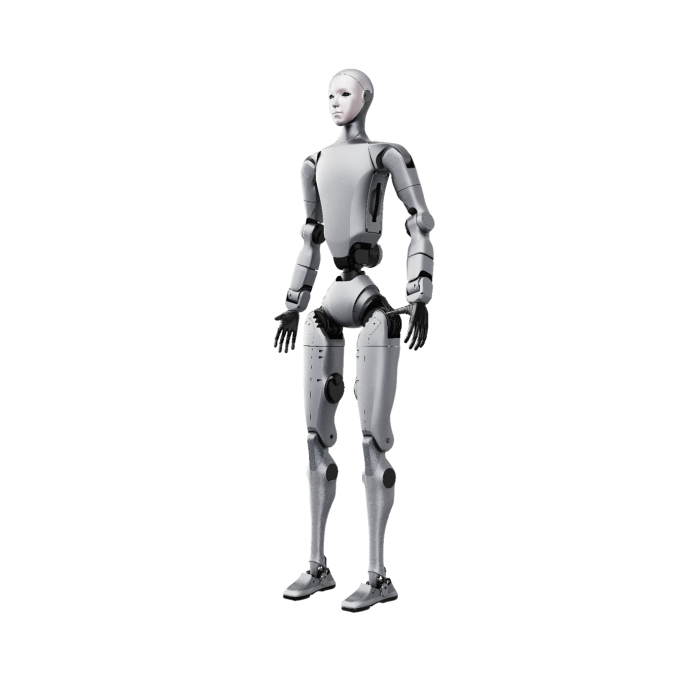
In stock
- BRAND:
- UNITREE ROBOTICS
- MODEL:
- H2-EDU-SMART-D
- PART #:
- H2-EDU-SMART-D
- ORIGIN:
- China
- Warranty:
- 12 MONTHS
- AVAILABILITY:
- SUBJECT TO AVAILABILITY
- SKU:
- Unitree-H2-EDU-SMART-D
Unitree H2 EDU SMART D Humanoid Robot
Three hours on a single battery is not a full shift, but it is a long laboratory session, and that is the right way to read the Unitree H2 EDU SMART D Humanoid Robot. It is a research and development humanoid, built for people who want to work on motion, perception and manipulation rather than only watch a robot walk across a stage. Two five-finger hands with wrist cameras make the SMART D configuration the one to consider when grasping is the question.
The Unitree H2 EDU SMART D Humanoid Robot is available through this page, by quotation.
Background
Unitree and the H2 line
Unitree Robotics is a company best known for legged machines, and its humanoids grew out of that experience with balance, joint actuation and dynamic walking. The H2 family is its full-size humanoid line. It spans a wide set of versions: H2 BASIC, H2 EDU STANDARD, a lettered series of H2 EDU SMART configurations from A to H, and H2 Plus.
The lettered SMART series is the part that matters for a buyer. Each letter is defined by its hands: Dex1-1 Plus, Dex3-1, Dex3-1 Tactile, Dex5-1, Dex5-1P Tactile, Revo 2 Basic, Revo 2 Touch and Inspire DFQ. The body is shared across the EDU line, and the hands are what change from one configuration to the next.
Where the SMART D sits
The SMART D configuration carries two five-finger Dex5-1 hands, each with a wrist-mounted RGB camera. Each hand has 16 degrees of freedom, and there is no tactile feedback. In plain terms, it is a manipulation-first configuration that relies on vision rather than touch sensing at the fingertips.
It also belongs to the EDU branch of the family, which supports secondary development. Motion control algorithms evolve continuously through over-the-air updates. For a university lab or an integrator, that combination of open development and regular algorithm updates matters as much as the mechanical figures.
Technical Specifications
| Specification | Value (H2 EDU, SMART D configuration) |
|---|---|
| Hands | 2 × five-finger Dex5-1 hands with wrist-mounted RGB cameras; 16 DoF per hand; no tactile feedback |
| Standing dimensions | 1820 x 456 x 218 mm |
| Weight with battery | Approximately 70 kg |
| Total degrees of freedom (body) | 31 |
| DoF per leg | 6 |
| DoF per arm | 7 |
| Waist DoF | 3 |
| Head DoF | 2 |
| Max. leg joint torque | 360 N.m |
| Max. arm payload | Peak: ~15 kg; nominal: ~7 kg |
| Battery | 15 Ah (0.972 kWh) |
| Battery life | Approximately 3 h |
| High-performance computing module | Up to Jetson AGX Thor (2070 TOPS) |
| Vision sensor | Wide-angle humanoid binocular camera |
| Voice interaction | Array microphones + high-power speaker |
| Connectivity | Wi-Fi 6, Bluetooth 5.2 |
| Secondary development | Supported on the EDU version |
| Operating temperature | 0°C to 40°C (32°F to 104°F); not waterproof or dustproof |
Specifications as published by the manufacturer; confirmed against the datasheet at quotation.
The manufacturer has not published the top speed, the IP rating, the weight of the hands, the charging time, the camera resolution or a complete in-the-box list for the SMART D; they are confirmed at quotation.
What makes the SMART D different from the other H2 EDU configurations?
The answer is in the hands. The body figures in the table, including 31 degrees of freedom, 360 N.m of leg joint torque and an arm payload of about 15 kg at peak, belong to the H2 EDU line as a whole. What the SMART D adds is a specific end-effector choice: Dex5-1 hands with 16 degrees of freedom each and a wrist camera on each side.
If your work needs touch sensing at the fingertips, look at the tactile configurations instead. The Unitree H2 EDU SMART C Humanoid Robot comes with Dex3-1 Tactile hands, and the Unitree H2 EDU SMART E Humanoid Robot with Dex5-1P Tactile hands. If a simpler hand is enough, the Unitree H2 EDU SMART B Humanoid Robot carries Dex3-1 hands. Each of those pages gives its own figures, and none of them should be read into this one.
The full family is gathered in the Unitree H2 EDU category, which is the right place to compare the lettered configurations side by side.
Does the SMART D have tactile feedback?
No. This configuration has no tactile feedback. That is a deliberate trade, not a gap to apologize for. A team working on vision-guided grasping, imitation learning from camera data or teleoperation can get a great deal from five articulated fingers and a camera at each wrist, without the added data stream and calibration work that touch sensing brings.
It does mean that a task which depends on feeling slip or contact force at the fingertip will need a different configuration or an external sensing strategy. Say so when you request a quotation, and we will point you to the better match.
Who is the Unitree H2 EDU SMART D for?
University and research labs are the clearest fit. The EDU line supports secondary development, the computing module goes up to Jetson AGX Thor at 2070 TOPS, and the hands give students and researchers a real manipulation problem to work on. Wi-Fi 6 and Bluetooth 5.2 make it simple to connect to a lab network and to peripherals.
Systems integrators and corporate R&D groups are the second segment. They can use the platform to prototype tasks that need two dexterous hands, then judge whether a humanoid form suits the application before committing further. Technical schools and training centers in the Caribbean can use it to teach humanoid control and perception.
Buyers who need touch sensing should compare the tactile siblings. Buyers who want a different hand type can review the Unitree H2 EDU SMART F Humanoid Robot, which comes with Revo 2 Basic hands.
What is the Unitree H2 EDU SMART D used for?
- Manipulation research. Two 16-DoF hands let teams study grasping, in-hand motion and bimanual tasks.
- Vision-guided grasping. The wrist-mounted RGB cameras give each hand its own view of the object being handled.
- Locomotion and balance studies. With 6 DoF per leg and 360 N.m of leg joint torque, the legs support gait and control work.
- Secondary development. The EDU version supports custom software, so teams can build their own behaviors on the platform.
- Human-robot interaction. Array microphones and a high-power speaker support voice-based experiments.
- Teaching and demonstration. A full-size humanoid gives students something concrete to program and observe in a controlled indoor setting.
Pricing and Availability
We do not print prices on this page. A quotation is the way to proceed, and it is where the configuration and the accessories are settled. Delivery, customs and support are arranged together with the quotation. The Unitree H2 EDU SMART D Humanoid Robot is available on this page.
Frequently Asked Questions
How many degrees of freedom does the SMART D have?
The body has 31 degrees of freedom: 6 per leg, 7 per arm, 3 in the waist and 2 in the head. Each Dex5-1 hand adds 16 degrees of freedom.
How long does the battery last?
Approximately 3 h from the 15 Ah (0.972 kWh) battery.
What can the arms lift?
The maximum arm payload is a peak of about 15 kg and a nominal load of about 7 kg.
Can I develop my own software for it?
Yes. Secondary development is supported on the EDU version, and motion control algorithms evolve continuously through over-the-air updates.
Can it work outdoors or in wet conditions?
It operates from 0°C to 40°C (32°F to 104°F) and is not waterproof or dustproof. Plan for dry, indoor use or a protected setting.
Does the SMART D have touch sensing in the fingers?
No, this configuration has no tactile feedback. Tactile hands are found on other lettered configurations in the family.
Where can I buy the Unitree H2 EDU SMART D Humanoid Robot and what does it cost?
You can request it through this page, by quotation. The cost is given in the quotation after the configuration and delivery details are agreed, and no price is printed here.
Summary
The Unitree H2 EDU SMART D Humanoid Robot is a research humanoid built around a few clear choices: a 31-degree-of-freedom body, two Dex5-1 hands with wrist cameras, up to Jetson AGX Thor computing, and about three hours of battery life for a working session. It has no tactile feedback, and it is not waterproof or dustproof, so it suits controlled indoor work focused on vision-led manipulation. For a quotation or to compare it with the other configurations, this page is the starting point.