
Unitree H2 EDU SMART B Humanoid Robot
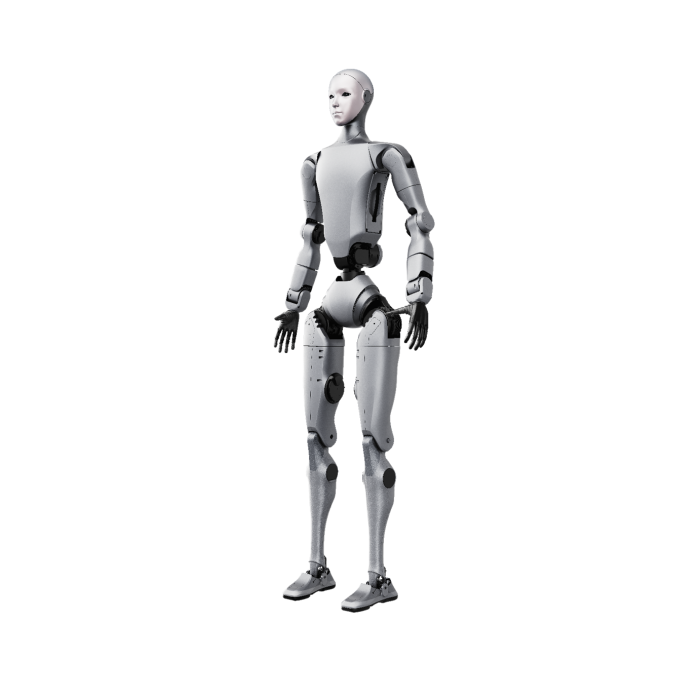
In stock
- BRAND:
- UNITREE ROBOTICS
- MODEL:
- H2-EDU-SMART-B
- PART #:
- H2-EDU-SMART-B
- ORIGIN:
- China
- Warranty:
- 12 MONTHS
- AVAILABILITY:
- SUBJECT TO AVAILABILITY
- SKU:
- Unitree-H2-EDU-SMART-B
Unitree H2 EDU SMART B Humanoid Robot
Most of the work we ask of a humanoid happens at arm's length, where a body that walks well still needs hands that can close on something. The Unitree H2 EDU SMART B Humanoid Robot is built around that idea: a full-size research body from Unitree Robotics, fitted with two three-finger hands and a camera on each wrist so that grasping can be studied with the robot's own view of the task.
This product is available through this page, by quotation.
Background
Unitree and the H2 family
Unitree Robotics is a Chinese company known for legged robots and, more recently, full humanoids. Its H2 line is aimed at laboratories, universities and integrators who want a capable platform they can program themselves rather than a finished appliance. Within that line, the H2 EDU body is the development-oriented option. It adds a computing unit for custom work and open secondary development, which the H2 BASIC does not offer.
The SMART letters describe how the hands, cameras and related options are packaged on top of that EDU body. Sibling packages such as the Unitree H2 EDU SMART A Humanoid Robot use different hands, so the body is shared and the end-of-arm tooling is what separates one package from another. All of these packages sit in the Unitree H2 EDU category.
What SMART B adds to the EDU body
The SMART B package carries two three-finger Dex3-1 hands with wrist-mounted RGB cameras. Each hand has 7 degrees of freedom and weighs 650 g, and the fingers use force control. The hands have no tactile feedback, which is worth knowing early: contact is handled through force control and the cameras, not through touch sensing on the fingertips.
Three fingers are a deliberate trade. They give a simpler mechanism than a five-finger hand while still allowing wrapped, pinched and supported grasps. For many manipulation studies, that is enough to work on perception, planning and control without the added complexity of a full anthropomorphic hand.
Technical Specifications
| Specification | Value |
|---|---|
| Hands and cameras | 2 × three-finger Dex3-1 hands with wrist-mounted RGB cameras |
| Hand degrees of freedom | 7 DoF per hand |
| Hand weight | 650 g per hand |
| Hand sensing | Three-finger force control; no tactile feedback |
| Standing dimensions | 1820 x 456 x 218 mm |
| Weight with battery | Approximately 70 kg |
| Degrees of freedom | 31 in total: 6 DoF per leg, 7 DoF per arm, 3 DoF at the waist, 2 DoF at the head |
| Maximum leg joint torque | 360 N.m |
| Maximum arm joint torque | 120 N.m |
| Arm payload | Peak: ~15 kg; nominal: ~7 kg |
| Battery | 15 Ah (0.972 kWh) |
| Battery life | Approximately 3 h |
| Computing for custom development | PC2: Intel Core i7 |
| High-performance computing module | Up to Jetson AGX Thor (2070 TOPS) |
| Vision sensor | Wide-angle humanoid binocular camera |
| Voice interaction | Array microphones + high-power speaker |
| Connectivity | Wi-Fi 6, Bluetooth 5.2 |
| Materials | Aerospace-grade aluminum + titanium alloy + high-strength engineering plastics |
| Secondary development | Yes |
| Included accessories | Charger; manual remote controller; removable smart battery |
Specifications as published by the manufacturer; confirmed against the datasheet at quotation.
The manufacturer has not published the walking speed, the IP rating, whether a lidar is fitted, the operating temperature, the charging time, the camera resolution, the hand payload or the packaged dimensions; they are confirmed at quotation.
What makes the SMART B different from the other H2 EDU packages?
The difference is in the hands and in what they can see. The SMART B pairs Dex3-1 three-finger hands with an RGB camera on each wrist, so the view of the object follows the hand as the arm moves. That matters in manipulation research, where a head camera is often blocked by the arm itself at the very moment a grasp is closing.
Compared with the Unitree H2 EDU Standard Humanoid Robot, the SMART B is the better choice when manipulation is the main subject of the work, since it brings hands and wrist cameras to the same body. The Standard version suits teams that want the platform itself first and plan to choose or build their own end effectors later. The SMART A uses a different hand type, and the SMART C to F packages, such as the Unitree H2 EDU SMART C Humanoid Robot, are separate configurations; their figures belong to their own pages and should not be read across.
What should a buyer know about the body and the computing?
Underneath the hands is a 31-degree-of-freedom body: 6 DoF per leg, 7 DoF per arm, 3 DoF at the waist and 2 DoF at the head. Leg joints reach 360 N.m and arm joints 120 N.m. The arms carry a peak payload of about 15 kg and a nominal payload of about 7 kg.
For software work, the EDU body carries a PC2 with an Intel Core i7 for custom development and a high-performance computing module of up to Jetson AGX Thor (2070 TOPS). Secondary development is available, so teams can run their own control and perception code. The battery is a removable smart battery of 15 Ah (0.972 kWh) with a life of approximately 3 h, and a charger and a manual remote controller are included.
Who is the Unitree H2 EDU SMART B Humanoid Robot for?
University laboratories are the clearest fit. A group studying grasping, imitation learning or vision-guided manipulation gets a humanoid with hands, wrist cameras and an open development path in one package, and can start on experiments instead of integrating parts.
Corporate research teams and system integrators form the second segment. They can use the platform to test whether a humanoid form suits a task, such as handling objects in spaces designed for people, before committing to a purpose-built design. Educators teaching advanced robotics will also find that the body, voice interaction and open development support a wide range of coursework.
Two groups should look elsewhere. Teams that need fingertip touch sensing should note that these hands have no tactile feedback. Teams that only need locomotion and a platform to mount their own tools may find the Standard version a closer match.
What is the Unitree H2 EDU SMART B Humanoid Robot used for?
- Grasping research. Three-finger force control and wrist cameras give a direct setup for studying how a robot reaches for and closes on objects.
- Vision-guided manipulation. Wrist-mounted RGB views move with the hand, supporting perception work alongside the head's binocular camera.
- Imitation and learning studies. With open secondary development and onboard computing options, teams can train and run their own policies.
- Teaching advanced robotics. A 31-degree-of-freedom body gives students a real platform for kinematics, balance and control.
- Human-robot interaction. Array microphones, a high-power speaker and Wi-Fi 6 and Bluetooth 5.2 support voice and connected applications.
- Industrial feasibility trials. Integrators can test whether a humanoid with arms carrying a nominal payload of about 7 kg fits a handling task before wider investment.
Pricing and Availability
Pricing for the Unitree H2 EDU SMART B Humanoid Robot is given by quotation, so that the package, accessories and your intended use are settled together. Delivery, customs and support are arranged with the quotation. The Unitree H2 EDU SMART B Humanoid Robot is available on this page.
Frequently Asked Questions
What hands does the SMART B have?
It has two three-finger Dex3-1 hands, each with 7 DoF and a weight of 650 g. The fingers use force control and there is no tactile feedback.
Does it have cameras on the hands?
Yes. The hands come with wrist-mounted RGB cameras. The body also has a wide-angle humanoid binocular camera for vision.
How tall is it and how much does it weigh?
Standing dimensions are 1820 x 456 x 218 mm. With the battery fitted, the weight is approximately 70 kg.
How long does the battery last?
Battery life is approximately 3 h from the 15 Ah (0.972 kWh) removable smart battery.
Can I run my own software on it?
Yes. Secondary development is available. The EDU body carries a PC2 with an Intel Core i7 and a high-performance module of up to Jetson AGX Thor (2070 TOPS).
What arm payload can it handle?
The arms have a peak payload of about 15 kg and a nominal payload of about 7 kg.
Where can I buy the Unitree H2 EDU SMART B Humanoid Robot and what does it cost?
It is available through this page, by quotation. The cost depends on the package and your requirements, so request a quotation and we will set it out together with delivery and support details.
Summary
The Unitree H2 EDU SMART B Humanoid Robot puts its emphasis where manipulation work is decided: at the hand. A 31-degree-of-freedom EDU body, open development and onboard computing options provide the foundation, and the three-finger Dex3-1 hands with wrist cameras turn it into a platform for grasping and vision research. If that is the work in front of you, this page is the starting point.


