
Unitree H2 EDU Humanoid Robot
In stock
- BRAND:
- UNITREE ROBOTICS
- MODEL:
- H2 EDU
- ORIGIN:
- China
- Warranty:
- 12 MONTHS
- AVAILABILITY:
- ALLOW 2-4 WEEKS FOR DELIVERY
- SKU:
- Unitree-H2-EDU
Unitree H2 EDU Humanoid Robot
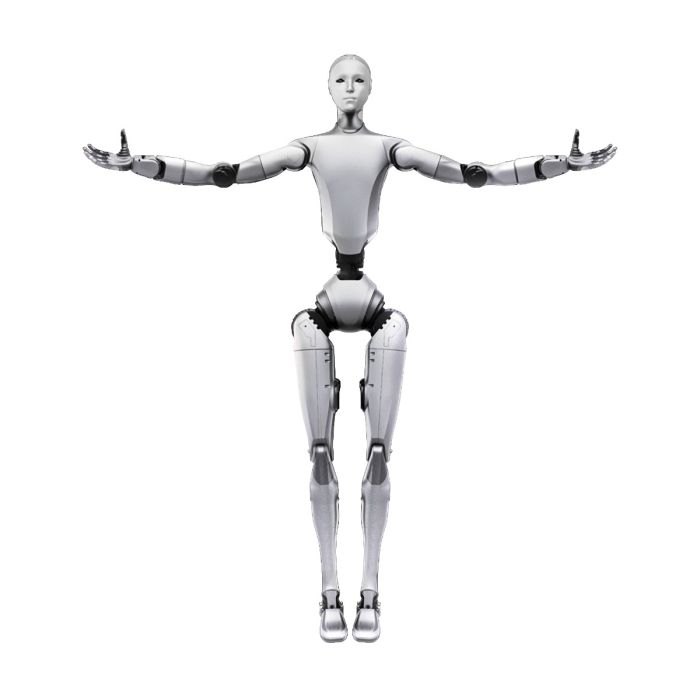
Almost every building, vehicle and workbench on earth was designed around a person with two arms, two legs and a head at a certain height. A Unitree H2 EDU Humanoid Robot starts from that fact. Instead of asking a team to redesign its lab or workshop around a machine, it brings a full-size human-shaped body into the space as it already is, and then leaves the software to you.
The Unitree H2 EDU Humanoid Robot is available through this page, by quotation.
Background
Unitree Robotics and the H2 line
Unitree Robotics is known for legged and humanoid machines that research groups and universities can actually buy and program. The H2 family sits at the full-size end of that range. The sources we work from name several versions: H2, H2 BASIC, H2 EDU, H2 EDU STANDARD and H2 EDU SMART. The EDU designation signals that the platform is aimed at education, research and development work rather than at a fixed, closed application.
Because several versions share a family name, it pays to read each specification against the version it belongs to. The figures in this article are those the fact sheet gives for the H2 EDU, and none of them is borrowed from a sibling.
Positioning and key technology
The H2 EDU is a bipedal humanoid with 31 degrees of freedom in total. That count is spread across the body the way a person's is: 7 in each arm, 6 in each leg, 3 in the waist and 2 in the head. The structure uses aerospace-grade aluminum, titanium alloy and high-strength engineering plastics, a mix chosen to keep a tall machine strong without making it heavier than it has to be.
Perception comes from a wide-angle humanoid binocular camera, and interaction from array microphones paired with a high-power speaker. For computing, the module goes up to Jetson AGX Thor at 2070 TOPS. Secondary development is available, and dexterous hands come in several model options. Together these make the H2 EDU a platform meant to be extended, not a finished appliance.
Technical Specifications
| Specification | Value |
|---|---|
| Standing dimensions | 1820 x 456 x 218 mm |
| Weight with battery | Approximately 70 kg |
| Total degrees of freedom | 31 |
| DoF per arm | 7 |
| DoF per leg | 6 |
| Waist DoF | 3 |
| Head DoF | 2 |
| Max. leg joint torque | 360 N.m |
| Max. arm joint torque | 120 N.m |
| Arm payload | Peak: ~15 kg; nominal: ~7 kg |
| Battery | 15 Ah (0.972 kWh) |
| Battery life | Approximately 3 h |
| High-performance computing module | Up to Jetson AGX Thor (2070 TOPS) |
| Vision sensor | Wide-angle humanoid binocular camera |
| Voice interaction | Array microphones + high-power speaker |
| Connectivity | Wi-Fi 6, Bluetooth 5.2 |
| Materials | Aerospace-grade aluminum + titanium alloy + high-strength engineering plastics |
| Cooling | Local air cooling |
| Secondary development | Yes |
| Dexterous hands | Yes, several model options |
| Charger | Yes |
| Manual remote controller | Yes |
| Intelligent OTA | Yes |
Specifications as published by the manufacturer; confirmed against the datasheet at quotation.
The manufacturer has not published the top speed, the IP rating, the camera resolution, whether a lidar is fitted, the charging time, the operating temperature range, the battery weight or whether a dexterous hand is included in the EDU base; these are confirmed at quotation.
What makes the H2 EDU different from a smaller research humanoid?
Scale is the first difference. At 1820 x 456 x 218 mm standing, the H2 EDU works at the height of an adult. Doorknobs, shelves, handrails and tables sit where the robot's arms and hands can meet them, which a bench-sized robot can never promise. Results gathered on a human-scale body also carry over more honestly to the human-scale world.
The second difference is joint strength. Maximum torque is 360 N.m in the legs and 120 N.m in the arms. A body of roughly 70 kg with its battery needs strong legs just to carry itself and move with control, and the arms are rated for a peak payload of about 15 kg and a nominal payload of about 7 kg. That is enough to make manipulation experiments meaningful, with objects that have real weight.
The third difference is openness. Secondary development is available, the computing module goes up to Jetson AGX Thor, and the hand options are several. A team can therefore move the platform from basic motion work toward perception-heavy and learning-heavy projects without changing robots.
Is the battery enough for a working session?
The H2 EDU carries a 15 Ah battery rated at 0.972 kWh, and battery life is approximately 3 h. For a lab day that usually means planning sessions around a charge: a morning of gait tuning, an afternoon of manipulation trials, and the supplied charger waiting in between.
Local air cooling keeps the thermal design simple, and wireless links are Wi-Fi 6 and Bluetooth 5.2. Intelligent OTA is included, which means software updates can reach the robot over the air. A manual remote controller comes with it too, giving the operator a direct way to command the robot beside any programmed behavior.
Who is the Unitree H2 EDU Humanoid Robot for?
University laboratories are the clearest fit. A humanoid with 31 degrees of freedom gives students and researchers a real body for locomotion, whole-body control and manipulation work, and the open development option keeps theses and funded projects from being limited by a closed system.
Corporate research and development teams are the second group. Companies exploring whether humanoids belong in logistics, inspection or service settings can test ideas on the H2 EDU before committing to any deployment. Integrators and system developers form a third group: they can build custom behaviors, attach their own sensing and software, and demonstrate results to clients on a robot that looks and moves the part.
Educators and technical institutes also benefit, since a robot this size draws attention and makes a strong teaching platform for robotics, control and artificial intelligence courses. If you already know you need a particular configuration, look at the Unitree H2 EDU SMART A, SMART B or SMART L pages, or browse the full Unitree H2 EDU category to compare versions side by side.
What is the Unitree H2 EDU Humanoid Robot used for?
- Locomotion research: developing and testing walking, balance and whole-body control on a full-size biped body.
- Manipulation studies: working with objects using 7-DoF arms and, where selected, dexterous hands.
- Perception and AI development: running vision and learning workloads using the binocular camera and the high-performance computing option.
- Human-robot interaction: building voice and gesture behaviors with the array microphones and speaker.
- Teaching and training: giving students hands-on access to a real humanoid in robotics and control courses.
- Demonstration and evaluation: showing clients and stakeholders what a humanoid can do in their own environment before wider commitments.
Pricing and Availability
We do not print prices on this page. The Unitree H2 EDU Humanoid Robot is supplied by quotation, so that the configuration, hand option and computing module you need are written down before anything is agreed. Delivery, customs and support are arranged together with the quotation, which keeps everything for the Caribbean in one place. Send us your requirements and the Unitree H2 EDU Humanoid Robot is available on this page.
Frequently Asked Questions
How tall is the H2 EDU and how much does it weigh?
Standing dimensions are 1820 x 456 x 218 mm, and the weight with battery is approximately 70 kg.
How many degrees of freedom does it have?
The total is 31: 7 in each arm, 6 in each leg, 3 in the waist and 2 in the head.
How long does the battery last?
The battery is 15 Ah (0.972 kWh) and battery life is approximately 3 h.
Can I develop my own software for it?
Yes. Secondary development is available, and the computing module goes up to Jetson AGX Thor (2070 TOPS). Intelligent OTA handles updates over the air.
Does it work with dexterous hands?
Yes, dexterous hands come in several model options. Tell us which one suits your project and we will include it in your quotation.
What comes with the robot?
A charger and a manual remote controller come with it.
Where can I buy the Unitree H2 EDU Humanoid Robot and what does it cost?
You can request it through this page. The cost is given in a quotation prepared for your configuration, with delivery, customs and support arranged alongside it.
Summary
The Unitree H2 EDU Humanoid Robot is built on a simple idea: if the world is made for people, the most useful research robot may be one shaped like a person. It offers 31 degrees of freedom, 360 N.m of leg joint torque, a 15 Ah battery and an open path for secondary development, all in a body that works at human scale. For laboratories, companies and educators who want to learn on a real humanoid, this page is the starting point.
Specifications
General
Physical
Mobility
Performance
Computing
Connectivity
Software
Battery + Power
What's included
- Unitree H2 EDU Humanoid Robot
- Charger
- Smart Battery (Quick-release)
- Handheld Remote Controller
- Free Delivery
Videos
Related Products
Out of stock


