
UBTECH Cleinbot M79 Professional Cleaning Robot For Public Scenarios
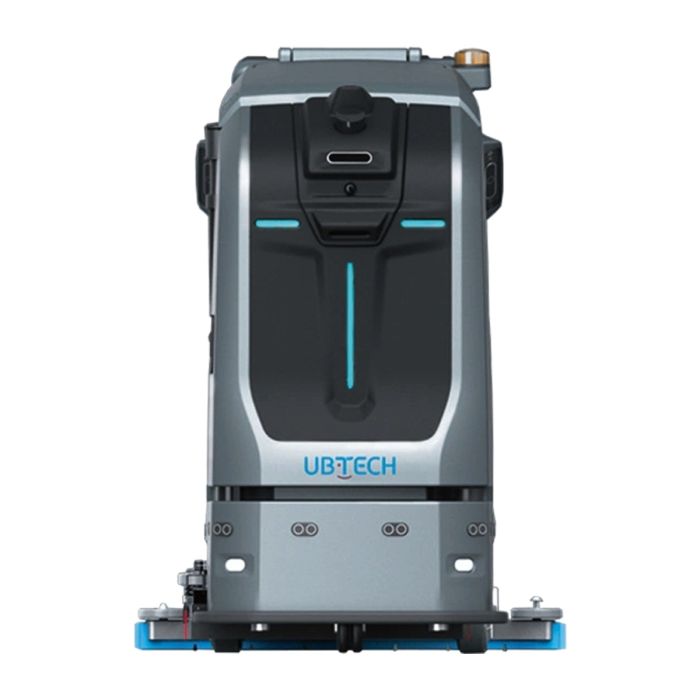
In stock
- BRAND:
- UBTECH
- PART #:
- M79
- ORIGIN:
- China
- AVAILABILITY:
- SUBJECT TO AVAILABILITY
- SKU:
- UBTECH-M79
UBTECH Cleinbot M79 Professional Cleaning Robot For Public Scenarios
The shortest instruction a cleaning robot can receive is a scan. With the UBTECH Cleinbot M79 Professional Cleaning Robot For Public Scenarios, a cleaning task is tied to a QR code, so a member of staff points at the code and the machine starts its route. For facilities where shifts change, crews rotate and nobody wants to reprogram a machine every evening, that small detail says a great deal about how the robot was designed.
The product is available through this page, by quotation.
Background
Where the Cleinbot M79 comes from
UBTECH is a robotics brand, and the Cleinbot name belongs to its line of cleaning machines for commercial buildings. The M79 is a professional commercial cleaning robot for public environments, which places it in the working end of the range rather than among machines meant for small rooms. A sibling in the same family, the UBTECH Cleinbot CC201 Intelligent Cleaning Service Robot, is also listed in this store, and buyers comparing the two should look at the scale of the floors they must cover.
The M79 is a floor scrubber first. It carries a clean water tank and a waste water tank, a rotating disk brush and a squeegee, which is the working layout of professional hard-floor cleaning equipment. What UBTECH adds is the autonomy around that layout: mapping, route planning, sensing and links to building infrastructure.
The technology that lets it work in public spaces
Public buildings are hard on robots because people, trolleys and doors keep changing the floor. The M79 navigates with a proprietary laser and vision fusion technology that delivers high-precision delineation of cleaning areas. Around the body, 3D TOF visual sensors work together with ultrasonic sensors to provide 360° obstacle avoidance, with a reaction time as low as 20ms.
Drops are handled separately. Through TOF and single-point laser coordination, the robot detects cliffs and navigates away from the hazard on its own. Together these systems are what allow a heavy, water-carrying machine to share a concourse or a lobby with people.
Technical Specifications
| Specification | Value |
|---|---|
| Product type | Professional commercial cleaning robot for public environments |
| Clean water tank | 70L |
| Waste water tank | 50L |
| Cleaning efficiency | 2040㎡ per hour |
| Continuous operation | 3-4 hours of continuous operation at full capacity* |
| Disk brush | Rotates at up to 160 RPM with a pressure of 13.2g/cm² per unit area |
| Squeegee blade width | 790mm |
| Obstacle avoidance | 3D TOF visual sensors with ultrasonic sensors, 360° coverage, reaction time as low as 20ms |
| Cliff detection | TOF and single-point laser coordination |
| Navigation | Proprietary laser and vision fusion technology |
| Display | 10-inch onboard touchscreen |
| Suitable floors | Terrazzo, epoxy flooring, PVC, cement, marble, granite and other hard surfaces |
| Building integration | Elevator and turnstile integration interface |
| Task start | Cleaning tasks associated with QR codes; automated operation upon scanning |
| Manual operation | Dual throttle handles provide self-propelled assistance |
| Tank monitoring | Dual tanks with floating ball level sensors |
| Maintenance features | External water filling port, telescopic waste discharge pipe, telescopic charging plug |
Specifications as published by the manufacturer; confirmed against the datasheet at quotation.
The manufacturer has not published the dimensions, the weight, the battery type and capacity, the charging time, the noise level, the IP rating, the climbing gradient, the maximum travel speed, the power rating, the connectivity or the contents of the box; they are confirmed at quotation.
What makes the M79 different from a hand-pushed scrubber?
A walk-behind or ride-on scrubber is only as consistent as the person operating it. Overlap changes from one pass to the next, corners get skipped when the shift runs long, and the operator's time is spent on the machine instead of on the building. The M79 replaces that variability with a defined cleaning area, a planned route and a record of progress that staff can follow through real-time progress monitoring and map editing.
The machine does not shut people out of the process, though. Dual throttle handles provide self-propelled assistance, so when a corner or a spill needs a person, the machine moves forward with little effort and simplifies hand-pushed cleaning tasks. That makes it a practical tool for a crew that wants autonomy for the large open floors and manual control for the awkward spots.
Capacity is the other difference. With a 70L clean water tank and a 50L waste water tank, the M79 is sized for long runs between refills. Its cleaning efficiency is 2040㎡ per hour, with 3-4 hours of continuous operation at full capacity. Floating ball level sensors in both tanks monitor the water in real time, so the team knows when to refill or empty the machine instead of discovering it mid-route.
How does the M79 deal with obstacles, drops and lifts?
Obstacles come first. The 3D TOF visual sensors encircle the device, and ultrasonic sensors complement them, which covers objects that vision alone can miss. The reaction time is as low as 20ms, which matters in a space where a person may step out from behind a pillar.
Drops come second. Loading bays, stair edges and level changes are the places where a floor machine can do the most damage, and the M79 uses TOF and single-point laser coordination to detect cliffs and steer away from them autonomously.
Lifts and gates come third. The M79 offers an elevator and turnstile integration interface, which supports cross-floor and cross-area operation. A robot that can only clean one level or one zone leaves staff to carry it between jobs; one that can pass through the building's own access points can serve a whole site.
Day-to-day service has been considered as well. The external water filling port, the telescopic waste discharge pipe and the telescopic charging plug are all aimed at shortening the time the machine stands idle between tasks.
Who is the Cleinbot M79 for?
The M79 suits operators of large, hard-floored public buildings: airports, shopping centers, hospitals, hotels, transport hubs, exhibition halls and large office lobbies. In the Caribbean, that includes cruise terminals, resort concourses and big retail centers where the floors are marble, terrazzo or polished cement and the opening hours leave little time for cleaning.
Facility managers will value the QR code task start and the map editing support, because cleaning routines can be set once and then repeated by any member of staff. Contract cleaning companies can use the same features to deliver a consistent standard across several sites. Buyers weighing other options can look at the UBTECH Cleinbot CC201, and the full selection is on the Cleaning Robots page.
The M79 is intended for hard surfaces such as terrazzo, epoxy flooring, PVC, cement, marble and granite, so sites that are mostly carpeted are not the target.
What is the Cleinbot M79 used for?
- Autonomous floor scrubbing. The disk brush and the squeegee clean large open hard floors along a planned route.
- Overnight or off-peak cleaning. The machine takes on the main floor area while staff handle detail work elsewhere.
- Multi-floor cleaning routines. The elevator interface allows the robot to work across floors within a building.
- Controlled-access areas. The turnstile interface allows the robot to move between zones that are separated by gates.
- One-scan task starts. Staff start a saved cleaning task by scanning a QR code, without re-entering settings.
- Assisted manual cleaning. The dual throttle handles let an operator push the machine through areas that need hands-on attention.
Pricing and Availability
We do not publish prices for the Cleinbot M79. Please request a quotation, and we will respond with the details for your project. Delivery, customs and support are arranged together with the quotation, so you receive one clear package rather than separate pieces. The UBTECH Cleinbot M79 Professional Cleaning Robot For Public Scenarios is available on this page.
Frequently Asked Questions
How much water can the M79 carry?
It has a 70L clean water tank and a 50L waste water tank. Floating ball level sensors monitor both in real time.
How long can it run?
It offers 3-4 hours of continuous operation at full capacity.
What floors can it clean?
It is intended for terrazzo, epoxy flooring, PVC, cement, marble, granite and other hard surfaces.
How does it avoid people and objects?
3D TOF visual sensors and ultrasonic sensors provide 360° obstacle avoidance with a reaction time as low as 20ms. Cliff detection uses TOF and single-point laser coordination.
Can it use elevators and pass turnstiles?
An elevator and turnstile integration interface is offered, enabling cross-floor and cross-area operation.
How is a cleaning task started?
Tasks can be associated with QR codes, and the robot starts automatically after a scan. The 10-inch onboard touchscreen is also available for setting up tasks.
Where can I buy the Cleinbot M79 and what does it cost?
The robot is available through this page, by quotation. We do not list a price here; send a request and we will prepare the quotation, including delivery, customs and support.
Summary
The M79 turns a cleaning task into something a person can start with a scan and then leave to the machine. Large water tanks, a wide squeegee, 360° sensing, cliff detection and links to elevators and turnstiles make it a tool for big public floors, while the throttle handles keep manual work simple when it is needed. For a quotation on the UBTECH Cleinbot M79 Professional Cleaning Robot For Public Scenarios, this page is the starting point.
Specifications
General
What's included
Videos
Choose your region


with four-legged mobility for industrial, research, military, and exploration applications.
Shop Robot Dogs
Explore advanced industrial robots for manufacturing, automation, and production lines.
Learn more