
BWSENSING Ultra High Precision Dual-Axis CAN Output Inclinometer (BWS2500)
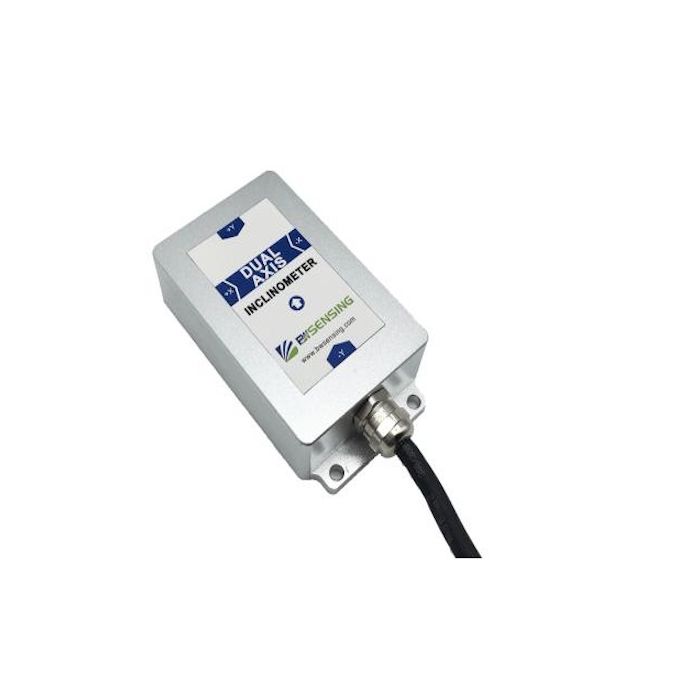
In stock
- BRAND:
- BWSENSING
- PART #:
- BWS2500
- ORIGIN:
- China
- AVAILABILITY:
- SUBJECT TO AVAILABILITY
- SKU:
- BWSENSING-BWS2500
BWSENSING Ultra High Precision Dual-Axis CAN Output Inclinometer (BWS2500)
Most structures never announce that they are moving. A bridge deck sags a little under traffic, a platform settles on its footings, a frame drifts out of level over a season, and nobody standing beside it notices. The BWSENSING Ultra High Precision Dual-Axis CAN Output Inclinometer (BWS2500) is made for watching exactly that kind of slow, quiet change, and for reporting it over a CAN bus to whatever controller or logger sits at the other end.
This product is available through this page, by quotation.
Background
BWSENSING and the inclinometer family
BWSENSING builds inclination sensors for industrial and engineering work, and its catalog runs from cost-effective digital models to ultra high precision units. The BWS2500 sits at the precision end of that family. Its siblings on this store, such as the BWSENSING Cost-Effective Dual-Axis Inclinometer (BWM427) and the BWSENSING Cost-Effective Single-Axis CAN Output Inclinometer (BWM415), serve projects where budget and simplicity come first. The BWS2500 serves projects where small angles matter and where the sensor must stay in place for years.
You can browse the wider range in our Sensors category or in the BWSensing brand listing.
What the BWS2500 is built to do
The BWS2500 measures inclination on two axes at once, so a single unit reports tilt in both directions of a surface. Its highest accuracy is 0.001°, with a resolution of 0.0005° when the sensor is completely still. The output is CAN, with a baud rate adjustable from 25k to 500k, and the output frequency is adjustable from 5 to 100Hz. That lets an integrator match the sensor to a slow structural logging network or to a faster control loop.
The housing carries an IP67 protection level, and the supply accepts 9-36VDC, which suits the mixed power systems found on bridges, machines and field cabinets. The manufacturer also accepts OEM customization, which matters for teams that need a variant tuned to their own equipment.
Technical Specifications
| Specification | Value |
|---|---|
| Measurement axes | Dual axis |
| Highest accuracy | 0.001° |
| Resolution (completely still) | 0.0005° |
| Zero temperature drift (-40~85℃) | ±0.0007 °/°C |
| Output interface | CAN |
| CAN baud rate | 25k~500k adjustable |
| Output frequency | 5~100Hz adjustable |
| Supply voltage | 9-36VDC |
| Current (no load) | 20-40 mA |
| Protection level | IP67 |
| Operating temperature | -40~+85 ℃ |
| Storage temperature | -55~+100 ℃ |
| Power-on start-up time | <3s |
| MTBF | ≥90000 h |
| Impact resistance | 2000g,0.5ms,3 times/axis |
| Insulation resistance | ≥100 MΩ |
Specifications as published by the manufacturer; confirmed against the datasheet at quotation.
The manufacturer has not published the package contents, any details of the output signal beyond CAN, or the cable length; they are confirmed at quotation.
What makes the BWS2500 different from a cost-effective dual-axis inclinometer?
The difference starts with the numbers a structural engineer cares about. The BWS2500 lists an accuracy of 0.001°, a resolution of 0.0005° and a zero temperature drift of ±0.0007 °/°C across -40~85℃. Drift is the figure that decides whether a sensor left outdoors for a season still tells the truth, because a slow structure moves only a little and a sensor that wanders with temperature can hide that movement or invent it.
The second difference is the fieldbus. CAN is a robust, widely used network in machinery and vehicles, and it allows several nodes on one pair of wires. With the baud rate adjustable from 25k to 500k, the BWS2500 can be matched to the network it joins instead of forcing the network to match the sensor.
The third is endurance. The sensor lists an MTBF of ≥90000 h and an insulation resistance of ≥100 MΩ, and it is rated for repeated shock on every axis. If your job is a short bench setup or a simple leveling aid, a cost-effective model such as the BWM427 may be enough. If the sensor must hold its calibration for years in the weather, the BWS2500 is the more fitting choice.
Which measuring range should I choose?
The sources name three versions of the BWS2500, each with its own measuring range. A narrower range suits structures that are expected to move very little, such as a bridge deck or a building under observation. A wider range suits platforms that are deliberately tilted or set up on uneven ground, where the sensor must stay inside its range during installation as well as in service.
The figures in the table above are stated for the BWS2500 as a model and are not split by range. Tell us the angles your application will see, and we will confirm the matching version and its figures with the quotation.
Who is the BWS2500 for?
Civil and structural engineers are the clearest buyers. Bridge deflection monitoring and building health monitoring need a sensor that reads tiny angles and then keeps reading them without maintenance. The IP67 protection level and the wide operating temperature range of -40~+85 ℃ fit that outdoor duty.
Automation builders form the second group. A precision platform that must level itself automatically needs two-axis feedback delivered over a bus the controller already understands. Defense and special-equipment integrators are a third group, since military equipment automation is one of the listed applications, and OEM customization is accepted for those who need a tailored unit.
If you only need one axis on a CAN network, the BWSENSING Cost-Effective Single-Axis CAN Output Inclinometer (BWM415) is the simpler path. If you need two axes but not this level of precision, look at the BWM427.
What is the BWS2500 used for?
- Bridge deflection monitoring. Logs the slow tilt of decks and piers so engineers can follow movement over time.
- Building health monitoring. Tracks settlement and lean in towers, walls and foundations.
- Precision platform automatic leveling. Feeds two-axis angle data to a controller that keeps a platform level.
- Military equipment automation. Supplies tilt data to special-purpose equipment that must orient itself reliably.
- OEM equipment integration. Built into a manufacturer's own machine, with customization accepted.
- CAN network sensing nodes. Joins a CAN bus as a tilt node at an output frequency adjustable from 5 to 100Hz, as the system requires.
Pricing and Availability
We do not publish prices on this page. Quotation is the way to buy: send us your required measuring range, quantity and application, and we will answer with a quotation. Delivery, customs and support are arranged with the quotation. The BWSENSING BWS2500 is available on this page.
Frequently Asked Questions
How many axes does the BWS2500 measure?
It measures inclination on two axes, so one unit reports tilt in both directions of a surface.
What output does it use?
The output is CAN, with a baud rate adjustable from 25k to 500k. The output frequency is adjustable from 5 to 100Hz.
What power supply does it need?
It accepts 9-36VDC. The operating current is 20-40 mA with no load.
Can it be used outdoors?
Yes. It has an IP67 protection level and an operating temperature range of -40~+85 ℃. Storage is rated at -55~+100 ℃.
How quickly is it ready after power-up?
The power-on start-up time is under 3s.
Is customization possible?
The manufacturer accepts OEM customization. Tell us what you need and we will confirm it with the quotation.
Where can I buy the BWS2500 and what does it cost?
You can buy it through this page by requesting a quotation. We do not list prices, and the cost depends on the version and quantity you need, so the quotation gives you the answer.
Summary
Some of the most important movement in engineering is the movement nobody can see. The BWS2500 is designed to see it: two axes, 0.001° accuracy, 0.0005° resolution, low temperature drift and a CAN output that fits into existing machine and monitoring networks. IP67 protection and a wide temperature range let it stay on site for the long haul. For bridge, building, leveling and special-equipment projects that need that kind of patience, this page is the starting point.


