
Xynova PRM10-25-64-75-F Linear Actuator
In stock
- BRAND:
- XYNOVA
- MODEL:
- PRM10-25-64-75-F
- ORIGIN:
- China
- Warranty:
- 12 MONTHS
- AVAILABILITY:
- SUBJECT TO AVAILABILITY
- SKU:
- Xynova-PRM10-25-64-75-F
Xynova PRM10-25-64-75-F Linear Actuator
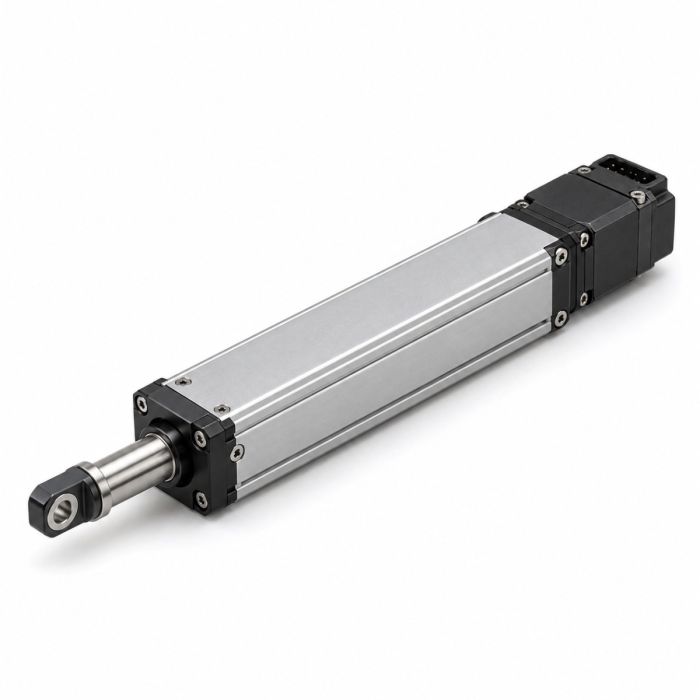
A humanoid forearm gives a designer very little room, and every millimeter spent on a drive is a millimeter taken from wiring, structure or sensing. The Xynova PRM10-25-64-75-F Linear Actuator answers that problem with a micro electric cylinder built around a 7mm planetary roller screw, sized at 10*13.5*86mm and weighing no more than 38g.
The product is available through this page, by quotation.
Background
Xynova and its focus on humanoid components
Xynova Technology Co., Ltd. is a core component supplier in the field of humanoid robots. Its range covers dexterous hands, joint modules and micro electric cylinders, which means the company works on the parts that sit inside a robot's limbs rather than on complete machines. For an integrator, this focus matters. The actuator, the motor, the screw and the control software come from one manufacturer, and they are designed to work together.
The PRM10 micro cylinders belong to the linear side of that range. If your project also needs rotation at the joints, the wider Robot Actuators category lists the other Xynova drives, including rotary models such as the Xynova PR20-102-130-HS Rotary Actuator.
The PRM10 series and its key technology
The PRM10-25-64-75-F is a micro electric cylinder designed for humanoid robots. Its transmission is an in-house developed 7mm micro planetary roller screw, which greatly improves transmission efficiency and suits various industrial and everyday applications. Turning the screw is an in-house developed frameless torque motor, a brushless hollow cup motor, which provides higher torque, longer lifespan and quieter operation.
Two further features complete the package. The joint self-locks easily, with no risk of power failure, which adds safety during operation. And Xynova supplies its own upper-level software with a rich set of API interfaces, so several modules can be coordinated and controlled together.
The series includes versions coded PRM10-20-34-150-F, PRM10-20-47-100-F, PRM10-25-47-100-F, PRM10-20-64-75-F, PRM10-25-64-75-F and PRM10-20-18-200-F. This page describes only the PRM10-25-64-75-F, and every figure below belongs to that version.
Technical Specifications
| Specification | Value |
|---|---|
| Model | PRM10-25-64-75-F |
| Effective stroke | 24+1%mm |
| Size (L×W×H) | 10*13.5*86mm |
| No-load max speed | ≥64mm/s |
| Full-load speed | ≥25mm/s |
| Max thrust | ≥75N |
| Weight | ≤38g |
| Operating voltage | DC12±10%V |
| Repeatability | ±0.05mm |
| Operating temperature | -15~60℃ |
| Static current | 0.05A |
| No-load current | 0.5A |
| Screw | In-house developed 7mm micro planetary roller screw |
| Motor | In-house developed frameless torque motor / brushless hollow cup motor |
Specifications as published by the manufacturer; confirmed against the datasheet at quotation.
The manufacturer has not published the communication interface, the ingress protection rating, the encoder type, the package contents, the mounting method, the service life or the rated thrust; they are confirmed at quotation.
How does the full-load speed differ from the no-load speed?
The data for this actuator separate two situations. With nothing pushing back, the cylinder reaches a no-load maximum speed of at least 64mm/s. Under full load, the speed is at least 25mm/s. A designer who plans a motion cycle should use the second number for moments when the actuator is moving a real load, and the first only for free travel.
The same logic applies to current. The static current is 0.05A when the actuator holds position, and the no-load current is 0.5A when it moves without load. The operating voltage is DC12±10%V, so the supply should stay inside that window. These figures help when you size a power rail for several modules working at once.
The maximum thrust is at least 75N, which is the figure to plan the load path around.
Why does self-locking matter in a humanoid joint?
A robot limb that loses power should not collapse, and it should not drift under the weight it carries. This actuator offers easy joint self-locking and no risk of power failure, which improves safety during operation. For a lightweight humanoid, that means a joint can hold its position without drawing continuous holding current from the supply.
The roller screw supports this approach. Because it transmits motion efficiently and in a very small package, it gives the designer a compact linear drive without needing a large gearbox next to it. The brushless hollow cup motor adds torque and quieter operation, which is welcome in machines meant to work near people, in classrooms or in demonstration halls.
Who is the Xynova PRM10-25-64-75-F Linear Actuator for?
The first group is the team building a humanoid robot, or a part of one such as a hand, a wrist or a forearm. The compact body and low weight suit places where space is tight and every gram counts.
The second group is research laboratories and university groups that need a precise linear drive for manipulation studies. A repeatability of ±0.05mm and an API-based software layer make it practical to program and to repeat experiments.
The third group is integrators of small automation systems and prototypes, who want a self-locking linear module that runs from a DC12 supply. If your design calls for a different version of the series, the Xynova PRM10-20-18-200-F Linear Actuator is worth examining; its figures are quoted separately. If your mechanism also needs a turning joint, look at the Xynova PR21-100-140-HS Rotary Actuator.
What is the Xynova PRM10-25-64-75-F Linear Actuator used for?
- Humanoid finger and hand mechanisms. A micro cylinder can drive a compact digit or a thumb where a larger drive will not fit.
- Wrist and forearm linkages. Short, repeatable strokes suit articulated joints that need push-pull motion.
- Robotic manipulation research. Laboratories can test grasp strategies with a positioning drive that repeats within ±0.05mm.
- Multi-module coordination. The in-house software and its API interfaces let several modules be controlled together.
- Education platforms. A small, quiet, self-locking drive is practical for teaching mechatronics and robot design.
- Small automation prototypes. Compact linear motion helps with test fixtures, feeders and positioning stages at the development stage.
Pricing and Availability
This actuator is sold by quotation only, and this page does not show prices. Send us your project details, the quantity you expect and any technical questions, and we will answer with a quotation. Delivery, customs and support are arranged together with the quotation. Everything you need to begin the request is available on this page.
Frequently Asked Questions
What is the stroke of this actuator?
The effective stroke is 24+1%mm. It belongs to the PRM10-25-64-75-F version only; other versions carry their own figures.
How much does it weigh and how large is it?
The weight is no more than 38g, and the size (L×W×H) is 10*13.5*86mm. This makes it suitable for tight humanoid assemblies.
What supply voltage does it need?
The operating voltage is DC12±10%V. The static current is 0.05A and the no-load current is 0.5A.
Does it hold its position when power is lost?
Yes, the joint self-locks easily and there is no risk of power failure, which adds safety during operation.
What temperatures can it work in?
The operating temperature range is -15~60℃.
What motor does it use?
It uses an in-house developed frameless torque motor, a brushless hollow cup motor, which provides higher torque, longer lifespan and quieter operation.
Where can I buy the Xynova PRM10-25-64-75-F Linear Actuator and what does it cost?
You can request it through this page. It is sold by quotation, so there is no listed price; send us your requirements and we will reply with a quotation.
Summary
Space is the scarce resource in a humanoid limb, and this micro electric cylinder is designed around that fact. A 7mm planetary roller screw, a brushless hollow cup motor, self-locking and an API-driven software layer fit into a body of 10*13.5*86mm and no more than 38g. Its full-load speed of at least 25mm/s, maximum thrust of at least 75N and repeatability of ±0.05mm give a designer clear numbers to plan with. For a quotation, this page is the starting point.


