
Unitree H2 EDU SMART K Humanoid Robot
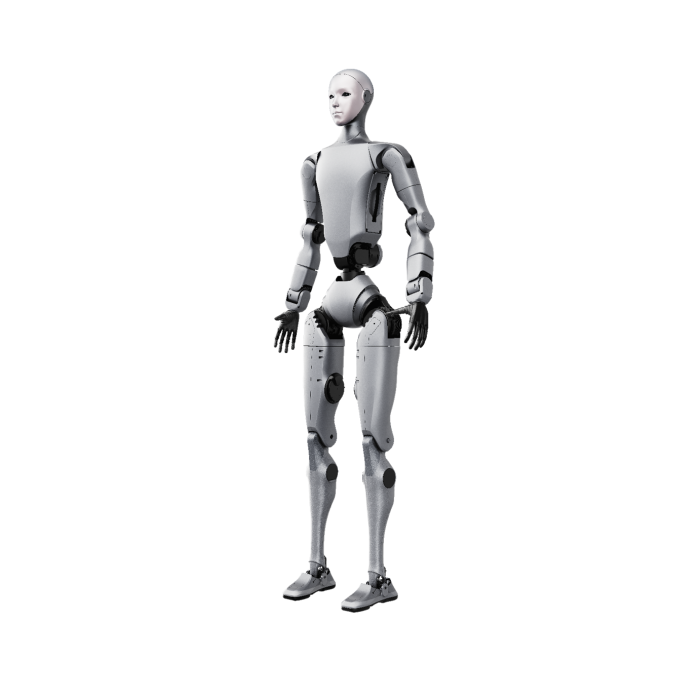
In stock
- BRAND:
- UNITREE ROBOTICS
- MODEL:
- H2-EDU-SMART-K
- PART #:
- H2-EDU-SMART-K
- ORIGIN:
- China
- Warranty:
- 12 MONTHS
- AVAILABILITY:
- SUBJECT TO AVAILABILITY
- SKU:
- Unitree-H2-EDU-SMART-K
Unitree H2 EDU SMART K Humanoid Robot
Inside the torso of the Unitree H2 EDU SMART K Humanoid Robot there is room for two separate computers: one that keeps the machine upright and moving, and one left entirely to your own code. That split says a lot about who this platform is built for. It is not a showpiece to be admired on a stand. It is a working body for teams who want to write, test and refine their own behaviors on real hardware.
The product is available through this page, by quotation.
Background
Unitree and the H2 lineage
Unitree Robotics is a manufacturer of legged and humanoid robots, and the H2 family sits in its humanoid range. Within that family the sources name several versions: H2, H2 BASIC, H2 EDU, H2 EDU STANDARD, and lettered SMART configurations such as SMART A DEX1-1 Plus and SMART B DEX3-1. The suffixes matter. They separate a base robot from one that is open to secondary development, and they separate a bare programmable body from one bundled with extra equipment.
The EDU line is the programmable end of that range. Unitree describes the H2 EDU as fully programmable, with full SDK access, dexterous-hand options, an added Core i7 for custom development and high-power onboard AI compute. The H2 EDU STANDARD is the version with two computing units, a Core i5 for the robot's own functions and a Core i7 dedicated to user development, with secondary development supported and no robotic hands included.
Where the SMART K sits
The Unitree H2 EDU SMART K Humanoid Robot belongs to the H2 EDU family, so the platform figures in this article are the H2 EDU figures. The package details of the SMART K, including its hand model, are set out in your quotation.
What the platform itself offers is clear. The body is made of aerospace-grade aluminum, titanium alloy and high-strength engineering plastics. It has 31 degrees of freedom in total, a wide-angle humanoid binocular camera for vision, and Wi-Fi 6 and Bluetooth 5.2 for connectivity. For teams that need more compute than the Core i7, the high-performance module goes up to Jetson AGX Thor.
Technical Specifications
| Specification | H2 EDU |
|---|---|
| Standing dimensions | 1820 x 456 x 218 mm |
| Weight with battery | Approximately 70 kg |
| Total degrees of freedom | 31 |
| Degrees of freedom per arm | 7 |
| Degrees of freedom per leg | 6 |
| Max. leg joint torque | 360 N.m |
| Max. arm joint torque | 120 N.m |
| Arm payload | Peak: ~15 kg; nominal: ~7 kg |
| Battery | 15 Ah (0.972 kWh) |
| Battery life | Approximately 3 h |
| Basic onboard computing | PC1: Intel Core i5 |
| Computing for custom development | PC2: Intel Core i7 |
| High-performance computing module | Up to Jetson AGX Thor (2070 TOPS) |
| Vision sensor | Wide-angle humanoid binocular camera |
| Connectivity | Wi-Fi 6, Bluetooth 5.2 |
| Secondary development | Yes (EDU) |
| Dexterous hands | Yes, several model options |
| Included accessories | Removable smart battery, charger and manual remote controller |
| Materials | Aerospace-grade aluminum + titanium alloy + high-strength engineering plastics |
Specifications as published by the manufacturer; confirmed against the datasheet at quotation.
The manufacturer has not published the top walking speed, the IP rating, the charging time, the operating temperature range, the weight of the battery, the contents of the SMART K configuration or the dexterous hand model in the SMART K; they are confirmed at quotation.
What makes the H2 EDU different from the base H2?
The difference is openness. The base H2 runs with a single basic onboard computer, PC1, a Core i5. The H2 EDU adds PC2, a Core i7 reserved for custom development, so your own software does not have to compete with the processes that keep the robot balanced. It also adds secondary development, the high-performance computing module option and the choice of dexterous hands, none of which the base column of the manufacturer's table offers.
In practice this means a research group can load perception models, planners or learning-based controllers onto the robot without giving up the stock behaviors. At the top of the compute range, the module goes up to Jetson AGX Thor, rated at 2070 TOPS, for teams running heavy models on board instead of streaming data to a separate machine.
How strong and capable is the H2 EDU body?
Each arm has 7 degrees of freedom and each leg has 6, adding up to 31 for the whole robot. The arm joints reach a maximum torque of 120 N.m and the leg joints 360 N.m. The arms carry a peak payload of about 15 kg and a nominal payload of about 7 kg, a useful distinction when you plan manipulation experiments: the nominal figure is the one to design routine tasks around.
At 1820 x 456 x 218 mm standing and roughly 70 kg with the battery fitted, the robot works at the scale of a tall adult. That matters for tasks designed around human spaces such as shelves, tables, door handles and workstations. The power comes from a removable smart battery of 15 Ah (0.972 kWh), good for approximately 3 h, and a removable pack is handy when a session is long.
Who is the Unitree H2 EDU SMART K for?
The first group is university and institute laboratories working on humanoid locomotion, whole-body control, manipulation and embodied AI. They need full SDK access and a computer of their own, and the EDU platform provides both. The second group is engineering teams in companies who evaluate whether a humanoid can fit a task in a plant, a warehouse or a service environment, and who want to write their own integration instead of waiting for a vendor application.
A third group is training institutions that want students to work on a real humanoid, not a simulation alone. Integrators who build demonstrations for clients also fit here, because the dexterous-hand options let them match the end effector to the demonstration.
If you want the same platform without hands, the H2 EDU STANDARD is described as a programmable platform with a Core i5 and a Core i7 and no robotic hands included. If you are still choosing a configuration, compare the sibling pages for Unitree H2 EDU SMART A Humanoid Robot and Unitree H2 EDU SMART B Humanoid Robot, or browse the whole Unitree H2 EDU category.
What is the Unitree H2 EDU SMART K used for?
- Humanoid locomotion research. Seven-degree-of-freedom arms and six-degree-of-freedom legs give a rich body for gait and balance studies.
- Manipulation experiments. The dexterous-hand options and the arm payload allow grasping and handling trials with real objects.
- Embodied AI development. The dedicated Core i7 and the optional Jetson AGX Thor module host perception and learning workloads on board.
- Teaching and student projects. Full SDK access lets classes write and test their own robot software on physical hardware.
- Application prototyping. Integrators and companies try humanoid tasks in human-scale spaces before committing to a deployment.
- Demonstration and evaluation. The vision system, wireless links and remote controller support live demonstrations and operational trials.
Pricing and Availability
Every configuration is quoted individually, because the contents of a SMART package and the hand option decide what the robot is. Send us your requirements and we will prepare the quotation. Delivery, customs and support are arranged together with the quotation, so you know the full picture before you decide. The Unitree H2 EDU SMART K Humanoid Robot is available on this page.
Frequently Asked Questions
Is the Unitree H2 EDU SMART K open to custom software?
Yes. It belongs to the EDU family, which supports secondary development and full SDK access. A Core i7 computer is dedicated to your own code.
How many degrees of freedom does it have?
The H2 EDU has 31 in total: 7 in each arm and 6 in each leg.
How long does the battery last?
The 15 Ah (0.972 kWh) removable battery gives approximately 3 h. A charger is included with the robot.
Does it come with robotic hands?
The H2 EDU offers dexterous hands in several model options. The hand model for the SMART K is listed in your quotation.
What computing options are available?
PC1 is an Intel Core i5 and PC2 is an Intel Core i7. The high-performance module goes up to Jetson AGX Thor at 2070 TOPS.
What is in the box?
The sources list a removable smart battery, a charger and a manual remote controller. The full package for the SMART K is itemized in your quotation.
Where can I buy the Unitree H2 EDU SMART K Humanoid Robot and what does it cost?
You can request it through this page. The cost is given in a quotation prepared for your configuration, together with delivery, customs and support arrangements.
Summary
The idea behind the Unitree H2 EDU SMART K Humanoid Robot is simple: one computer for the robot, one for you. Around that sit a body of aluminum, titanium alloy and engineering plastics, 31 degrees of freedom, a binocular camera, wireless links and a choice of dexterous hands. For laboratories, classrooms and integration teams, it is a platform to build on rather than a finished product to watch. For a humanoid you intend to program yourself, this page is the starting point.