
Unitree H2 EDU SMART H Humanoid Robot
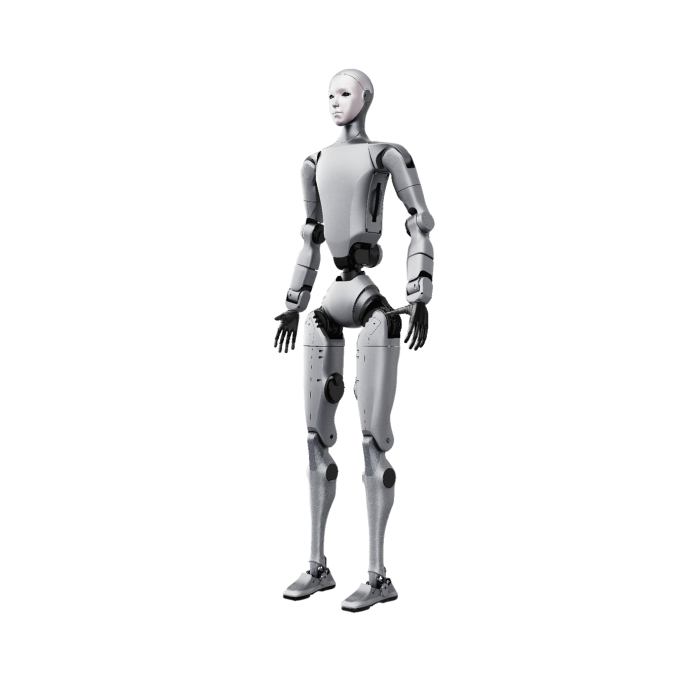
In stock
- BRAND:
- UNITREE ROBOTICS
- MODEL:
- H2-EDU-SMART-H
- PART #:
- H2-EDU-SMART-H
- ORIGIN:
- China
- Warranty:
- 12 MONTHS
- AVAILABILITY:
- SUBJECT TO AVAILABILITY
- SKU:
- Unitree-H2-EDU-SMART-H
Unitree H2 EDU SMART H Humanoid Robot
A robot that stands 1820 mm tall walks into rooms designed for people: doorways, lab benches, workshop aisles. That is the premise behind the Unitree H2 EDU SMART H Humanoid Robot, a full-size biped built for teams that want to test ideas in real human spaces rather than on a scaled-down demonstrator.
The product is available through this page, by quotation.
Background
Unitree Robotics and the H2 lineage
UNITREE ROBOTICS is a brand that research labs, universities and integrators know for legged and humanoid platforms. The H2 family sits at the full-scale end of that range. The sources name three versions: the H2, the H2 EDU and the H2 EDU SMART H. The EDU line is the one aimed at development work, and the SMART H package carries that line's name forward.
Within the EDU line, the store lists several lettered SMART packages, from A to H. The fact sheet for this page does not spell out what separates one letter from another, so the figures below are the ones published for the H2 EDU SMART H and its family, and nothing is borrowed from a sibling listing.
Positioning and key technology
The H2 EDU SMART H is positioned as a development and demonstration platform. It combines a body made of aircraft-grade aluminum, titanium alloy and high-strength engineering plastics with a bionic head that has facial features, a binocular camera with a wide field of view, an array microphone and a high-power speaker. The robot is powered by a 2070 TOPS chip, which supports diverse intelligent models, and its algorithms evolve continuously through OTA updates.
For developers, the EDU line adds secondary development support, which the source marks as available on the EDU only. It also adds a choice of computing: PC1 is an Intel Core i5 for platform capabilities, and PC2 is an Intel Core i7 for custom development. A high-power computing module is offered in multiple brands and models, such as Thor, and a dexterous hand is offered in multiple model options.
Technical Specifications
| Specification | Value |
|---|---|
| Dimensions (standing) | 1820 x 456 x 218mm |
| Weight (with battery) | About 70kg |
| Total degrees of freedom | 31 |
| Single leg degrees of freedom | 6 |
| Single arm degrees of freedom | 7 |
| Waist degrees of freedom | 3 |
| Head degrees of freedom | 2 |
| Maximum arm joint torque | 120N.m |
| Maximum leg joint torque | 360N.m |
| Arm maximum payload | Peak: ~15 kg; Rated: ~7 kg |
| Materials | Aircraft-Grade Aluminum + Titanium Alloy + High-Strength Engineering Plastics |
| Battery capacity | 15Ah (0.972KWh) |
| Battery voltage | Maximum Voltage: 75.6 V |
| Battery life | About 3h |
| Cooling system | Local air cooling |
| Computing (H2 EDU) | PC1: Intel Core i5 (Platform Capabilities); PC2: Intel Core i7 (Custom Development) |
| Compute chip | 2070 TOPS |
| Sensing | Humanoid Binocular Camera with Wide Field of View |
| Voice interaction | Array Microphone and High-Power Speaker |
| Wireless | WiFi 6, Bluetooth 5.2 |
| Bionic head with facial features | Yes |
| Secondary development (H2 EDU) | Supported on the EDU only |
| Dexterous hand (H2 EDU) | Multiple model options |
| High-power computing module (H2 EDU) | Multiple brands and models available, such as Thor |
| Accessories included | Smart Battery (Quick Release), Charger, Manual Controller |
Specifications as published by the manufacturer; confirmed against the datasheet at quotation.
The manufacturer has not published the top walking speed, the IP rating, the camera resolution and field of view, the operating temperature range, the charging time, the onboard memory and storage or the hand specifications; they are confirmed at quotation.
What makes the H2 EDU SMART H a serious development platform?
The first answer is the joint count. With 31 degrees of freedom in total, split into 6 per leg, 7 per arm, 3 in the waist and 2 in the head, the robot can reach, bend and turn its head in ways that a simpler biped cannot. The seven-degree arm is worth noting: it gives a controller room to choose how the elbow sits while the hand goes to the same point, which matters when the robot works near furniture or equipment.
The second answer is torque. The legs are rated for a maximum joint torque of 360N.m and the arms for 120N.m. The arms carry a peak payload of about 15 kg and a rated payload of about 7 kg. A team planning a manipulation task will want to design around the rated figure, and treat the peak as a short-duration ceiling.
The third answer is how the machine is meant to be changed. The EDU line supports secondary development, and the computing options run from an Intel Core i5 to an Intel Core i7, with further high-power modules available. The 2070 TOPS chip and OTA updates mean the software can move on without a change to the body.
What does the battery and cooling setup mean in practice?
The Smart Battery is a quick-release unit, with 15Ah of capacity (0.972KWh) and a maximum voltage of 75.6 V. Battery life is about 3h. The quick-release design is practical for a lab or a demonstration schedule, because the robot can be brought back into service by swapping the pack rather than waiting beside a charger. Cooling is local air cooling. The charger and a manual controller come with the robot.
Who is the H2 EDU SMART H for?
Universities and research institutes are the clearest fit. A full-size humanoid with secondary development support gives a lab something to build locomotion, manipulation and interaction studies on, without first constructing a body. Teaching programs benefit as well, since students can see a machine at human scale.
Integrators and corporate innovation teams are the second group. If the question is whether a humanoid can work in a space built for people, a robot of this height and with this arm reach lets them test that directly. Exhibition and visitor-center operators are the third group: the bionic head with facial features, the array microphone and the speaker suit a robot that has to talk with an audience.
Buyers who want to compare packages should look at the Unitree H2 EDU category, which gathers the line in one place. The lettered packages, such as the Unitree H2 EDU SMART A Humanoid Robot and the Unitree H2 EDU SMART B Humanoid Robot, are listed separately, and we can confirm the differences between them when you request a quotation.
What is the H2 EDU SMART H used for?
- Locomotion research: studying balance and walking control on a body with 6 degrees of freedom in each leg.
- Manipulation studies: developing reaching and carrying behavior with 7-degree arms and a rated payload of about 7 kg.
- Human-robot interaction: using the bionic head, binocular camera, array microphone and speaker for voice and gesture work.
- AI model deployment: running intelligent models on the 2070 TOPS chip and updating them through OTA.
- Teaching: giving engineering students a full-size humanoid for programming and control courses.
- Demonstrations: presenting a human-scale robot at exhibitions, visitor centers and client meetings.
Pricing and Availability
Pricing is arranged by quotation, since the package, the hand option and the computing module all affect the configuration. Delivery, customs and support are arranged with the quotation, so that the Caribbean shipping route and the after-sales plan are agreed before an order. The Unitree H2 EDU SMART H Humanoid Robot is available on this page.
Frequently Asked Questions
How tall is the Unitree H2 EDU SMART H Humanoid Robot?
Standing dimensions are 1820 x 456 x 218mm. The robot weighs about 70kg with its battery.
How many degrees of freedom does it have?
It has 31 in total: 6 in each leg, 7 in each arm, 3 in the waist and 2 in the head.
How long does the battery last?
Battery life is about 3h. The Smart Battery is a quick-release pack of 15Ah (0.972KWh) with a maximum voltage of 75.6 V.
What can the arms carry?
The arm maximum payload is about 15 kg at peak and about 7 kg rated. The maximum arm joint torque is 120N.m.
Can I develop my own software for it?
Secondary development is supported on the EDU line only. The computing options include an Intel Core i5 and an Intel Core i7, and algorithms can be updated via OTA.
What is included with the robot?
The accessories are a Smart Battery with quick release, a charger and a manual controller.
Where can I buy the Unitree H2 EDU SMART H Humanoid Robot and what does it cost?
You can request it through this page. The cost depends on the configuration and is given in a quotation, not as a listed amount.
Summary
A humanoid is only useful if it fits the places people already work, and the H2 EDU SMART H is built at that scale: 1820 mm tall, 31 degrees of freedom, strong leg and arm joints, and a development-ready EDU platform behind it. For labs, integrators and demonstration teams that want a full-size humanoid to build on, this page is the starting point.


