
Unitree G1 Dex3-1 Force Control Three Finger Dexterity Hand
In stock
- BRAND:
- UNITREE ROBOTICS
- PART #:
- G1-DEX3-3FINGERHAND
- ORIGIN:
- China
- AVAILABILITY:
- SUBJECT TO AVAILABILITY
- SKU:
- Unitree-G1-DEX3-1
Unitree G1 Dex3-1 Force Control Three Finger Dexterity Hand
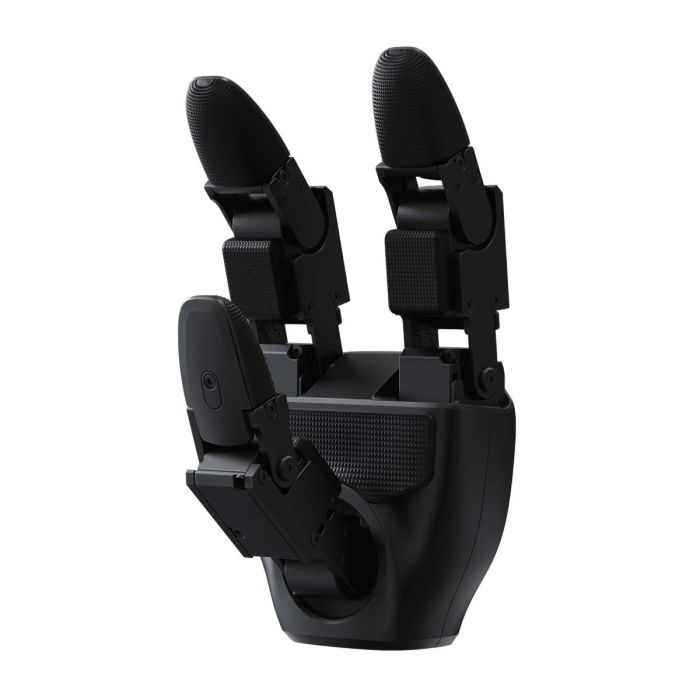
Cameras tell a robot where an object is; only touch tells it how that object behaves once the fingers close. The Unitree G1 Dex3-1 Force Control Three Finger Dexterity Hand exists for that second half of the job. It gives the G1 humanoid robot a hand that feels, adjusts and lets go, instead of one that simply closes on a target it has seen.
The product is available through this page, by quotation.
Background
Unitree and the road to the dexterous hand
Unitree Robotics is known for legged and humanoid platforms, and the G1 humanoid robot is one of the machines at the center of that range. A humanoid body can walk, turn and reach, but those abilities only become useful work when the end of the arm can do something. For that reason, hands have become a product line of their own, and the Dex3-1 is the hand made to be used with the G1 humanoid robot to perform various complex actions.
Buyers in research labs, universities and integration shops often treat the hand as a separate decision from the robot. That is sensible. The body sets the reach and balance, while the hand sets what the robot can actually pick up, hold and place. You can browse the wider family in the Hands category, and accessories that go with the humanoid platforms are gathered under Humanoid Accessories.
Three fingers, seven motions, and a sense of touch
The Dex3-1 is a three-finger dexterous hand with 7 degrees of freedom. Six of its micro brushless force control joints are direct drives, and one is a micro brushless force control joint with a gear drive. Each hand carries 33 tactile sensors, so the control software receives a continuous picture of where and how hard the fingers are touching an object.
The hand works with force and position hybrid control. In plain terms, the controller can command where a finger should be and how much force it should apply, and it can blend the two. That matters for objects that are soft, light or irregular, where position alone either misses the object or crushes it. A rotor absolute value encoder is fitted for joint feedback.
Technical Specifications
| Specification | Value |
|---|---|
| Version | Dex3-1 |
| Type | Three-finger dexterous hand |
| Degrees of freedom | 7 |
| Joint drive | 6 micro brushless force control joint direct drives, 1 micro brushless force control joint gear drive |
| Transmission mechanism | 6 Motors Drive Directly, 1 Motor Drive with Gears |
| Tactile sensors | 33 per hand |
| Number of pressure sensors | 9 (Total of 33 Pressure Sensors) |
| Range of perception | 10g-2500g |
| Control method | Force and position hybrid control |
| Joint encoder | Rotor Absolute Value Encoder |
| Size | 175mm x 88mm x 77mm |
| Working temperature range | -20℃ ~ 60℃ |
| Works with | G1 humanoid robot |
Specifications as published by the manufacturer; confirmed against the datasheet at quotation.
The manufacturer has not published the grip force, the finger speed, the IP rating or the box contents; they are confirmed at quotation.
What makes the Dex3-1 different from a simple gripper?
A simple gripper opens and closes. It is excellent for one part shape on one production line, and it asks very little of the control system. A dexterous hand answers a different question: what happens when the object changes, when it sits at an odd angle, or when it must be held without being damaged?
The Dex3-1 approaches that question with three fingers and 7 degrees of freedom, which allows the fingers to take different poses instead of repeating one pinch. The 33 tactile sensors add information that a gripper normally lacks. The range of perception is 10g-2500g, so the hand registers contact across a span from very light touches to heavier loads.
The drive design is also worth noting. Six joints are driven directly by micro brushless force control motors, and one uses a gear drive. Direct drive suits force control because the motor and joint are tightly coupled, so the force the controller commands is close to the force the finger delivers. With force and position hybrid control on top, the hand can be programmed to hold a position or to hold a force, depending on the task.
How does the Dex3-1 fit with the G1 humanoid robot?
The hand is made for the G1 humanoid robot. That makes the pairing a natural one for teams that already own, or plan to buy, the G1 and want to move from walking and waving to handling objects.
The size is 175mm x 88mm x 77mm, a figure to check against your mounting and workspace plans. The working temperature range is -20℃ ~ 60℃, which covers typical indoor lab and workshop conditions as well as cooler or warmer rooms. Buyers planning dusty, wet or outdoor work should ask about the IP rating when requesting a quotation.
Teams that want to compare a similar listing can also look at the Unitree G1 Dex3-1 Force-Controlled 3-Finger Tactile Dexterous Hand page, and those who want a different approach to the G1 hand can review the Unitree G1 Third-Party Dexterity (One-Handed) listing.
Who is the Dex3-1 for?
The first group is university and institute labs working on manipulation, tactile sensing and learning from touch. A hand with 33 tactile sensors and force control joints gives researchers real contact data to work with, rather than only camera images.
The second group is robotics educators. A three-finger hand is easier to understand and to program than a hand with many more joints, so it makes a clear teaching platform for grasping, force control and sensor feedback on a humanoid.
The third group is system integrators and development teams building demonstrations or pilot applications on the G1 humanoid robot. They need a hand that can do more than a binary grip and that comes with clear dimensions for planning the build.
If your work calls for a hand with many more degrees of freedom, look at the Unitree Dex5-S Pro 22-DOF Tactile Dexterous Hand. The Dex3-1 suits those who value a simpler three-finger design with a clear tactile layout.
What is the Dex3-1 used for?
- Tactile manipulation research: collecting contact data from 33 tactile sensors while the hand handles different objects.
- Force-controlled grasping: using force and position hybrid control to hold items firmly without squeezing them too hard.
- Humanoid task development: giving the G1 humanoid robot a hand for complex actions beyond walking and gesturing.
- Teaching and training: showing students how drive type, encoder feedback and touch sensing work together in a robotic hand.
- Light and delicate object handling: exploring tasks near the lower end of the 10g-2500g perception range.
- Integration trials: testing whether a three-finger hand meets the needs of a pilot application before a wider rollout.
Pricing and Availability
Pricing is provided by quotation. Send us your requirements and the G1 configuration you work with, and we will respond with a quotation tailored to your project. Delivery, customs and support are arranged together with the quotation, so you know the whole picture before you commit. The Unitree G1 Dex3-1 Force Control Three Finger Dexterity Hand is available on this page.
Frequently Asked Questions
How many degrees of freedom does the Dex3-1 have?
The Dex3-1 has 7 degrees of freedom. Six joints are micro brushless force control direct drives and one is a micro brushless force control gear drive.
How many tactile sensors does the hand carry?
One hand carries 33 tactile sensors. The specification also lists 9 as the number of pressure sensors, given as a total of 33 pressure sensors.
Which robot does it work with?
It is made to be used with the G1 humanoid robot to perform various complex actions.
What range of touch can the hand perceive?
The range of perception is 10g-2500g.
What are the dimensions and working temperature?
The size is 175mm x 88mm x 77mm, and the working temperature range is -20℃ ~ 60℃.
What about grip force, finger speed and IP rating?
Those figures are not on this page. Ask for them, together with the box contents, when you request a quotation.
Where can I buy the Dex3-1 and what does it cost?
You can request it through this page. The cost is given by quotation, after we review your configuration and delivery needs.
Summary
Vision shows a robot the object, but touch decides whether the grasp succeeds. The Unitree G1 Dex3-1 Force Control Three Finger Dexterity Hand puts that sense of touch on the G1 humanoid robot with 7 degrees of freedom, 33 tactile sensors, direct-drive force control joints and force and position hybrid control. The size, temperature range and perception range give you solid figures to plan with. For research, teaching and integration work on the G1, this page is the starting point.
Specifications
General
What's included
Related Products
Out of stock


