
Paxini GMH18 Robot Hand
In stock
- BRAND:
- PAXINI
- PART #:
- GMH18
- ORIGIN:
- China
- AVAILABILITY:
- SUBJECT TO AVAILABILITY
- SKU:
- Paxini-GMH18
Paxini GMH18 Robot Hand
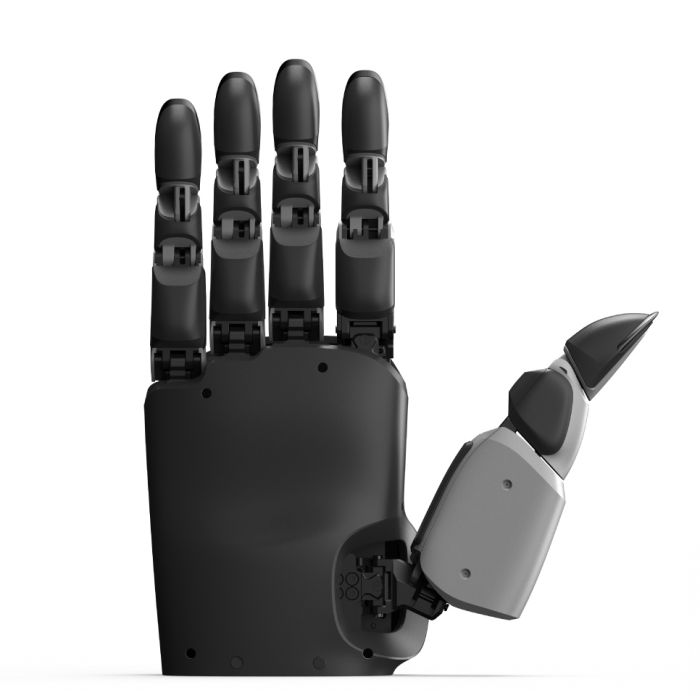
Most robot hands can squeeze, but few can feel what they are squeezing. The Paxini GMH18 Robot Hand is built on the opposite idea: that a robot works better when its fingers, palm and even fingernails report back on pressure, force and slip. It is an 18-DOF robotic hand with multi-dimensional tactile sensing, and it is offered for robots that must handle real objects, not only tidy test blocks.
The product is available through this page, by quotation.
Background
PaXini and its tactile focus
The GMH18 comes from PaXini (PaXini Tech), a robotics manufacturer based in China. The maker describes the hand as an 18-DoF tactile robotic hand offering adaptive grasping, full-coverage sensor feedback and high payload capacity for versatile humanoid and industrial robots.
That description tells you where the design starts. The hand is not a plain gripper with a few sensors added later. Sensing is part of its identity, and the same maker also offers other hands and humanoid platforms that you can compare on this store, such as the Paxini DexH13 Dexterous Robot Hand and the Paxini Dexh5. You can also browse the full PaXini category.
Positioning and key technology
The GMH18 blends a human-like hand form with adaptive, sensor-rich fingertips. Its motion comes from a hollow-cup motor with a multi-link drive. The hand connects via common industrial protocols and features modular expansion options, including optional palm or back-of-hand cameras.
Its payload capacity is 20 kg. That figure supports both delicate tasks and heavier object handling, which makes the hand a flexible choice for industrial, service or research robots.
Technical Specifications
| Specification | Value |
|---|---|
| Product type | Robotic hand with multi-dimensional tactile sensing |
| Degrees of freedom | 18-DOF |
| Payload capacity | 20 kg |
| Tactile sensing | Pressure, force and slip across the palm, fingertips and fingernails |
| Motor technology | Hollow-cup motor + multi-link drive |
| Connectivity | Common industrial protocols |
| Expansion | Optional palm or back-of-hand cameras |
| Design | Human-like hand form with adaptive, sensor-rich fingertips |
| Manufacturer | PaXini (PaXini Tech), China |
Specifications as published by the manufacturer; confirmed against the datasheet at quotation.
The manufacturer has not published the dimensions, the exact weight, the power supply voltage, the communication interface model, the fingertip force, the operating temperature, the IP rating, the package contents, the software and SDK support or the number of tactile sensing units; they are confirmed at quotation.
What makes the GMH18 different from a standard gripper?
A standard gripper opens and closes, and the controller assumes the object is where it should be. The GMH18 gives the robot information. It senses pressure, force and slip across the palm, fingertips and even fingernails, so the robot receives refined feedback and can interact more naturally with the world.
The second difference is range. With 18-DOF and a human-like form, the hand lets robots pick up, hold and manipulate items that vary in shape, size or material. Together with a 20 kg payload capacity, it covers both fine work and heavier handling in one tool.
Can the GMH18 be adapted to different robot setups?
Yes. The hand connects via common industrial protocols, which helps when it must join an existing control system. Modular expansion options include optional palm or back-of-hand cameras, so vision can sit right at the point of contact.
Send your integration requirements with your quotation request, and they will be addressed there.
Who is the GMH18 for?
Integrators building humanoid or industrial robots will find a hand that pairs stability with human-level sensitivity. Service robot developers can use the tactile feedback for objects that must not be dropped or crushed. Research teams gain a sensor-rich platform for studying manipulation.
If your project is smaller in scope, you may also look at the Paxini DexH13 Dexterous Robot Hand or the Paxini Dexh5. Teams that want a complete robot rather than a hand can review the Paxini TORA ONE Multi-Dimensional Tactile Wheeled Humanoid Robot.
What is the GMH18 used for?
- Logistics handling: picking and holding items of different shapes, sizes and materials.
- Assembly work: placing and manipulating parts where feel matters.
- Tactile-intensive tasks: jobs that need feedback on pressure, force and slip.
- Humanoid robots: serving as a human-like hand for versatile platforms.
- Service robots: handling everyday objects with adaptive grasping.
- Research: studying dexterous manipulation with rich tactile data.
Pricing and Availability
We do not print prices on this page. Quotation is the way to proceed: send us your requirements and we will respond with an offer. Delivery, customs and support are arranged with the quotation. The Paxini GMH18 Robot Hand is available on this page.
Frequently Asked Questions
How many degrees of freedom does the GMH18 have?
The GMH18 is an 18-DOF robotic hand.
What is the payload capacity?
The payload capacity is 20 kg.
What can its tactile sensors detect?
They sense pressure, force and slip across the palm, fingertips and even fingernails.
Can a camera be added?
Yes. Optional palm or back-of-hand cameras are available as modular expansion options.
How does it connect to a robot?
It connects via common industrial protocols.
Who makes the GMH18?
The GMH18 is made by PaXini (PaXini Tech), a robotics manufacturer in China.
Where can I buy the GMH18 and what does it cost?
You can request it through this page, by quotation. The cost depends on your requirements and is given in the quotation.
Summary
The GMH18 is a hand that feels as well as grips. Its 18-DOF design, tactile sensing across palm, fingertips and fingernails, hollow-cup motor with multi-link drive and 20 kg payload capacity suit industrial, service and research robots. For a quotation on the Paxini GMH18 Robot Hand, this page is the starting point.


