
Linkerbot Linker Hand L20 Pro Version
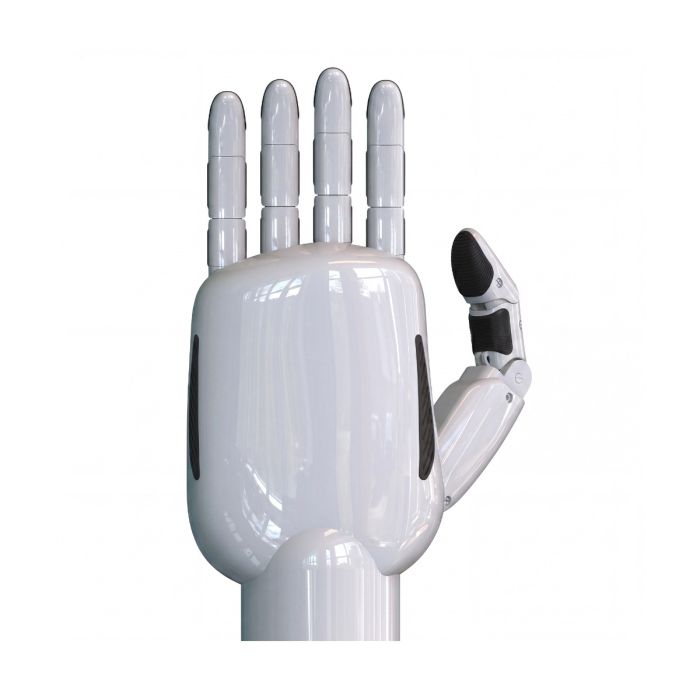
In stock
- BRAND:
- LINKERBOT
- PART #:
- Linker Hand L20
- ORIGIN:
- China
- AVAILABILITY:
- SUBJECT TO AVAILABILITY
- SKU:
- Linkerbot-Linker-Hand-L20
Linkerbot Linker Hand L20 Pro Version
A robot hand has two jobs that pull against each other: it must be gentle enough to pinch a small part and strong enough to hold a heavy one. The Linkerbot Linker Hand L20 Pro Version is built around that tension. The manufacturer's current page lists a 20kg maximum load and a 100N five-finger grip force, together with sixteen active joints for fine finger movement.
The product is available through this page, by quotation.
Background
Linkerbot and the Linker Hand line
Linkerbot (灵心巧手) is a robotics company founded in 2023. It builds dexterous hands, the end-effectors that let a robot arm or a humanoid body handle objects the way a person does. The Linker Hand range covers several designs, and every Linkerbot product is grouped on the Linkerbot page.
The sources name several entries for this model: the Linker Hand L20 on the manufacturer's current page, the Linker Hand L20 in an older product manual and at resellers, the Linker Hand L20 Lite, and the Linker Hand L20 Pro Version, which is the name a reseller uses. This article keeps each figure with the source it comes from.
Positioning and key technology
The L20 is a multi-fingered hand with 16 active degrees of freedom and 5 passive degrees of freedom. Its drive is an in-house joint module developed by the manufacturer. Control runs over CAN or RS485, two interfaces that robotics integrators already know from motor drives and arm controllers.
The manufacturer names its target fields as education and research, industrial automation, household assistance, and health and elder care. That is a broad list, and it fits a hand designed to be a general-purpose end-effector rather than a single-task tool. Browse the wider Robot Hands category to compare it with other designs.
Technical Specifications
| Specification | Linker Hand L20 (manufacturer's current page) | Linker Hand L20 (older product manual) |
|---|---|---|
| Degrees of freedom | 16 active + 5 passive | Not stated |
| Control interface | CAN/RS485 | Not stated |
| Weight | ≈1200g | 1100g (left hand) |
| Maximum load | 20kg | Not stated |
| Operating voltage | DC 24V—48V | Not stated |
| Static current | 0.3A | Not stated |
| Maximum current | 1.8A | Not stated |
| Maximum grip force (five fingers) | 100N | Not stated |
| Maximum thumb fingertip force | 15N | Not stated |
| Maximum four-finger fingertip force | 20N | Not stated |
| Four-finger bending angle | 1.22rad (69.9°) | Not stated |
| Drive | In-house joint module | Not stated |
| Tactile sensor | Not stated | Piezoresistive array 6*12; capacitive sensor optional |
Specifications as published by the manufacturer; confirmed against the datasheet at quotation.
The manufacturer has not published the IP rating, the operating temperature or the contents of the box; they are confirmed at quotation.
What makes the L20 Pro Version different from a simple gripper?
A two-finger or three-finger gripper opens and closes. It does the job well when every part is the same shape and arrives in the same place. The L20 is a different kind of tool. It has five fingers with 16 active joints, so the controller can shape the hand to the object instead of forcing the object to suit the hand.
The force figures show how the hand is meant to work. The thumb fingertip force is 15N and the four-finger fingertip force is 20N. These are the numbers that matter when a fingertip has to press a button, hold a card or pinch a small component. The five-finger grip force is 100N, which is the number that matters when the whole hand closes around a tool or a container. The maximum load is 20kg.
The four fingers bend through 1.22rad (69.9°). Together with the five passive degrees of freedom, that gives the hand room to wrap around rounded shapes. Where a gripper needs a change of jaws for every new part, one hand can be commanded into many grasps by software.
The older product manual also lists a piezoresistive tactile array of 6*12, with a capacitive sensor as an option. Touch feedback is what lets a controller know that a grasp has closed and how firmly. If tactile sensing matters for your project, ask us which sensor configuration comes with the unit you order, since the current manufacturer page does not list one.
What do the 16 active and 5 passive degrees of freedom mean in practice?
An active degree of freedom is a joint that a motor moves on command. A passive degree of freedom follows the movement of the others, so the finger can adapt its shape without a motor of its own. The L20 combines both: 16 active and 5 passive.
For the buyer the result is a balance between control and complexity. Every active joint is a motion you can program, record or teach by demonstration. Every passive joint is one fewer thing to command. Teams working on teleoperation, imitation learning or embodied AI usually want many active joints, because they need rich hand movements to record and replay. Teams working on a fixed industrial task may prefer fewer commands and more repeatability.
The drive is the manufacturer's own joint module. Because the maker designs it, the hand is supported as one system rather than as a set of bought-in parts, which is useful when you need a single point of contact for technical questions.
Power is straightforward. The operating voltage is DC 24V—48V, the static current is 0.3A and the maximum current is 1.8A. A 24V to 48V supply is common on mobile robots and arm cells, so many projects will not need a special power stage.
Who is the Linkerbot Linker Hand L20 Pro Version for?
Universities and research institutes are the first group. The manufacturer names education and research as a field, and a hand with this many active joints gives students and researchers real material for work on grasping, manipulation and learning from demonstration.
Industrial automation teams are the second. A hand that carries 20kg and closes with 100N can be tested on parts handling, assembly and tool use, especially where the parts vary in shape.
Developers of service and care robots are the third. The manufacturer lists household assistance and health and elder care among its fields. A hand that can adapt its grasp is of interest where the objects are cups, bottles, doors and everyday items rather than standard workpieces.
If your project needs a lighter or simpler hand, look at the Linkerbot Linker Hand L10 Standard Version. If you want to compare a different driving principle, the Linkerbot Linker Hand L30 Cable Driven Version is the page to open. Ask us for a comparison and we will help you choose.
What is the Linkerbot Linker Hand L20 Pro Version used for?
- Research on dexterous manipulation. Sixteen active joints give laboratories a platform for grasp planning and in-hand movement studies.
- Teaching robotics. Education is a field the manufacturer names, and a five-finger hand lets students see anatomy and control in one device.
- Industrial handling. The 20kg maximum load and 100N grip force suit trials with parts of mixed shape.
- Household assistance. Adaptive fingers are suited to the everyday objects found in a home.
- Health and elder care. The manufacturer lists care among its fields, where a hand has to work near people.
- Humanoid and arm end-effector. The CAN/RS485 interface and DC 24V—48V supply let the hand be fitted to an arm or a humanoid platform.
Pricing and Availability
We do not print prices on this page. Please request a quotation and tell us your application, your quantity and your controller. Delivery, customs and support are arranged together with the quotation, so that you see the full picture before you decide. The Linkerbot Linker Hand L20 Pro Version is available on this page.
Frequently Asked Questions
How many degrees of freedom does the L20 have?
The manufacturer's current page lists 16 active degrees of freedom plus 5 passive degrees of freedom.
How is the hand controlled?
The control interface is CAN/RS485. Your integrator can connect it to an arm controller or a computer through a suitable adapter.
What power supply does it need?
The operating voltage is DC 24V—48V. The static current is 0.3A and the maximum current is 1.8A.
How much can it carry and how hard can it grip?
The maximum load is 20kg and the maximum five-finger grip force is 100N. The thumb fingertip force reaches 15N and the four-finger fingertip force reaches 20N.
Does it have tactile sensing?
The older product manual lists a piezoresistive array of 6*12, with a capacitive sensor as an option. The current manufacturer page does not list a sensor, so please ask us about the configuration when you request a quotation.
Is an IP rating or operating temperature available?
Neither figure is given in the sources we hold, and the same goes for the contents of the box. Raise them when you request a quotation.
Where can I buy the Linkerbot Linker Hand L20 Pro Version and what does it cost?
You can buy it through this page by requesting a quotation. We do not list a price here; the cost depends on the configuration, the quantity and the delivery destination, and it is given in the quotation.
Summary
The Linkerbot Linker Hand L20 Pro Version answers the old tension between strength and finesse with sixteen active joints, five passive joints and a 20kg maximum load. It speaks CAN/RS485, runs on DC 24V—48V and is made for research, industry, home assistance and care. If you want to put a dexterous hand on your robot, this page is the starting point.


