
Linkerbot Linker Hand L10 Standard Version
In stock
- BRAND:
- LINKERBOT
- PART #:
- Linker Hand L10
- ORIGIN:
- China
- AVAILABILITY:
- SUBJECT TO AVAILABILITY
- SKU:
- Linkerbot-Linker-Hand-L10
Linkerbot Linker Hand L10 Standard Version
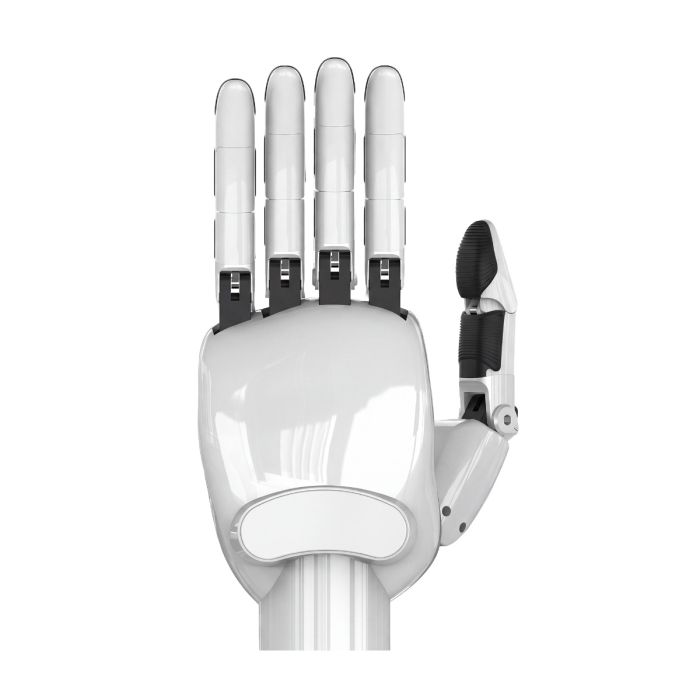
Most of what a robot arm can do is decided in the last few inches, where the machine finally meets the object. The Linkerbot Linker Hand L10 Standard Version is built for that meeting point. It is a multi-jointed dexterous hand that gives an arm fingers instead of a simple pinch, so a research cell or an automation line can work with real grasps.
The product is available through this page, by quotation.
Background
The company and its lineage
Linkerbot builds dexterous robot hands, and the Linker Hand name covers a family of them. The family runs from compact models to larger, more articulated designs, and each member aims at a different balance of finger count, drive method and intended duty. The L10 sits in the middle of that range. It is a hand for teams that need real finger articulation but also want a unit that can be mounted, powered and commanded without a long development effort.
The related Linker Hand L10B is made by Linkerbot Beijing Technology co., Ltd. If you are comparing models, the Linkerbot brand page shows the rest of the range, and the Robot Hands category places the L10 beside other end effectors of its kind.
Positioning and key technology
The L10 offers 10 degrees of freedom and 20 joints, of which 10 are active and 10 are passive. The active joints are driven by the motors. The passive joints follow along, so the fingers can curl around an object without a separate actuator for every joint. This is how a hand can produce a natural-looking grasp with a manageable number of drive channels.
Motion is transmitted through a worm gear. The control interface is CAN/RS485, the two serial buses that robot integrators already know well. The hand offers position control, speed control and haptic feedback (force control) through fingertip sensors, and its firmware can be upgraded online.
Technical Specifications
| Specification | Value |
|---|---|
| Degrees of freedom | 10 |
| Number of joints | 20 (10 active + 10 passive) |
| Transmission mode | Worm gear transmission |
| Control interface | CAN/RS485 |
| Weight | 800g |
| Maximum load | 25kg |
| Operating voltage | DC24V+/-10% |
| Maximum current | 3A |
| Repeat positioning accuracy | < +/-0.2mm |
| Opening/closing time | 1.2s |
| Maximum five-finger grasping force | 80N |
| Maximum thumb fingertip force | 15N |
Specifications as published by the manufacturer; confirmed against the datasheet at quotation.
The manufacturer has not published the dimensions, the IP rating, the operating temperature or the service life of the hand; they are confirmed at quotation.
What makes the Linker Hand L10 different from a two-finger gripper?
A two-finger gripper opens and closes along one axis. It is fast to program and hard to beat for parts that always arrive in the same orientation. Its limit is shape. Anything that needs to be wrapped, cradled, pinched with a thumb or turned in the palm is awkward for it.
The L10 has 10 degrees of freedom spread across a thumb and fingers, so it can adopt many grasp shapes. Its maximum five-finger grasping force is 80N, and its maximum thumb fingertip force is 15N. The maximum load is 25kg. Together these figures describe a hand that can hold with all its fingers at once and also apply a smaller, more controlled force with the thumb.
Precision matters as well. Repeat positioning accuracy is below +/-0.2mm, which counts when the same grasp must be reproduced hundreds of times in a test routine. The opening/closing time of 1.2s is a figure to weigh against your cycle requirements.
The hand weighs 800g. For an arm, that is the part of the payload that must be carried before any object is lifted, so a light hand leaves more of the arm's capacity for the work itself.
How does the L10 connect to arms and software?
The L10 works with robotic arms from UR, Franka, XArm, RealMan and AgileX, and with the simulators Pybullet, Isaac and MuJoCo. That combination suits teams that train or test a grasp in simulation first and then move to hardware.
Power is supplied at DC24V+/-10%, with a maximum current of 3A. The box includes a power adapter, a power cable, a USB-to-CAN debugging cable and an XT30 (2+2) connector cable, so the first bench connection does not depend on sourcing small parts. The hand itself is included, one unit.
Online firmware upgrade keeps the hand current once it is installed. The fingertip sensors support haptic feedback in force control mode, which lets a program react to contact instead of simply closing to a fixed position.
Who is the Linker Hand L10 for?
University and corporate research labs are the clearest fit. They need an articulated hand with simulator support and a standard bus, and they need to move from simulation to a real arm without redesigning anything.
Integrators building demonstration cells or pilot lines will find the control modes and the included cables useful. The hand can be commissioned on the bench and then fitted to a supported arm.
Teams working on humanoid or mobile manipulation platforms care about weight first, and 800g is the figure to check against their wrist or arm limits.
If your task calls for more articulation than ten degrees of freedom, look at the Linkerbot Linker Hand L20 Pro Version. If a cable-driven design is what you want, see the Linkerbot Linker Hand L30 Cable Driven Version. For rugged, repetitive work, the Linkerbot Linker Hand J42 Industrial Grade 6 Finger Claw is a different type of tool and may suit better.
What is the Linker Hand L10 used for?
- Dexterous grasping research. Studying how multi-finger hands pick up objects of different shapes, in simulation and on a real arm.
- Teleoperation and demonstration. Recording human hand motions and replaying them on a robot hand to build training data.
- Contact-aware handling. Using fingertip haptic feedback in force control to adjust grip when an object shifts.
- Laboratory automation. Picking up and placing varied containers and tools where a plain gripper struggles.
- Humanoid and mobile manipulation. Giving a humanoid or a wheeled manipulator an articulated hand for everyday objects.
- Teaching and training. Showing students how worm gear drives, passive joints and CAN or RS485 control work in one compact unit.
Pricing and Availability
This page lists no prices. Quotation is the way to buy: send your request and the details of your arm and application, and you will receive an offer. Delivery, customs and support are arranged with the quotation, so you see the full picture before you commit. The Linkerbot Linker Hand L10 Standard Version is available on this page.
Frequently Asked Questions
How many joints does the Linker Hand L10 have?
It has 20 joints, made up of 10 active joints and 10 passive joints. The hand offers 10 degrees of freedom.
Which interfaces does it use?
The control interface is CAN/RS485. A USB-to-CAN debugging cable is included in the box.
What power supply does it need?
The operating voltage is DC24V+/-10%, with a maximum current of 3A. A power adapter and a power cable are included.
Which robot arms and simulators does it work with?
It works with UR, Franka, XArm, RealMan and AgileX arms. The simulators are Pybullet, Isaac and MuJoCo.
What control modes are available?
Position control, speed control and haptic feedback (force control) via fingertip sensors are available. Online firmware upgrade is included as well.
Where can I find the IP rating?
Ask for it with your quotation request, together with the dimensions and operating temperature.
Where can I buy the Linkerbot Linker Hand L10 Standard Version and what does it cost?
You can buy it through this page by requesting a quotation. The cost is given in the quotation, together with delivery, customs and support arrangements.
Summary
The last few inches of a robot arm decide whether a task succeeds, and the Linkerbot Linker Hand L10 Standard Version puts a capable hand there. It has 10 degrees of freedom, 20 joints, a worm gear drive, CAN/RS485 control and an 800g weight. It also works with several popular arms and simulators. If this hand fits your arm and your task, this page is the starting point.


