
LimX Tron 2 Multi-Form Embodied Robot
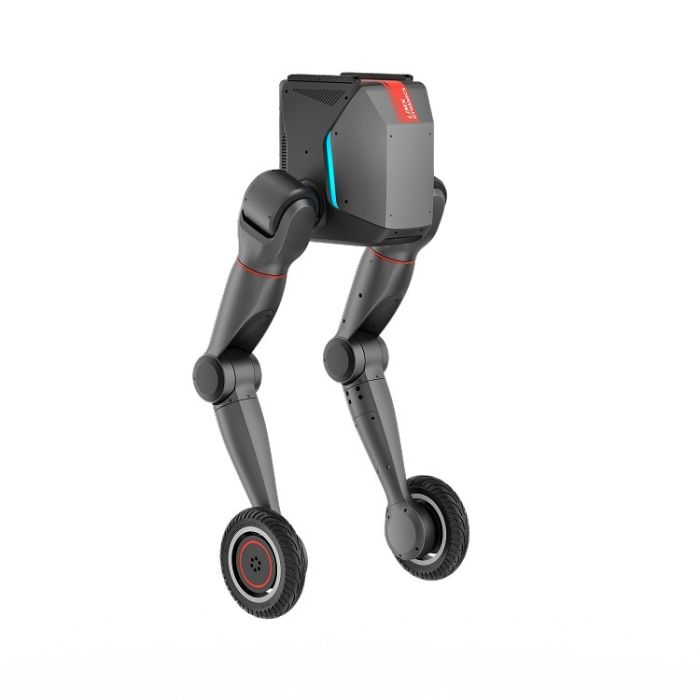
In stock
- BRAND:
- LIMX
- MODEL:
- TRON 2
- ORIGIN:
- China
- AVAILABILITY:
- SUBJECT TO AVAILABILITY
- SKU:
- LimX-Tron-2
LimX Tron 2 Multi-Form Embodied Robot
Most robots have to settle early on how they will travel: on legs, on wheels, or not at all. The LimX Tron 2 Multi-Form Embodied Robot was built so that this choice stays open. It is one body that carries two dexterous arms and can move on its soles or on wheels, so a team can match the robot to the task instead of the task to the robot.
The LimX Tron 2 Multi-Form Embodied Robot is available through this page, by quotation.
Background
LimX Dynamics and the Tron line
LIMX is a robotics developer whose range runs from full-size humanoids to smaller research platforms. Within that family, the Tron products are the multi-modal machines aimed at development work. The Tron 2 follows the earlier biped models and adds a pair of manipulator arms to the idea of a robot that adapts its way of moving. If you already know the family, you can browse the whole LimX category to see where it sits.
The earlier machines in the line focus on walking and balance. The Tron 2 widens the scope to manipulation, so the same research group can study locomotion, grasping and whole-body coordination on one hardware base instead of buying separate systems for each topic.
One body, three configurations
The Tron 2 is a multi-modal embodied robot with one body and three configurations. It combines high-performance dual manipulator arms with all-terrain bipedal mobility. It serves as an all-scenario, all-terrain integrated development platform for VLA research, mobile manipulation and full-body motion control.
In practice this means the robot is a platform, not a finished appliance. Its value lies in the software and research you build on it. It works with Python and C++ development environments and supports ROS1 and ROS2 systems, so teams can bring tools they already use. The body is made of aluminum alloy and plastic.
Technical Specifications
| Specification | Value |
|---|---|
| Product type | Multi-modal embodied robot, one body, three configurations |
| Material | Aluminum alloy, plastic |
| Degrees of freedom (single arm) | 7 DoF |
| Degrees of freedom (single leg) | 5 DoF |
| Active vision head | 2 DoF |
| Arm reach | 70cm |
| Maximum end effector load | 5kg per arm (3kg extended) |
| Maximum end effector speed | 5 m/s |
| Repeat positioning accuracy | ± 0.5mm |
| Teleoperation delay | 100ms |
| Maximum movement speed | Sole: 2-3 m/s, Wheeled: 3-5 m/s |
| Maximum climbing slope | Sole: 15°, Wheeled: 30° |
| Maximum step height | 20cm |
| Maximum load capacity | 30kg (flat ground), 20kg (stair climbing) |
| Battery | Ternary lithium battery, 9Ah |
| Battery output voltage | 46.8V |
| Maximum battery power | 2,800W |
| Charging time | 30min (20-80%), 54min (20-100%) |
| Software compatibility | Python, C++; ROS1/ROS2 |
Specifications as published by the manufacturer; confirmed against the datasheet at quotation.
The manufacturer has not published the robot weight, the dimensions, the ingress protection rating, the operating runtime per charge, the operating temperature range or the wireless connectivity; they are confirmed at quotation.
What makes the Tron 2 different from a conventional mobile manipulator?
A conventional mobile manipulator usually pairs a wheeled base with one arm, and it is at its best on smooth floors. The Tron 2 starts from a different place. Its legs have 5 DoF each, and it can travel on its soles or on wheels. On soles it handles slopes up to 15° and steps up to 20cm. In the wheeled mode the climbing slope rises to 30° and the movement speed to 3-5 m/s, against 2-3 m/s on soles.
That gives a research team a real trade-off to study. Wheels are faster and climb steeper slopes, while legs deal with steps. Because both belong to the same robot, experiments can compare them without changing the hardware or the control software.
The arms are the second difference. Each has 7 DoF and a 70cm reach, carries up to 5kg (3kg when extended) and moves its end effector at up to 5 m/s with a repeat positioning accuracy of ± 0.5mm. A 2 DoF active vision head lets the robot look where it works. Together these figures describe a platform that can reach, grasp and reposition itself in a single task, which is what mobile manipulation research needs.
How does the Tron 2 suit teleoperation and VLA research?
Embodied AI work depends on data, and much of that data comes from a person guiding the robot. The Tron 2 has a teleoperation delay of 100ms, which matters when an operator has to demonstrate a task and the recording must match what the operator intended. Together with the 7 DoF arms and the head camera movement, this supports collecting demonstrations for vision-language-action models.
On the software side, support for Python and C++ and for ROS1 and ROS2 means the robot slots into the toolchains that most laboratories already run. A group does not need to learn a closed environment before the first experiment. It can write its own controllers, test whole-body motion strategies, and compare results between locomotion modes.
The power system suits long sessions of stop-and-start work. The battery is a ternary lithium unit of 9Ah with a 46.8V output and a maximum power of 2,800W. Charging takes 30min from 20 to 80%, or 54min from 20 to 100%. Teams planning long unattended runs should raise their runtime needs when they request a quotation.
Who is the LimX Tron 2 for?
The first group is university and corporate research laboratories working on mobile manipulation, whole-body control or VLA models. They need a single body that can walk, roll and handle objects, with open software interfaces. The Tron 2 is aimed squarely at them.
The second group is engineering schools that want students to work with a real embodied platform. The Tron 2 comes in a Standard and an EDU version, so teaching programs should mention their needs when they ask.
The third group is teams that care about locomotion more than manipulation. If your work is about walking and balance alone, the LimX Tron 1 Education Edition Multi-Modal Biped Robot or the LimX Tron 1 Standard Edition Multi-Modal Biped Robot may fit better, since they do not carry the dual arms. Groups that need a full-size humanoid should look at the LimX Oli EDU Full-Size General Purpose Open Source Humanoid Robot.
What is the LimX Tron 2 used for?
- VLA research. Train and test vision-language-action models on a robot that sees, reaches and moves.
- Mobile manipulation. Combine travel and object handling in a single task, using the 70cm arm reach and the 5kg per arm end effector load.
- Full-body motion control. Develop and compare controllers for legs, arms and head working together.
- Teleoperated data collection. Record operator demonstrations with a teleoperation delay of 100ms.
- Locomotion studies. Compare sole and wheeled travel over slopes up to 15° and 30° and steps up to 20cm.
- Teaching and prototyping. Give students and engineers a platform that works with Python, C++, ROS1 and ROS2.
Pricing and Availability
Prices for the Tron 2 are given by quotation only. Please send a request and tell us which version, Standard or EDU, and which application you have in mind. Delivery, customs and support are arranged together with the quotation, so you see the whole picture before you decide. The LimX Tron 2 Multi-Form Embodied Robot is available on this page.
Frequently Asked Questions
What does multi-form mean for the Tron 2?
It is one body with three configurations. It combines dual manipulator arms with all-terrain bipedal mobility, and it can travel on soles or on wheels.
How many degrees of freedom does the robot have?
Each arm has 7 DoF, each leg has 5 DoF and the active vision head has 2 DoF.
How much can the arms carry?
The maximum end effector load is 5kg per arm, or 3kg when the arm is extended. The robot as a whole can carry 30kg on flat ground and 20kg when climbing stairs.
Which software does it work with?
It is compatible with Python and C++ development environments and supports ROS1 and ROS2 systems.
How fast does it charge?
The 9Ah battery charges from 20 to 80% in 30min and from 20 to 100% in 54min.
How fast can it move?
On soles the maximum movement speed is 2-3 m/s, and in wheeled mode it is 3-5 m/s.
Where can I buy the LimX Tron 2 and what does it cost?
You can buy it through this page, by quotation. No price is listed here; send a request and we will respond with a quotation that covers delivery, customs and support.
Summary
The Tron 2 answers the old question of legs or wheels by not forcing a choice. Its 7 DoF arms with a 70cm reach, its 5 DoF legs, its sole and wheeled modes and its open software support give research teams one body for locomotion, manipulation and teleoperation. If this is the robot you want to work with, this page is the starting point.


