
BMR Intelligent Construction Hoist
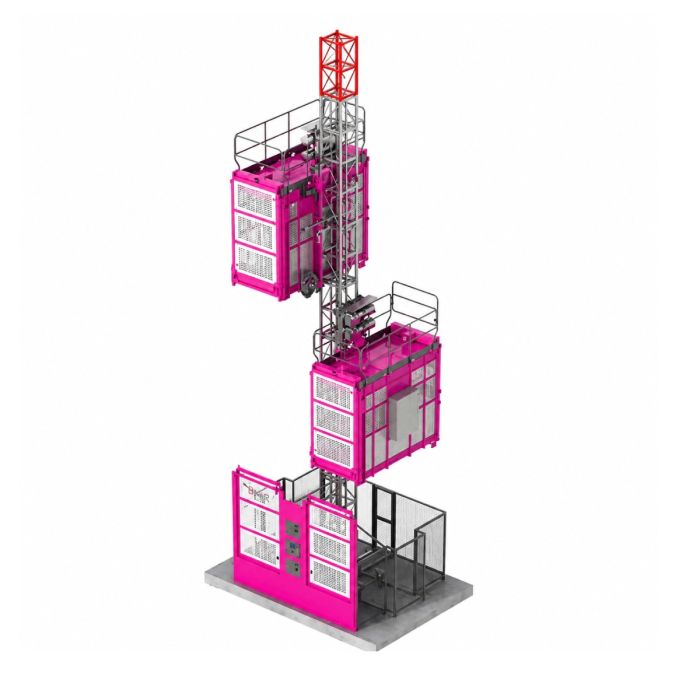
In stock
- BRAND:
- BMR
- MODEL:
- SC200/200ZA
- ORIGIN:
- China
- Warranty:
- 12 MONTHS
- AVAILABILITY:
- SUBJECT TO AVAILABILITY
- SKU:
- BMR-Intelligent-Construction-Hoist
BMR Intelligent Construction Hoist
A high-rise site is a building that has no working elevator yet, and that single gap decides how fast everything else can move. The BMR Intelligent Construction Hoist is made for that gap: a twin-cage hoist that answers floor calls, opens its own landing doors and can carry construction robots between floors without anyone walking them in.
The product is available through this page, by quotation.
Background
The company behind the hoist
The hoist comes from Shenzhen BrightMaster Robotics Co., Ltd., a high-tech enterprise in the intelligent construction sector. The manufacturer describes its work as full-stack independent R&D of construction robots, large-scale on-site deployment and full-lifecycle construction services. That background matters for a hoist. A company that puts robots to work on active sites learns quickly where those robots get stuck, and the vertical trip between floors is one of the first places.
You can read more about the brand on the BrightMaster page, and the machines that work on the floors themselves are grouped under Construction Robots.
Where the hoist fits in a smart site
A conventional construction hoist moves people and materials, and someone has to run it. The BMR Intelligent Construction Hoist is built for smart building system projects. It is equipped with automatic landing doors and responds both to calls made from the landings and to floor selections made inside the cage.
The second half of the idea is integration. The hoist is connected to a vertical logistics scheduling system, and through that system it supports automated interaction with construction robots. The manufacturer describes the result as barrier-free interfloor transportation for robots, which improves the efficiency of vertical logistics channels and helps keep the construction schedule on track.
The version covered on this page is the SC200/200ZA, which uses a twin-cage configuration with a total rated capacity of 2 × 2,000 kg.
Technical Specifications
| Specification | SC200/200ZA |
|---|---|
| Model | SC200/200ZA |
| Rated load capacity | 2×2000kg |
| Cage dimensions (LxWxH) | 3.2×1.5×2.45m |
| Maximum installation height | 242m |
| Lifting speed | 0~36m/min |
| Motor power | 2×2×15kw |
Specifications as published by the manufacturer; confirmed against the datasheet at quotation.
The manufacturer has not published the weight, the mast section dimensions, the power supply voltage, the dimensions of the hoist as a whole, the IP rating, the certifications, the contents of the box, the operating temperature range or the control interface and communication protocols; they are confirmed at quotation.
What makes an intelligent construction hoist different from a conventional one?
The difference is in who and what can operate it. A conventional hoist waits for a person to take it to the right floor. This one is equipped with automatic landing doors and responds to external floor calls as well as to floor selection commands from inside the cage. That makes it behave much more like the elevator of a finished building than like a piece of site plant.
The second difference is the link to robots. When the hoist is connected to a vertical logistics scheduling system, it can interact with compatible construction robots. A robot that must cross from one floor to another is no longer waiting for a person to hold a door or press a button. The manufacturer calls this barrier-free interfloor transportation, and for a site that runs several robots on different levels it removes a stop-start step from the workflow.
The third difference is oversight. The safety management system configured for the hoist enables full-life-cycle quality and safety supervision of the equipment by the factory, by rental or engineering service providers and by general contractors. Each party that has a stake in the machine has a view of it, instead of the record living in one logbook on one site.
Finally, the hoist can integrate with intelligent construction platforms. For a project that already coordinates its work digitally, that means the lift does not have to remain a separate island.
What does the SC200/200ZA twin-cage configuration offer?
The SC200/200ZA has a twin-cage configuration with a total rated capacity of 2 × 2,000 kg. Each cage measures 3.2×1.5×2.45m (length, width and height), and the hoist can be installed up to a maximum height of 242m. Lifting speed runs from 0 to 36m/min, and motor power is stated as 2×2×15kw.
Two cages on one mast mean more than one trip can be in progress at a time. On a tall building, where the hoist is the main route for everything that cannot use the stairs, that is a practical advantage. The cage length of 3.2m is also worth noting for planning, since it sets the size of the loads and the number of machines that can travel together. Check your own equipment dimensions against the published cage figures when you request a quotation.
Who is the BMR Intelligent Construction Hoist for?
The first group is the general contractor on a high-rise or smart building project. Vertical movement is a recurring bottleneck on tall sites, and a hoist that responds to calls on its own takes pressure off the schedule. The safety supervision features also give the contractor a role in monitoring the equipment over its whole life.
The second group is the rental or engineering service provider. The manufacturer states that the safety management system allows quality and safety supervision across the factory, the rental provider and the general contractor, which suits a business that supplies equipment to other people's sites.
The third group is any team that already runs, or plans to run, construction robots on upper floors. The hoist is designed to interact with compatible construction robots through a vertical logistics scheduling system. If your robots include floor-finishing machines such as the BMR Floor Grinding Robot 850M or the BMR Floor Coating Robot, ask at quotation whether your specific machines are compatible with the scheduling system.
Only one version is listed here, the SC200/200ZA, so there is no lighter or heavier sibling to steer you toward. If your project needs figures that are not in the table, raise them when you ask for a quotation.
What is the BMR Intelligent Construction Hoist used for?
- Moving robots between floors. Compatible construction robots can travel interfloor through the vertical logistics scheduling system.
- Carrying materials up the building. Each cage has a rated load of 2000kg, and the twin-cage layout gives a total of 2 × 2,000 kg.
- Serving floor calls. The hoist responds to external calls from the landings and to floor selections made inside the cage.
- Running vertical logistics on smart building projects. It is intended for smart building system projects where lifting is coordinated rather than ad hoc.
- Supervising equipment safety. The safety management system supports full-life-cycle supervision by the factory, rental providers and general contractors.
- Linking to intelligent construction platforms. The hoist can integrate with such platforms to fit into a wider digital site workflow.
Pricing and Availability
No price is listed on this page, because the hoist is configured and quoted for each project. Request a quotation and the details of your site, your installation height and your robot fleet can be reviewed against the manufacturer's datasheet. Delivery, customs and support are arranged together with the quotation. The BMR Intelligent Construction Hoist SC200/200ZA is available on this page.
Frequently Asked Questions
What is the rated load of the SC200/200ZA?
The hoist has a twin-cage configuration with a total rated capacity of 2 × 2,000 kg, shown in the table as 2×2000kg.
How high can the hoist be installed?
The maximum installation height is 242m.
How fast does it lift?
The lifting speed is stated as 0~36m/min.
Can construction robots use the hoist?
Yes. When it is connected to a vertical logistics scheduling system, the hoist can interact with compatible construction robots and provide barrier-free interfloor transportation for them.
Does it have automatic doors and call buttons?
It is equipped with automatic landing doors and can respond to external floor calls and to floor selection commands from inside the cage.
Who can supervise the hoist's safety?
The configured safety management system enables full-life-cycle quality and safety supervision by the factory, rental or engineering service providers and general contractors.
Where can I buy the BMR Intelligent Construction Hoist and what does it cost?
You can request a quotation on this page. The cost depends on the project, so no price is printed here; delivery, customs and support are arranged with the quotation.
Summary
On a tall site, the way up decides the pace of the whole project. The BMR Intelligent Construction Hoist SC200/200ZA takes the human gatekeeper out of that route with automatic landing doors, call handling and a link to a vertical logistics scheduling system for construction robots. Its twin cages carry 2 × 2,000 kg and can be installed up to 242m, and its safety management system gives the factory, the rental provider and the contractor a shared view of the equipment. If that matches your project, this page is the starting point.


