
Agilex AUTO KIT (AUTO KIT)
In stock
- BRAND:
- AGILEX
- PART #:
- AUTO KIT
- ORIGIN:
- China
- AVAILABILITY:
- SUBJECT TO AVAILABILITY
- SKU:
- AgileX-AUTO-KIT
Agilex AUTO KIT (AUTO KIT)
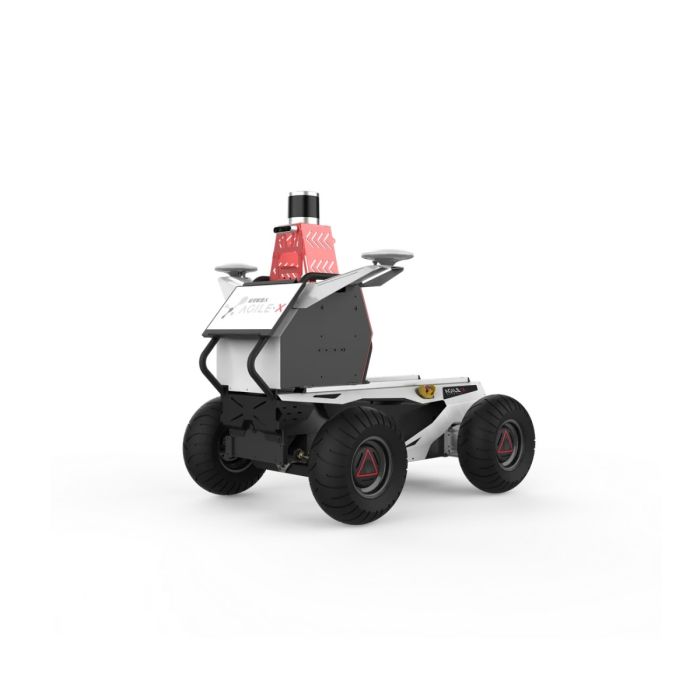
A robot chassis has wheels, motors and a battery, but it has no idea where it is. The Agilex AUTO KIT (AUTO KIT) is the part that gives it that idea: a computer, a LiDAR, a display and a CAN interface, packaged as an Autoware-based development kit that bolts onto a compatible mobile robot and starts teaching it to find its own way.
The product is available through this page, by quotation.
Background
The company and its lineage
AgileX Robotics builds mobile robot platforms for research, education and industry, and the AUTO KIT sits on top of that family of chassis. Rather than a new vehicle, it is an add-on brain: a stack of compute, sensing and interfaces designed for the robots the company already makes. You can see the wider range on the AgileX category page.
That lineage explains the kit's character. It is built to be mounted on a rover, connected to the chassis through its USB-to-CAN module, and then developed further by the people who own it. It is not a finished self-driving product; it is a starting point for building one.
Positioning and key technology
The AUTO KIT is described as The Open Source Autonomous Driving Development KIT, an autonomous driving development kit based on the Autoware open source framework. Autoware is a widely used open framework for self-driving software, so the work students and engineers do on this kit uses tools they will meet again in professional settings.
The kit is pitched as an economical, comprehensive solution tailored specifically for educational applications. At the same time, it can be extended: you can build professional applications, customize performance, and add GPS, depth cameras or line-following modules. Comprehensive tutorials and sample code are offered, covering everything from beginner to advanced levels, so a class can start with the basics and a lab can go deeper on the same hardware.
Technical Specifications
| Specification | Value |
|---|---|
| Product type | Open source autonomous driving development kit |
| Software framework | Autoware open source framework |
| Compatible robots | Hunter 2.0, Bunker, Scout 2.0 and Ranger mini 2.0 |
| Onboard computer | ASUS VC66, 8 cores |
| Computer memory type | DDR4 RAM 2400MHz |
| Computer power adapter | 24v to 19V (10a) |
| LiDAR | Robotsense RO-LiDAR-16, 16 channel |
| LiDAR range | 150m (80m@10% NIST) |
| LiDAR range accuracy (typical) | Up to ±2cm |
| LiDAR rotation speed | 300/600/1200rpm (5/10/20Hz) |
| LiDAR dimensions | φ109mm * H80.7 mm |
| LiDAR operating voltage | 9V - 32V |
| Display | 11.6 inch monitor, 480g/8mm, 1920 X 1080 resolution, USB Type-C direct connection |
| Vehicle interface | USB-to-CAN module |
| Mounting | Standardized mounting solution with aluminum T-slot rails compatibility |
| GPS module | Not included in the standard package |
Specifications as published by the manufacturer; confirmed against the datasheet at quotation.
The manufacturer has not published the kit's total weight, its dimensions, its power consumption, its IP rating or its operating temperature; they are confirmed at quotation.
What makes the AUTO KIT different from a bare robot chassis?
A bare chassis can be driven, but it cannot perceive. The AUTO KIT supplies the missing perception and decision layer in one package: an onboard computer with 8 cores, a 16-channel LiDAR with a range of 150m (80m@10% NIST), a screen for monitoring, and the USB-to-CAN module that links the computer to the vehicle. Everything arrives chosen to work together, so a team does not spend its first weeks matching sensors to a computer.
The software side matters as much as the hardware. Using computer vision, the kit can detect certain objects such as letters, numbers and traffic lights. It also senses obstacles and plans local paths, which is the basic behavior any autonomous vehicle needs before it can be trusted to move on its own. Because the framework is Autoware and open source, every layer can be read, changed and extended.
The LiDAR deserves its own mention. Its rotation speed can be set at 300, 600 or 1200rpm, which corresponds to 5, 10 or 20Hz, and its typical range accuracy is up to ±2cm. It operates on 9V - 32V, which suits the 24v supply arrangements common on mobile platforms. The computer takes power through a 24v to 19V (10a) adapter.
Which robots does the AUTO KIT fit?
The kit is compatible with the Hunter 2.0, Bunker, Scout 2.0 and Ranger mini 2.0 mobile robots. These span different drive layouts, so the same autonomy software work can be tried on more than one kind of vehicle. If you are still choosing a chassis, the Agilex BUNKER PRO 2.0 and the Agilex BUNKER MINI 2.0 are tracked platforms in the same family that you can compare; ask us which Bunker variant the kit is matched to.
Mounting is straightforward. The bottom of the kit provides a standardized mounting solution with aluminum T-slot rails compatibility, which makes it convenient to secure the kit to compatible rovers. Teams that already use T-slot rails on their platforms will find this familiar.
One point to plan for: the GPS module is not included in the standard package. If your work involves outdoor positioning, you can add GPS later, as the kit is designed to accept it along with depth cameras and line-following modules. Sources also name an Auto Kit Pro version; ask us about it when you request a quotation.
Who is the AUTO KIT for?
Schools, colleges and universities are the first audience. The kit is described as tailored specifically for educational applications, and the tutorials and sample code run from beginner to advanced levels. An instructor can build a course around it, from first drive to full obstacle avoidance, without writing all the teaching material from scratch.
Research labs are the second. Because the framework is open source and the kit accepts GPS, depth cameras and line-following modules, a lab can start with the standard package and shape it toward a particular experiment. The LiDAR's adjustable rotation speed and the open software give room to test different approaches on the same hardware.
Developers and integrators form the third group. If you are prototyping a professional application for a mobile robot, the kit shortens the road from a chassis to a working autonomy demonstration. Teams that want a gentler first step into robotics, with a manipulator rather than a vehicle, may prefer to look at the AgileX COBOT S KIT instead.
What is the AUTO KIT used for?
- Teaching autonomous driving. Students work through tutorials and sample code, from beginner to advanced levels, on real hardware.
- Learning the Autoware framework. The kit is based on Autoware, so classes and labs practice with an open source framework used in self-driving development.
- Obstacle detection and avoidance. Computer vision recognizes certain objects such as letters, numbers and traffic lights, while the kit senses obstacles and plans local paths.
- LiDAR-based sensing. The 16-channel Robotsense RO-LiDAR-16 gives the robot a long-range view of its surroundings.
- Upgrading a compatible rover. The kit mounts on the Hunter 2.0, Bunker, Scout 2.0 or Ranger mini 2.0 through its T-slot rail mounting solution.
- Building custom applications. Teams add GPS, depth cameras or line-following modules and tune performance for their own projects.
Pricing and Availability
We do not publish prices for this kit. A quotation is the way to proceed: tell us which robot you plan to mount it on and what you want to build, and we respond with the configuration that fits. Delivery, customs and support are arranged together with the quotation. The Agilex AUTO KIT (AUTO KIT) is available on this page.
Frequently Asked Questions
What is included in the AUTO KIT?
The kit comes with a computer with 8 cores, a Robotsense RO-LiDAR-16 16 channel LiDAR, an LCD display and a USB-to-CAN module. The GPS module is not included in the standard package.
Which software does it run on?
It is based on the Autoware open source framework. Tutorials and sample code are offered for beginner to advanced levels.
Which robots is it compatible with?
It is compatible with the Hunter 2.0, Bunker, Scout 2.0 and Ranger mini 2.0 mobile robots.
Can I add GPS or a depth camera?
Yes. The kit can be extended with GPS, depth cameras or line-following modules to build professional applications and customize performance.
How does it attach to the robot?
The bottom of the kit provides a standardized mounting solution with aluminum T-slot rails compatibility, so it can be secured to compatible rovers.
What display comes with the kit?
An 11.6 inch monitor with 1920 X 1080 resolution and a USB Type-C direct connection.
Where can I buy the Agilex AUTO KIT (AUTO KIT) and what does it cost?
You can buy it through this page by requesting a quotation. We do not list prices; the cost depends on your configuration and is given in the quotation.
Summary
A chassis that cannot sense its surroundings is only half a robot. The Agilex AUTO KIT (AUTO KIT) supplies the other half with an Autoware-based software foundation, an 8-core computer, a 16-channel LiDAR, a display and a USB-to-CAN link, all ready to mount on a compatible AgileX rover. It suits classrooms that need a clear learning path and labs that want an open platform to extend. If that matches your plans, this page is the starting point.