
Topsky Small fire reconnaissance robot
In stock
- BRAND:
- TOPSKY
- MODEL:
- RXR-C10D
- PART #:
- RXR-C10D
- ORIGIN:
- China
- Warranty:
- 12 MONTHS
- AVAILABILITY:
- SUBJECT TO AVAILABILITY
- SKU:
- Topsky-RXR-C10D
Topsky Small fire reconnaissance robot
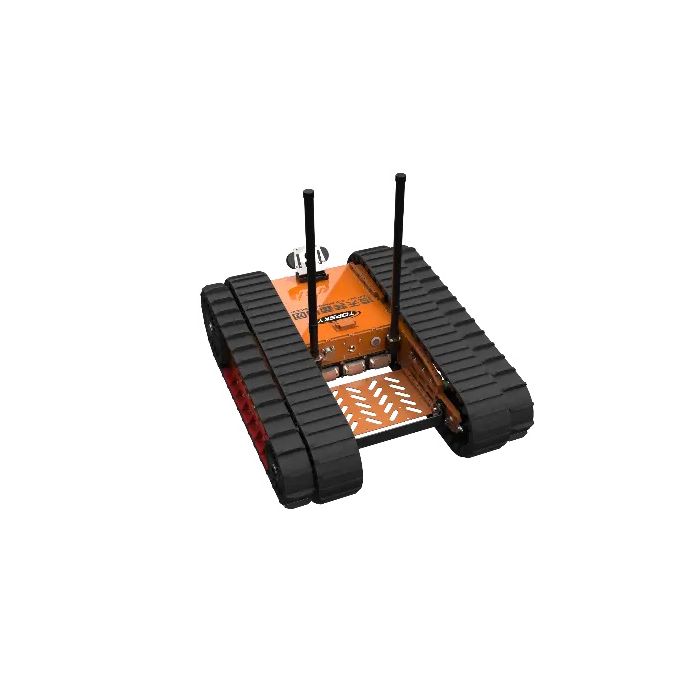
Before anyone steps through the door of a smoke-filled warehouse or a chemical store, someone has to learn what is waiting inside. The Topsky Small fire reconnaissance robot (RXR-C10D) is built to be that first look: a low, tracked machine that carries cameras and sensors into the place where a person should not yet go.
The product is available through this page, by quotation.
Background
Topsky and the reconnaissance role
TOPSKY builds robots for fire and rescue work, and its range runs from reconnaissance units to larger machines for extinguishing and smoke exhaust. Reconnaissance sits at the start of that chain. Before water, foam or powder is committed, the incident commander needs to know about gas, obstacles, heat and the layout of the space.
Fire reconnaissance robots are mainly used to replace people who would otherwise approach flammable, explosive, complex and other harsh environments for environmental reconnaissance and gas detection. The RXR-C10D is the small member of that family. It is a compact platform that one crew can carry to the scene and deploy quickly. Teams that also want to look at larger machines can browse the Firefighting Robots category.
A small chassis with a big reach over terrain
The chassis uses a crawler and front double swing arm structure. It can cross vertical obstacles of 280mm at most and can climb a 360mm platform, so it adapts to various terrains for rapid deployment. The dual swing arms can be disassembled freely, which opens the robot to more scenarios, for example when the job calls for the lowest possible profile.
The crawler tracks are made of flame-retardant, anti-static, high-temperature-resistant rubber with Kevlar inside, and they include a derailment protection design. The whole robot carries an IP67 protection level. A multi-function expansion interface accepts different modules, so the same body can be set up for different jobs. Readers who want to see where the robot fits among wheeled and tracked platforms can look at the wider UGVs category.
Technical Specifications
| Specification | Value |
|---|---|
| Model | RXR-C10D small fire reconnaissance robot |
| Chassis | Crawler + front double swing arm structure |
| Track material | Flame-retardant, anti-static, high-temperature-resistant rubber with Kevlar inside, with derailment protection design |
| Protection level | IP67 (whole robot) |
| Power | Electric, ternary lithium battery |
| Size | ≤ length 610mm × width 490mm × height 200mm (without antenna) |
| Weight | ≤25kg |
| Maximum linear speed | ≥2.7m/s, remote control stepless speed |
| Continuous walking time | ≥2h |
| Obstacle height | ≥280mm (280mm vertical obstacles at most) |
| Platform climbing | 360mm platform |
| Slope climbing | 45 degree slopes |
| Stair climbing | 40 degree stairs |
| Trench crossing | Spans 41 cm wide trenches |
| Wireless video transmission distance | 500m (open) two-point communication; 800m (open) three-point communication to meet the occlusion scene (optional) |
| Wired remote control distance | 100m |
| Cameras | 2-channel HD camera |
| Expansion modules | Lidar module, gas detection module, reconnaissance gimbal module, robotic arm module |
Specifications as published by the manufacturer; confirmed against the datasheet at quotation.
The manufacturer has not published the battery capacity, the charging time, the camera resolution, the operating temperature range, the gas detection sensor types or the ground clearance; they are confirmed at quotation.
What makes the RXR-C10D different from a larger firefighting robot?
The difference is the job. Larger firefighting robots are made to deliver water, foam, powder or smoke exhaust at a fire. This robot is made to go first and bring back information. That is why the figures that matter here are its low and compact body, its ability to get over obstacles and its communication links, rather than any extinguishing capacity.
The body measures no more than 610mm by 490mm by 200mm without the antenna and weighs no more than 25kg. The manufacturer also names small and low spaces, such as the bottom of a car body or the bottom of a shelf, as places where it can be used for reconnaissance. A bigger machine cannot enter those spaces. For heavier duties, the store lists other machines, among them the Topsky All-terrain fire fighting robot and the Topsky Firefighting reconnaissance modeling robot.
How does the robot keep control in a difficult site?
Signal is often the first thing to fail inside steel structures, basements and tunnels. The RXR-C10D answers with several links. Wireless video reaches 500m in the open with two-point communication, and 800m in the open with three-point communication, an optional setup that meets the occlusion scene. Where signal interference is a problem, the robot also has wired control, with a wired remote control distance of 100m.
The operator drives with a remote control at stepless speed up to a maximum linear speed of ≥2.7m/s and watches the scene through the 2-channel HD camera. The robot can run for ≥2h of continuous walking time, which suits a typical reconnaissance sweep. Because the expansion interface takes a lidar module, a gas detection module, a reconnaissance gimbal module and a robotic arm module, the operator can match the payload to the task.
Who is the Topsky Small fire reconnaissance robot for?
Fire and rescue brigades are the first group. They need an early look at fuel stores, gas cylinder areas and chemical sites without sending a crew into unknown air. Industrial emergency teams at plants, ports and warehouses are the second, since they know their own sites and can plan routes for a small tracked robot.
A third group is security and inspection teams. They can use the robot to check under vehicles and shelving, using the same low profile that suits fire reconnaissance. Training centers and civil protection agencies in the region will also find a platform that one or two people can carry and operate. Buyers who need to put out the fire as well as inspect it should look at the Topsky Tianlong Conquest D5 Explosion-Proof Fire Fighting Robot (RXR-MC80BD).
What is the Topsky Small fire reconnaissance robot used for?
- Environmental reconnaissance. It goes ahead of the crew into flammable, explosive or complex environments and sends back live video.
- Gas detection. With the gas detection module fitted, it checks the air before anyone enters.
- Low-space inspection. It looks under car bodies and under shelves, where people cannot see.
- Rough-terrain access. Its tracks and swing arms take it over obstacles, slopes, stairs and trenches within the stated limits.
- Mapping and observation. The lidar module and the reconnaissance gimbal module extend what the robot can capture.
- Handling tasks. The robotic arm module adds a means to act on what the robot finds.
Pricing and Availability
The price depends on the configuration, including which expansion modules and which communication setup you need, so it is given by quotation only. Send us your requirements and we will answer with a quotation. Delivery, customs and support are arranged together with the quotation. The Topsky Small fire reconnaissance robot is available on this page.
Frequently Asked Questions
What obstacles can the robot cross?
It can cross vertical obstacles of 280mm at most and climb a 360mm platform. It can also climb 45 degree slopes and 40 degree stairs, and span trenches 41 cm wide.
How far can the video signal travel?
Wireless video reaches 500m in the open with two-point communication. With three-point communication, an optional setup, it reaches 800m in the open to meet the occlusion scene.
Can I still control it if the wireless signal is jammed?
Yes. The robot has wired control, which works under signal interference, with a wired remote control distance of 100m.
How well is the robot protected?
The whole robot is rated IP67. Its tracks are flame-retardant, anti-static, high-temperature-resistant rubber with Kevlar inside, with a derailment protection design.
What can be fitted to the expansion interface?
The manufacturer lists a lidar module, a gas detection module, a reconnaissance gimbal module and a robotic arm module.
How long can it run and how fast can it go?
Continuous walking time is ≥2h and maximum linear speed is ≥2.7m/s with stepless speed control from the remote.
Where can I buy the Topsky Small fire reconnaissance robot and what does it cost?
It is available through this page, by quotation. The cost depends on configuration, so please send your requirements and we will reply with a quotation.
Summary
A fire scene gives its answers only to whoever goes in first, and the RXR-C10D goes in so that people do not have to. It is small enough to reach low spaces and tough enough to cross obstacles of 280mm, with IP67 protection, wireless and wired links and a choice of modules. If your team needs eyes and a gas check before the crew advances, this page is the starting point.


