
Unitree Superman Humanoid Robot
In stock
- BRAND:
- UNITREE ROBOTICS
- MODEL:
- SUPERMAN
- ORIGIN:
- China
- Warranty:
- 12 MONTHS
- AVAILABILITY:
- SUBJECT TO AVAILABILITY
- SKU:
- Unitree-Superman
Unitree Superman Humanoid Robot
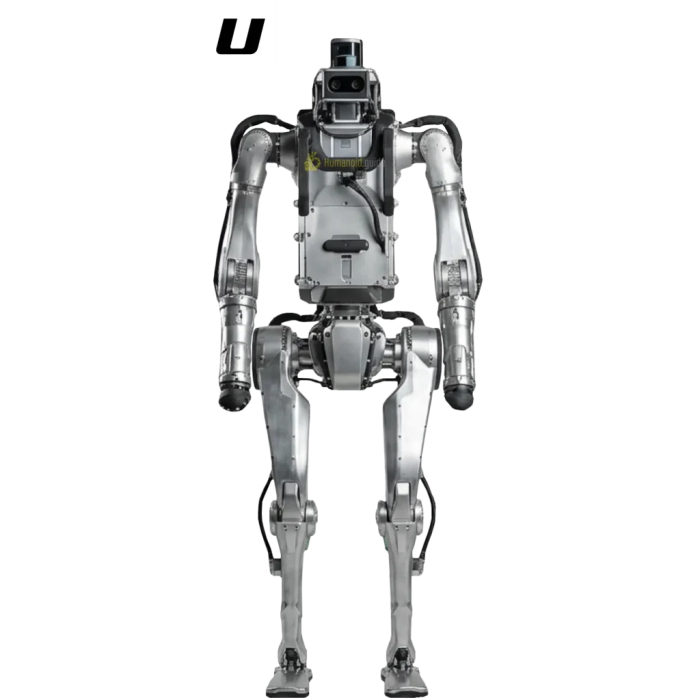
A sprinter is not judged by what she can carry, only by how she moves. The Unitree Superman Humanoid Robot is built on that same logic: a body with no face and no fingers, shaped almost entirely around the question of how hard and how fast a pair of robotic legs can work.
The Unitree Superman Humanoid Robot is available through this page, by quotation.
Background
Unitree and its lineage
Unitree Robotics is best known for legged machines, and its humanoid work has moved quickly. In a social media post, the company said it had cumulatively produced and delivered about 18,000 bipedal humanoid robots across multiple models as of July. Its commercial H1 and G1 lines are part of that story, and they carry head-mounted sensor hardware that Superman does not have.
Superman arrived in a very different way from a product launch. On August 17, Unitree posted a 30-second video to the Chinese social network Weibo, and the machine's name and abilities spread from there. The company says the prototype has been in development for a little over three months, which is a short time for a full-size humanoid.
A prototype built around the legs
Unitree describes Superman as an experimental platform for studying highly dynamic movements. It also says plainly that the prototype is not a commercial product yet, and that there is still significant room for further improvement in the coming months. That honesty matters for any buyer: this is a research statement in metal, not a catalog item with a long service history.
The mechanical approach is familiar. The joints use Unitree's typical design, with high torque density built around rare-earth magnets. The legs measure 0.85 metres in length. Everything else has been stripped back: there is no head, and there are no hands and no grippers. The height is at least 6 foot 3.
Technical Specifications
| Specification | Value |
|---|---|
| Product status | Prototype, not a commercial product yet |
| Purpose | Experimental platform for studying highly dynamic movements |
| Leg length | 0.85 metres |
| Standing high jump | Two metres |
| Top speed | 12.66 metres per second, or 45.6 kilometres per hour |
| Height | At least 6 foot 3 |
| Hands and grippers | None |
| Head | None |
| Head-mounted sensor hardware | Not fitted, unlike the commercial H1 and G1 lines |
| Joints | Unitree's typical design, high torque density, rare-earth magnets |
| Development time | A little over three months |
Specifications as published by the manufacturer; confirmed against the datasheet at quotation.
The manufacturer has not published the weight, the degrees of freedom, the battery capacity, the runtime per charge, the sensors fitted, the payload, the overall dimensions, the connectivity, the compute platform, the contents of the box or a mass-production timeline; they are confirmed at quotation.
How is Superman different from the H1 and G1 lines?
The difference starts with purpose. The H1 and G1 lines are commercial humanoids, and they include head-mounted sensor hardware. Superman has no head at all, so that hardware is simply absent. It also has no hands and no grippers, which means it is not designed to pick up, sort or carry anything.
What it offers in exchange is focus. Every design decision points toward leg performance: a two-metre standing high jump and a top speed of 12.66 metres per second, or 45.6 kilometres per hour, are the headline figures Unitree gives. A general-purpose humanoid has to balance many jobs. This machine is asked to do one thing as well as it can, and to teach its builders something while it does.
For a buyer, that means the comparison is not about which robot is better. It is about which question you are trying to answer. If the question is how a body can move at its limits, Superman is the interesting platform. If the question is how a robot can work in a building, the commercial lines are the natural starting point.
Is Unitree Superman ready for deployment?
Not in the usual sense. Unitree itself says the prototype is not a commercial product yet, and it points to significant room for improvement in the coming months. There is no mass-production timeline, and several of the figures a deployment plan would depend on, such as payload, runtime per charge and connectivity, are not yet public.
That does not make the machine unimportant. Prototypes are how a company learns, and buyers in research and demonstration work often want to be close to that learning. The sensible approach is to ask for a quotation and state your intended use, and we will come back to you with the details.
Who is Unitree Superman for?
Universities and research laboratories are the clearest audience. A platform built for studying highly dynamic movements gives a legged-locomotion group something to learn from, particularly when its design strips out the hands and the head and leaves the legs as the subject.
Technology organizations and demonstration teams form a second group. A machine with a two-metre standing high jump makes a strong visual case for what robotic legs can now do, and its short development time tells its own story about the pace of the field.
Some buyers will be better served by a robot that is already part of a product line. If you need a humanoid for teaching, development or applied work, the Unitree H2 EDU Standard Humanoid Robot and the Unitree H2 EDU SMART B Humanoid Robot are listed on this store, and our team can explain how they differ from this prototype. Those interested in other configurations can also see the Unitree H2-A Standard A Humanoid Robot.
What is Unitree Superman used for?
- Locomotion research. The platform exists to study highly dynamic movements, so jumping and running are the core subjects.
- Studying leg design. With 0.85 metres of leg length and high-torque-density joints, it gives engineers a focused body to examine.
- Benchmarking. A two-metre standing high jump and a top speed of 12.66 metres per second give teams a reference point for comparing their own work.
- Demonstrations. A humanoid with no head and no hands, built for speed and height, is a striking subject for public and industry events.
- Teaching. Universities can use it to show students what happens when a humanoid is designed around legs alone.
- Tracking Unitree's direction. Organizations that follow the company's humanoid progress can see where its dynamic-movement work is heading.
Pricing and Availability
No price is printed on this page. Quotation is the way to proceed: tell us your intended use, your location and your timeline, and we will respond with the details. Delivery, customs and support are arranged together with the quotation. The Unitree Superman Humanoid Robot is available on this page.
Frequently Asked Questions
Is the Unitree Superman Humanoid Robot a commercial product?
Unitree says the prototype is not a commercial product yet. It describes the machine as an experimental platform for studying highly dynamic movements.
How high can it jump and how fast can it run?
The standing high jump is two metres, and the top speed is 12.66 metres per second, or 45.6 kilometres per hour.
Does it have hands or a head?
No. The machine has no hands, no grippers and no head, and it does not carry the head-mounted sensor hardware of the commercial H1 and G1 lines.
How tall is it?
The height is at least 6 foot 3. The legs measure 0.85 metres in length.
What are the joints like?
The joints use Unitree's typical design, with high torque density built around rare-earth magnets.
Are weight, battery and runtime available?
The manufacturer has not published them, nor the other missing specifications. Ask for them with your quotation.
Where can I buy the Unitree Superman Humanoid Robot and what does it cost?
It is available through this page, by quotation. No price is shown here; send a request and we will respond with the details.
Summary
The Unitree Superman Humanoid Robot is a machine judged by its movement alone. It has no head, no hands and no grippers, and what remains is a pair of legs, 0.85 metres long, built on high-torque-density joints and aimed at a two-metre standing high jump and a top speed of 45.6 kilometres per hour. It is a prototype, offered by Unitree as an experimental platform, and it is best understood as a window into dynamic locomotion rather than a finished tool. For research groups, demonstration teams and anyone following Unitree's progress, this page is the starting point.


