
Unitree H2-D Standard M Humanoid Robot
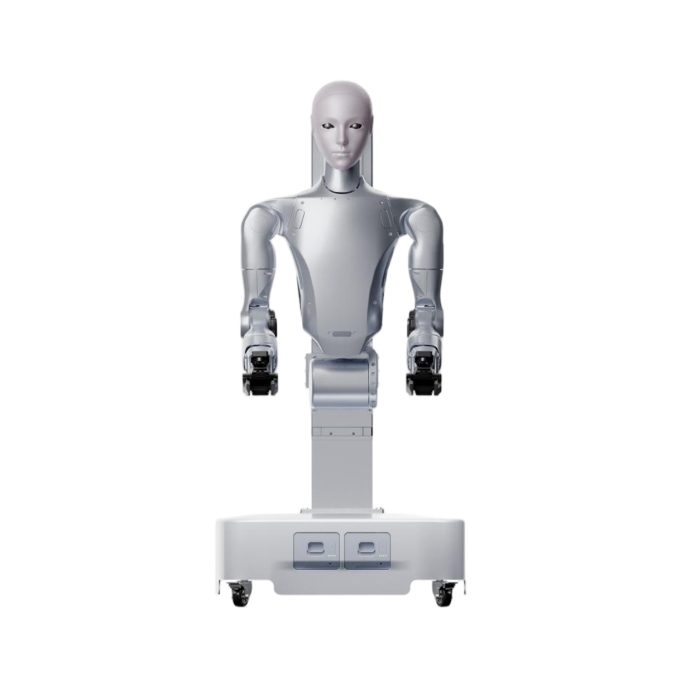
In stock
- BRAND:
- UNITREE ROBOTICS
- MODEL:
- H2-D-Standard-M
- PART #:
- H2-D-Standard-M
- ORIGIN:
- China
- Warranty:
- 12 MONTHS
- AVAILABILITY:
- SUBJECT TO AVAILABILITY
- SKU:
- Unitree-H2-D-Standard-M
Unitree H2-D Standard M Humanoid Robot
A humanoid that stands 1820 mm tall is easy to admire from across a room. The harder question is what a team can actually do with it once the demonstration ends. The Unitree H2-D Standard M Humanoid Robot belongs to a family built around that question: 31 degrees of freedom, 360N.m joint torque and a software platform that keeps changing after delivery.
The product is available through this page, by quotation.
Background
Unitree Robotics and the H2 lineage
Unitree Robotics is a manufacturer of legged and humanoid robots. Its machines are used mostly by laboratories, universities and integrators who want a platform they can program and test, not a closed demonstration unit. The H2 family carries that approach to full human scale. The platform comes in three versions: the H2, the H2 EDU and the H2 Plus. This page lists the Unitree H2-D Standard M as part of the H2-D range, which sits within the Unitree H2-D category and the H2-D Standard category.
The H2 figures are the reference for everything below. Where a figure belongs to a particular version, this article says which. The H2's algorithms evolve continuously through OTA updates. In practice, the robot a buyer receives is not the final form of its software.
Positioning and key technology
The H2 is built for precise dynamic movement replication. It combines 31 degrees of freedom with 360N.m joint torque. Six degrees of freedom sit in each leg and seven in each arm. That leaves the remainder for the waist and head. The maximum leg joint torque is 360 N.m.
The structure uses aerospace-grade aluminum, titanium alloy and high-strength engineering plastics. That mix is typical of machines that must be light enough to move quickly yet stiff enough to carry a payload at arm's length. Perception comes from a wide-angle humanoid binocular camera. Voice interaction uses array microphones and a high-power speaker. Connectivity is Wi-Fi 6 and Bluetooth 5.2.
The H2 runs on a basic onboard computing unit, PC1, with an Intel Core i5 processor. The H2 EDU adds a second computing unit. That arrangement matters for development work, and a later section explains why.
Technical Specifications
| Specification | H2 |
|---|---|
| Standing dimensions | 1820 x 456 x 218 mm |
| Weight with battery | Approximately 70 kg |
| Total degrees of freedom | 31 |
| Degrees of freedom per leg | 6 |
| Degrees of freedom per arm | 7 |
| Maximum leg joint torque | 360 N.m |
| Arm payload | Peak: ~15 kg; nominal: ~7 kg |
| Materials | Aerospace-grade aluminum + titanium alloy + high-strength engineering plastics |
| Battery | 15 Ah (0.972 kWh) |
| Battery life | Approximately 3 h |
| Basic onboard computing | PC1: Intel Core i5 |
| Vision sensor | Wide-angle humanoid binocular camera |
| Voice interaction | Array microphones + high-power speaker |
| Connectivity | Wi-Fi 6, Bluetooth 5.2 |
| Included accessories | Charger, manual remote controller, removable smart battery |
Specifications as published by the manufacturer; confirmed against the datasheet at quotation.
The manufacturer has not published the top speed, the IP rating, the charging time, whether a lidar is fitted, the camera resolution, the operating temperature or the weight of the robot without its battery; they are confirmed at quotation.
What makes the H2 different from a demonstration robot?
The difference starts with the numbers a team can plan around. A 360 N.m joint torque and 31 degrees of freedom describe a machine that can reproduce human movement with force behind it. The arms add a peak payload of about 15 kg and a nominal payload of about 7 kg. That gap between peak and nominal is useful to know early. A task that needs to be repeated all day should be planned around the nominal figure, while the peak figure covers short, demanding movements.
The second difference is the battery. A removable smart battery of 15 Ah (0.972 kWh) gives approximately 3 h of battery life. Because the battery is removable, a lab can plan sessions around swapping it instead of waiting at a charger. A buyer planning a full day of work should raise charging when requesting a quotation.
The third difference is software. The algorithms evolve continuously through OTA updates, so the movement quality of the robot is not frozen at the time of purchase.
What does the H2 EDU change for developers?
The basic H2 has one computing unit, no PC dedicated to user development, and no support for secondary development. The H2 EDU takes a different route. It has two computing units: an Intel Core i5 for the robot's own functions and an Intel Core i7 dedicated to user development. Secondary development is supported.
The split is sensible. The robot's balance and movement stay on their own processor, while a team's experimental code runs on separate hardware. A research group can then try new behavior without competing with the control software for the same resources.
Both the H2 and the H2 EDU come with no robotic hands included. A project that depends on fine finger work should raise that point directly when asking for a quotation for the Standard M.
Who is the Unitree H2-D Standard M for?
The first group is university and corporate research labs. They need a full-size humanoid platform with a known mechanical specification, and they value the ability to develop on top of it. For these teams, the question of secondary development is the deciding one, and it is worth comparing the H2 and H2 EDU carefully.
The second group is system integrators who prepare humanoid demonstrations or pilot projects for clients. They benefit from a stated payload, a removable battery and a manual remote controller in the box.
The third group is training and education programs. A robot with voice interaction, a camera and standard wireless connectivity makes a strong teaching platform for embodied intelligence.
Buyers who are still choosing between configurations can also look at neighboring models in the range: the Unitree H2-D Standard A, the Standard B and the Standard C. Each has its own configuration, so ask for the details with your quotation request.
What is the Unitree H2-D Standard M used for?
- Locomotion research. Six degrees of freedom per leg and a 360 N.m leg joint torque give a base for gait and balance studies.
- Manipulation studies. Seven degrees of freedom per arm and a nominal payload of about 7 kg support reaching and carrying experiments.
- Algorithm development. With the H2 EDU's dedicated Core i7 unit, teams can write and test their own behavior code.
- Human-robot interaction. Array microphones, a high-power speaker and a binocular camera allow voice and vision experiments.
- Demonstrations and exhibitions. The standing height and dynamic movement replication make the robot a strong presence at events.
- Teaching. Wi-Fi 6 and Bluetooth 5.2 connectivity and a manual remote controller suit classroom and workshop sessions.
Pricing and Availability
No price is printed on this page. Quotation is the way to buy: send a request describing the configuration, quantity and destination, and a response follows. Delivery, customs and support are arranged together with the quotation. The Unitree H2-D Standard M Humanoid Robot is available on this page.
Frequently Asked Questions
How many degrees of freedom does the H2 have?
The H2 has 31 degrees of freedom in total. Each leg has 6 and each arm has 7.
How much can the arms carry?
The arm payload is about 15 kg at peak and about 7 kg nominal. Plan repeated tasks around the nominal figure.
How long does the battery last?
The 15 Ah (0.972 kWh) removable smart battery gives approximately 3 h of battery life.
Can I develop my own software on it?
The basic H2 does not support secondary development. The H2 EDU does, with a Core i7 unit dedicated to user development alongside the Core i5 for the robot's functions.
Does it come with robotic hands?
The H2 and H2 EDU come with no robotic hands included. Ask about hands for the Standard M when you request a quotation.
What comes in the box?
The listed accessories are a charger, a manual remote controller and a removable smart battery.
Where can I buy the Unitree H2-D Standard M and what does it cost?
You can buy it through this page by requesting a quotation. The cost depends on configuration, quantity and destination, so no price is printed here.
Summary
A tall robot proves little until its torque, payload, battery and software are known. The Unitree H2-D Standard M Humanoid Robot comes from a platform with 31 degrees of freedom, 360N.m joint torque, a removable battery and OTA-driven software growth. For a team ready to move from admiring a humanoid to working with one, this page is the starting point.


