
Unitree H2-D Standard L Humanoid Robot
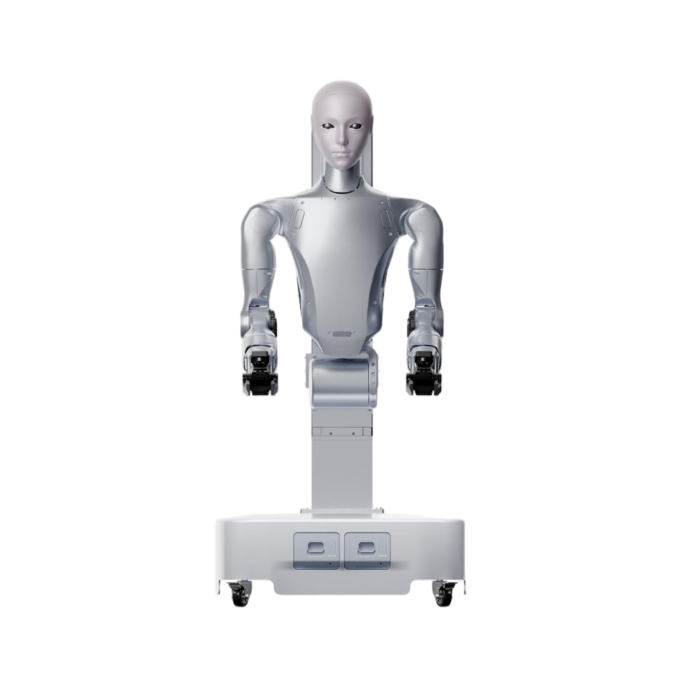
In stock
- BRAND:
- UNITREE ROBOTICS
- MODEL:
- H2-D-Standard-L
- PART #:
- H2-D-Standard-L
- ORIGIN:
- China
- Warranty:
- 12 MONTHS
- AVAILABILITY:
- SUBJECT TO AVAILABILITY
- SKU:
- Unitree-H2-D-Standard-L
Unitree H2-D Standard L Humanoid Robot
Seventy kilograms is a lot of machine to keep upright, and the Unitree H2-D Standard L Humanoid Robot does it on a battery of 0.972 kWh for roughly three hours. That one trade-off, mass against energy, tells you most of what you need to know before planning a humanoid project: this is a serious, full-scale platform, and it rewards buyers who know what they want to test.
The product is available through this page, by quotation.
Background
The brand and the H2 family
Unitree Robotics is the brand behind this robot, and the H2 family is named in four versions: H2, H2 EDU, H2 BASIC and H2 EDU STANDARD. The figures on this page are given for the H2 and the H2 EDU, and the table below keeps them apart so that no figure is moved from one version to the other.
The H2-D Standard range on this site is split into lettered configurations. Next to this L configuration you will find, for example, the Unitree H2-D Standard A Humanoid Robot and the Unitree H2-D Standard B Humanoid Robot. Each is quoted on its own page, so compare the letters before you decide.
Positioning and key technology
The H2 is described with 31 degrees of freedom, 360N.m joint torque and precise dynamic movement replication. Seven of those degrees of freedom sit in each arm, which is what lets the robot reach, hold and place objects in a way that a simpler upper body cannot.
The body is built from aerospace-grade aluminum, titanium alloy and high-strength engineering plastics. Perception comes from a wide-angle humanoid binocular camera, and the robot connects over Wi-Fi 6 and Bluetooth 5.2. A charger and a manual remote controller are part of the package.
For computing, both versions carry a basic onboard unit, PC1, with an Intel Core i5. The H2 EDU adds a second unit for custom development, PC2 with an Intel Core i7, and a high-performance module of up to Jetson AGX Thor rated at 2070 TOPS. Teams that plan to run their own software should read that difference closely.
Technical Specifications
| Specification | H2 | H2 EDU |
|---|---|---|
| Standing dimensions | 1820 x 456 x 218 mm | 1820 x 456 x 218 mm |
| Weight with battery | Approximately 70 kg | Approximately 70 kg |
| Total degrees of freedom | 31 | 31 |
| DoF per arm | 7 | 7 |
| Max. leg joint torque | 360 N.m | 360 N.m |
| Max. arm payload | Peak: ~15 kg; nominal: ~7 kg | Peak: ~15 kg; nominal: ~7 kg |
| Battery | 15 Ah (0.972 kWh) | 15 Ah (0.972 kWh) |
| Battery life | Approximately 3 h | Approximately 3 h |
| Basic onboard computing | PC1: Intel Core i5 | PC1: Intel Core i5 |
| Computing for custom development | - | PC2: Intel Core i7 |
| High-performance computing module | - | Up to Jetson AGX Thor (2070 TOPS) |
| Vision sensor | Wide-angle humanoid binocular camera | Wide-angle humanoid binocular camera |
| Connectivity | Wi-Fi 6, Bluetooth 5.2 | Wi-Fi 6, Bluetooth 5.2 |
| Charger and manual remote controller | Charger: Yes; remote controller: Yes | Charger: Yes; remote controller: Yes |
| Materials | Aerospace-grade aluminum + titanium alloy + high-strength engineering plastics | Aerospace-grade aluminum + titanium alloy + high-strength engineering plastics |
Specifications as published by the manufacturer; confirmed against the datasheet at quotation.
The manufacturer has not published the top speed, the IP rating, the hand type for this configuration, the lidar, the charging time or the operating temperature range; they are confirmed at quotation.
What makes the H2 EDU different from the H2?
On the body, nothing separates them: the dimensions, weight, degrees of freedom, torque, payload and battery are the same in both columns. The difference is in the computing. The H2 carries PC1 with an Intel Core i5 and stops there. The H2 EDU keeps PC1 and adds PC2 with an Intel Core i7, marked as EDU only, together with a high-performance module of up to Jetson AGX Thor at 2070 TOPS.
In practice, that means the H2 is the platform you operate and the H2 EDU is the platform you develop on. If your team will write its own perception, planning or learning code and needs processing power on the robot itself, the extra compute is the reason to ask about the EDU line. If the work is demonstration, observation or evaluation of the stock behavior, the base computing may be all you need.
How long can the robot work between charges?
Battery life is approximately 3 h from a 15 Ah (0.972 kWh) battery. For a robot of approximately 70 kg that is a working session, not a working day. Plan your trials in blocks and keep the supplied charger where the robot is stored.
Payload deserves the same planning. The arm payload is a peak of about 15 kg and a nominal figure of about 7 kg. Design tasks around the nominal figure and treat the peak as a limit you should not routinely rely on.
Who is the Unitree H2-D Standard L Humanoid Robot for?
University laboratories and research institutes are the clearest fit. Seven degrees of freedom per arm and 31 in total give robotics groups a body for studying whole-body control, manipulation and human-robot interaction without building one from scratch.
Technical colleges and training centers can use it to teach humanoid mechanics and programming on real hardware. Integrators and innovation teams can use it to test whether a humanoid form suits a task before committing to a larger program. Companies that exhibit or demonstrate advanced technology will also find a robot of this scale commands attention.
Because the lettered configurations are quoted separately, compare this page with the others in the range. Browse the H2-D Standard category, or the wider Unitree H2-D category, and tell us in your request which computing you need so we can match the right configuration.
What is the Unitree H2-D Standard L Humanoid Robot used for?
- Humanoid research. Study balance, gait and whole-body motion on a platform with 31 degrees of freedom.
- Manipulation experiments. Use the seven-degree-of-freedom arms for reaching, grasping and carrying within the stated payload.
- Teaching and training. Give students hands-on access to a full-size humanoid in robotics and engineering courses.
- Perception and vision work. Develop and test vision software on the wide-angle humanoid binocular camera.
- Custom software development. On the EDU line, run your own code on the additional computing, including the Jetson AGX Thor option.
- Demonstration and evaluation. Show stakeholders what a humanoid can do, and judge its fit for your own operations.
Pricing and Availability
We do not publish prices on this page. Quotation is the way to buy: send us your requirements, including the configuration and computing you need, and we will reply with an offer. Delivery, customs and support are arranged with the quotation, so you see the full picture before you commit. The Unitree H2-D Standard L Humanoid Robot is available on this page.
Frequently Asked Questions
How many degrees of freedom does the robot have?
It has 31 degrees of freedom in total, with 7 in each arm. Joint torque in the legs reaches 360 N.m.
How heavy is it, and what size is it?
It weighs approximately 70 kg with the battery. Its standing dimensions are 1820 x 456 x 218 mm.
How long does the battery last?
Battery life is approximately 3 h from the 15 Ah (0.972 kWh) battery.
What can it carry?
The arm payload is a peak of about 15 kg and a nominal figure of about 7 kg. We suggest planning around the nominal figure.
What computing does it include?
Both versions have PC1 with an Intel Core i5. The H2 EDU adds PC2 with an Intel Core i7 and a module of up to Jetson AGX Thor at 2070 TOPS.
How does it connect?
It connects over Wi-Fi 6 and Bluetooth 5.2. A manual remote controller and a charger come with it.
Where can I buy the Unitree H2-D Standard L Humanoid Robot and what does it cost?
You can buy it through this page by requesting a quotation. We do not list a price here; the offer is prepared once we know your configuration and delivery needs.
Summary
The Unitree H2-D Standard L Humanoid Robot is a full-scale machine whose numbers tell a clear story: approximately 70 kg of body, 31 degrees of freedom, 360 N.m of leg joint torque and a 0.972 kWh battery that gives approximately 3 h of work. What it does with them depends on your project and on the computing you choose, from the Intel Core i5 baseline to the EDU line with its Jetson AGX Thor option. If you are ready to move from reading to planning, this page is the starting point.


