
Unitree H2-D Standard J Humanoid Robot
In stock
- BRAND:
- UNITREE ROBOTICS
- MODEL:
- H2-D-Standard-J
- PART #:
- H2-D-Standard-J
- ORIGIN:
- China
- Warranty:
- 12 MONTHS
- AVAILABILITY:
- SUBJECT TO AVAILABILITY
- SKU:
- Unitree-H2-D-Standard-J
Unitree H2-D Standard J Humanoid Robot
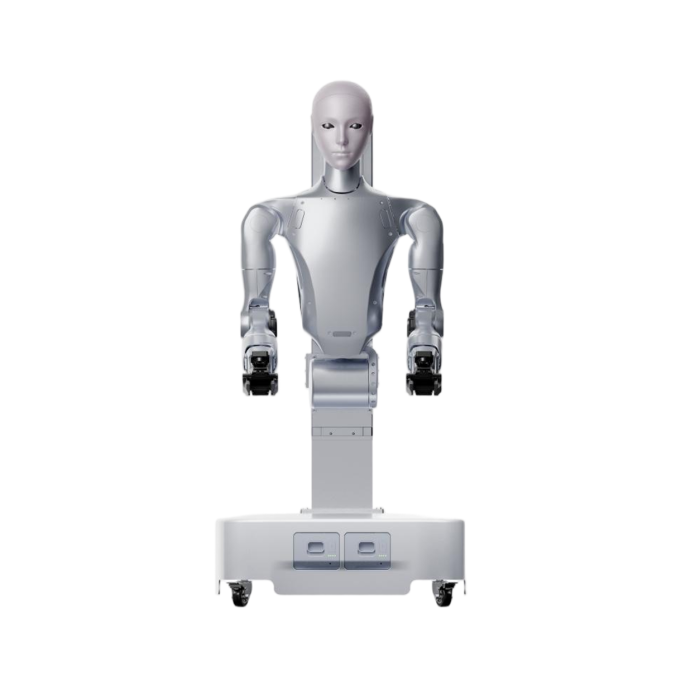
Most robots ask a workplace to change for them; the Unitree H2-D Standard J Humanoid Robot asks only for a little floor space and a power outlet. Its torso rises on a lift column, its waist bends forward, and two arms reach out to work at a bench, a shelf or a table. It is built for teams that care more about what a robot can do with its hands than about how it walks.
The Unitree H2-D Standard J Humanoid Robot is available through this page, by quotation.
Background
Unitree and the H2 Series
Unitree Robotics is known for bringing advanced legged and humanoid machines to research labs, universities and industrial teams. The H2 Series Dual-Arm Humanoid Robot extends that work into upper-body manipulation. It includes two product lines, H2-D and H2-A, designed for industrial operations, commercial services, research and development, and embodied intelligence training.
Within the H2-D line, the Standard configuration is the reference point, and lettered variants follow it. The Standard J is the one described on this page. Its hand is a Revo 3 U21 (SHF3L), and the configuration is listed with 61 total DOF. If you want to see the neighboring configurations, the pages for the Unitree H2-D Standard A Humanoid Robot and the Unitree H2-D Standard B Humanoid Robot are a good place to compare.
Positioning and key technology
The H2-D is a dual-arm platform on a lift column. It is meant for work where reach, height adjustment and two-handed manipulation matter. The column moves the torso between a minimum and a maximum height, and the waist joint adds pitch motion, so the arms can be positioned over a work surface without moving the whole base. The robot can also rotate in place about the Z axis, which helps when it must turn toward a different station.
The structure uses aerospace-grade aluminum, titanium alloy and high-strength engineering plastics. The joints use industrial-grade cross-roller bearings for high precision and high load-carrying capacity. A microphone array and a high-power speaker support natural voice interaction, and WiFi 6 and Bluetooth 5.2 cover wireless connectivity. The platform supports secondary development and system customization, which matters to teams that plan to write their own software on top of it. You can browse the wider family in the H2-D Standard category and the Unitree H2-D category.
Technical Specifications
| Specification | Value |
|---|---|
| Hand (Standard J) | Revo 3 U21 (SHF3L) |
| Total DOF (Standard J) | 61 |
| Overall dimensions, min. column height (H2-D Standard) | 1200x560x605mm |
| Overall dimensions, max. column height (H2-D Standard) | 1700x560x605mm |
| Total weight with battery (H2-D Standard) | Approx. 148Kg |
| Waist joint range of motion (H2-D Standard) | Pitch: 0°-115° |
| Lift speed (H2-D Standard) | Up to 200 mm/s |
| Turning (H2-D Standard) | Supports ±90° in-place Z-axis rotation |
| Materials (H2-D Standard) | Aerospace-Grade Aluminum, Titanium Alloy, and High-Strength Engineering Plastics |
| Joint output bearing (H2-D Standard) | Industrial-Grade Cross-Roller Bearing (High Precision, High Load-Carrying Capacity) |
| Voice interaction (H2-D Standard) | Microphone Array & High-Power Speaker |
| Connectivity (H2-D Standard) | WiFi 6 & Bluetooth 5.2 |
| Base battery (H2-D Standard) | Quick-Release, 48V/18Ah (864Wh) |
| Power supply (H2-D Standard) | Direct Power Supply: 7*24H |
| End-effector options (H2-D Standard) | Optional 2-Finger Gripper / 3-Finger Dexterous Hand / 5-Finger Dexterous Hand |
| Computing module accessory (H2-D Standard) | Multiple brands and models available, such as Thor |
| Handheld controller (H2-D Standard) | Yes |
Specifications as published by the manufacturer; confirmed against the datasheet at quotation.
The manufacturer has not published the Standard J hand specifications, the payload at full arm extension, the IP rating, the charging time, the hand fingertip force or the maximum travel speed of the Standard chassis; they are confirmed at quotation.
What makes the H2-D Standard J different from a walking humanoid?
A walking humanoid spends much of its design effort on balance, foot placement and falling safely. The H2-D takes a different approach. Its torso sits on a lift column, so working height is a matter of moving the column. It runs from a minimum column height of 1200x560x605mm to a maximum of 1700x560x605mm, with a lift speed of up to 200 mm/s. For a task at a bench or a shelf, that range may matter more than any gait.
The waist adds pitch from 0° to 115°, so the upper body can lean toward the work. In-place rotation of ±90° about the Z axis lets the robot face a neighboring station without being repositioned. The result is a machine that is easier to reason about when you plan a workcell, because the working envelope is defined by the column, the waist and the arms.
The robot is not light, at approximately 148Kg with the battery, so it suits a fixed or semi-fixed station better than a task that needs frequent hand-carried relocation. That weight comes with the benefit of a stable base for two-handed work.
What does the Standard J hand configuration change?
The H2-D Standard offers optional end-effectors: a 2-finger gripper, a 3-finger dexterous hand or a 5-finger dexterous hand. The Standard J is listed with a Revo 3 U21 (SHF3L) hand and 61 total DOF.
For a buyer, the practical point is that the hand sets the experiment. A gripper, a three-finger hand and a five-finger hand lead to different grasping studies and different integration work. If your project depends on a particular hand, tell us when you request your quotation. Neighboring variants such as the Unitree H2-D Standard C Humanoid Robot are worth reviewing alongside this one before you decide.
Who is the Unitree H2-D Standard J Humanoid Robot for?
University and institute labs are the most natural fit. The platform supports secondary development and system customization, so a research group can build its own manipulation, perception or voice software on it and use it for embodied intelligence training.
Integrators and industrial teams can use it to evaluate dual-arm work in a station designed for people, with the lift column handling height changes. Commercial service developers may value the voice interaction hardware and the wireless connectivity for demonstrations and interactive applications. Teams that need a particular hand should compare configurations before choosing, and the lettered Standard pages are the place to begin.
What is the Unitree H2-D Standard J Humanoid Robot used for?
- Manipulation research. Two arms and a configurable hand make it a platform for grasping and handling studies.
- Embodied intelligence training. Teams collect data and train behaviors on a dual-arm body with a handheld controller available.
- Industrial workcell trials. The lift column and waist pitch allow tests at benches and shelves of different heights.
- Commercial service demonstrations. Voice interaction hardware supports reception and guidance concepts.
- Custom software development. Secondary development support lets engineers build their own control and application layers.
- Teaching and lab training. Students work with a real humanoid upper body in robotics and automation courses.
Pricing and Availability
We do not list a price for the Unitree H2-D Standard J Humanoid Robot. A quotation reflects the configuration you need, including the hand and any computing module. Delivery, customs and support are arranged with the quotation. To begin, send your requirements, and the Unitree H2-D Standard J Humanoid Robot is available on this page.
Frequently Asked Questions
Which hand does the Standard J use?
The Standard J is listed with a Revo 3 U21 (SHF3L) hand and 61 total DOF.
How tall is the H2-D Standard?
The overall dimensions are 1200x560x605mm at minimum column height and 1700x560x605mm at maximum column height. The lift speed is up to 200 mm/s.
How is it powered?
It uses a quick-release base battery rated 48V/18Ah (864Wh). A direct power supply option is listed as 7*24H.
Can I develop my own software for it?
Yes. The platform supports secondary development and system customization. A computing module such as Thor can be added as an accessory.
How does it connect and interact?
It supports WiFi 6 and Bluetooth 5.2. A microphone array and high-power speaker handle voice interaction, and a handheld controller is part of the specification.
Does it have an IP rating or a stated payload?
Neither appears among the figures above, so ask about both when you send your quotation request.
Where can I buy the Unitree H2-D Standard J Humanoid Robot and what does it cost?
You can request it through this page. The cost is given by quotation and depends on the configuration, so no price is listed here.
Summary
The Unitree H2-D Standard J Humanoid Robot trades the drama of walking for the practical value of reach: a lift column, a bending waist, two arms and a hand you can specify. It is a platform for teams that want to build manipulation work around a stable body and their own software. For the exact configuration, specifications and a quotation, this page is the starting point.


