
Unitree H2-D Standard H Humanoid Robot
In stock
- BRAND:
- UNITREE ROBOTICS
- MODEL:
- H2-D-Standard-H
- PART #:
- H2-D-Standard-H
- ORIGIN:
- China
- Warranty:
- 12 MONTHS
- AVAILABILITY:
- SUBJECT TO AVAILABILITY
- SKU:
- Unitree-H2-D-Standard-H
Unitree H2-D Standard H Humanoid Robot
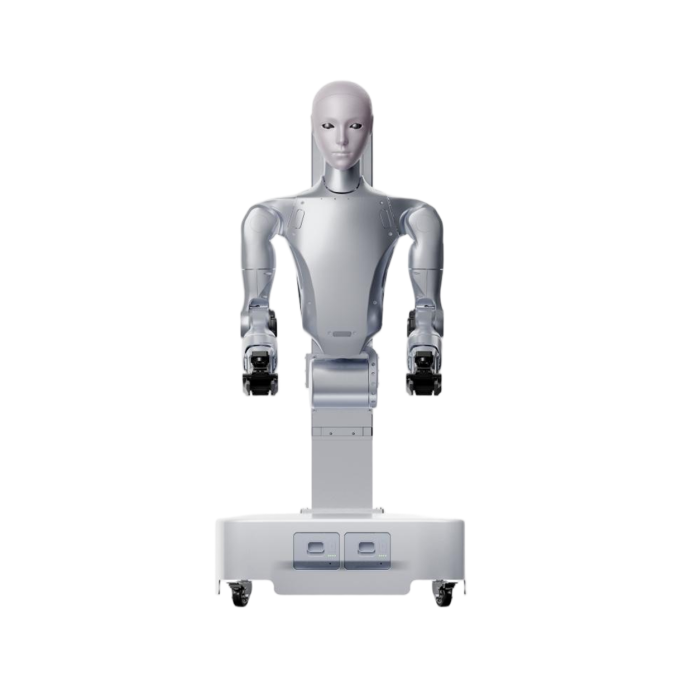
A humanoid robot earns its keep not by looking like a person but by how many joints it can move, how much torque it puts into each step and how long it keeps going before it needs a charger. The Unitree H2-D Standard H Humanoid Robot is built on the Unitree H2 platform, a full-size machine with 31 degrees of freedom, and the questions that matter are the practical ones: what it can do, what it is built from, and which configuration suits your project.
The product is available through this page, by quotation.
Background
Unitree and its lineage
Unitree Robotics is a robotics company known for legged machines. Its quadruped robots made it a familiar name in laboratories and universities, and its humanoid line grew from the same work on joints, motors and balance control. The H2 platform belongs to that humanoid line. It is meant for people who want to study, teach or build on a full-size walking machine, not only to watch one on a stage.
Legged robotics rewards companies that make their own actuators, because the joint is where a humanoid succeeds or fails. Every step loads the legs, every reach loads the arms, and the torque each joint can deliver sets what the whole machine can attempt. That is why the fact sheet for this platform is built around joints and torque figures.
Positioning of the H2-D Standard range
The Unitree H2-D Standard H Humanoid Robot sits in the H2-D Standard range, which this store lists as a set of lettered versions. The sources name several H2 configurations: H2, H2 EDU, H2 BASIC, H2 EDU STANDARD and H2 EDU SMART. The figures in this article are the ones given for the H2 platform. The entry-level H2 BASIC is described as having one computing unit, no PC dedicated to user development, no support for secondary development and no robotic hands included. Tell us your needs when you request a quotation, and we will match them to the right package.
To see the wider family, you can browse the H2-D Standard category or the Unitree H2-D category.
Technical Specifications
| Specification | H2 |
|---|---|
| Standing dimensions (H x W x D) | 1820 x 456 x 218 mm |
| Weight with battery | Approximately 70 kg |
| Total degrees of freedom | 31 |
| DoF per leg | 6 |
| DoF per arm | 7 |
| Waist DoF | 3 |
| Head DoF | 2 |
| Max. arm joint torque | 120 N.m |
| Max. leg joint torque | 360 N.m |
| Battery | 15 Ah (0.972 kWh) |
| Battery life | Approximately 3 h |
| Basic onboard computing | PC1: Intel Core i5 |
| Vision sensor | Wide-angle humanoid binocular camera |
| Voice interaction | Array microphones + high-power speaker |
| Connectivity | Wi-Fi 6, Bluetooth 5.2 |
| Materials | Aerospace-grade aluminum + titanium alloy + high-strength engineering plastics |
| Intelligent OTA | Yes |
| Charger | Yes |
| Manual remote controller | Yes |
Specifications as published by the manufacturer; confirmed against the datasheet at quotation.
The manufacturer has not published the top walking speed, the IP rating, the charging time, the operating temperature range, the camera resolution or whether a LiDAR is fitted; they are confirmed at quotation.
What makes the H2 platform different from a simple walking demonstrator?
The first difference is the joint count. With 31 degrees of freedom in total, the H2 platform spreads its movement across six degrees of freedom in each leg, seven in each arm, three in the waist and two in the head. A seven-joint arm can reach around obstacles and approach an object from more than one direction, which a simpler arm cannot do. A three-joint waist lets the torso bend and turn independently of the legs, and a two-joint head lets the cameras look where the task is.
The second difference is torque. The maximum is 120 N.m at the arm joints and 360 N.m at the leg joints. The legs carry the whole body, so they are stronger than the arms, as you would expect. For a team planning balance, gait or whole-body control work, joints with this headroom matter more than a long feature list.
The third difference is the build. The sources list aerospace-grade aluminum, titanium alloy and high-strength engineering plastics. A machine of about 70 kg with its battery needs a light, stiff frame, and that mix of materials is how this platform addresses it.
The fourth is the sensing and communication package: a wide-angle humanoid binocular camera, array microphones with a high-power speaker, Wi-Fi 6 and Bluetooth 5.2, and intelligent OTA updates. Together these give the robot a way to see, listen, speak and receive software updates, which is what interaction and research projects need.
What should I check about the configuration before ordering?
Configuration is where humanoid purchases go wrong. The sources describe the H2 BASIC as an entry-level package with one computing unit, no PC dedicated to user development, no secondary development and no robotic hands. A team that plans to write its own software, or needs the robot to handle objects, should therefore look closely at the version it chooses.
The basic onboard computing listed for the H2 is PC1 with an Intel Core i5. The sources say nothing about extra computing in the other versions, so this article adds none. Send us your requirements for computing, hands, development access and the contents of the Standard H package with your request. If you want to compare it with other lettered versions, the Unitree H2-D Standard A Humanoid Robot and the Unitree H2-D Standard B Humanoid Robot are good places to start.
Who is the Unitree H2-D Standard H Humanoid Robot for?
Universities and research institutes are the clearest fit. A full-size humanoid with a high joint count gives a laboratory a platform for locomotion, manipulation and human-robot interaction studies, and the onboard Intel Core i5 computing and wireless links suit software work.
Technical colleges and training centers can use it to teach robotics in a way a textbook cannot. Students see a real machine balance, move its arms and respond to speech, and the manual remote controller gives an instructor direct control during a lesson.
Integrators and product developers can use it to see how a humanoid would behave in a workplace built for people, such as doorways, shelves and corridors. The standing height of 1820 mm is the human-scale reference for that work.
Exhibition and visitor-experience operators may also be interested, since the voice interaction and the human-like form draw attention. If your project is mainly software development, tell us so when you ask for a quotation. For a comparison across the lettered versions, see the Unitree H2-D Standard C Humanoid Robot.
What is the Unitree H2-D Standard H Humanoid Robot used for?
- Locomotion research. Six degrees of freedom in each leg and high leg joint torque give researchers a platform for gait and balance studies.
- Manipulation studies. Seven degrees of freedom in each arm support work on reaching and approach strategies.
- Teaching and training. Instructors can show students a working full-size humanoid and run it with the manual remote controller.
- Human-robot interaction. The array microphones, high-power speaker and binocular camera support voice and vision projects.
- Integration trials. Teams can test how a human-scale robot fits spaces and workflows designed for people.
- Public demonstrations. A tall, speaking humanoid is a strong attraction for exhibitions and technology showcases.
Pricing and Availability
This page lists no prices. Quotation is the way to buy: send us your requirements, including the intended use, the hands and development features you need, and the delivery destination, and we will prepare an offer. Delivery, customs and support are arranged with the quotation. The Unitree H2-D Standard H Humanoid Robot is available on this page.
Frequently Asked Questions
How many degrees of freedom does the H2 platform have?
The H2 platform has 31 degrees of freedom in total. That is six in each leg, seven in each arm, three in the waist and two in the head.
How tall and how heavy is the robot?
The H2 stands 1820 x 456 x 218 mm (H x W x D) and weighs approximately 70 kg with its battery.
How long does the battery last?
The H2 battery is 15 Ah (0.972 kWh), and the battery life is approximately 3 h. A charger is listed with the platform.
Does it connect wirelessly and receive updates?
Yes. The H2 lists Wi-Fi 6 and Bluetooth 5.2, and intelligent OTA is listed as available. A manual remote controller is also listed.
Can I develop my own software on it?
It depends on the version. The H2 BASIC does not support secondary development, so tell us your development needs when you request a quotation.
What sensors and interaction hardware does it carry?
The H2 lists a wide-angle humanoid binocular camera, array microphones and a high-power speaker. Its basic onboard computing is PC1 with an Intel Core i5.
Where can I buy the Unitree H2-D Standard H Humanoid Robot and what does it cost?
You can buy it through this page by requesting a quotation. The cost depends on the configuration and the delivery destination, and it is given in the quotation itself.
Summary
The Unitree H2-D Standard H Humanoid Robot is worth judging by its joints, its torque and its configuration, not by its silhouette. The H2 platform offers 31 degrees of freedom, 120 N.m at the arm joints, 360 N.m at the leg joints, a 15 Ah battery and a sensing and communication package for interaction work. Choosing the right package for your project is the remaining step. When you are ready to compare configurations and plan your work, this page is the starting point.


