
Unitree H2-D Standard G Humanoid Robot
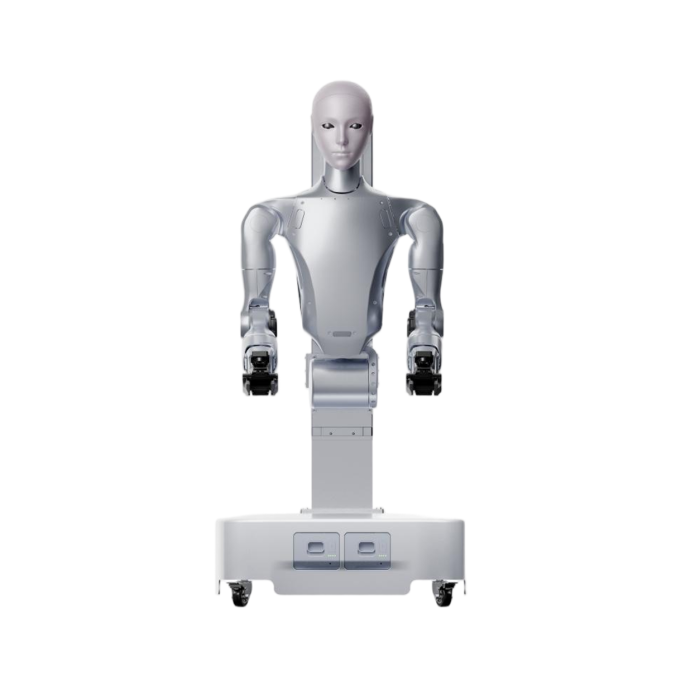
In stock
- BRAND:
- UNITREE ROBOTICS
- MODEL:
- H2-D-Standard-G
- PART #:
- H2-D-Standard-G
- ORIGIN:
- China
- Warranty:
- 12 MONTHS
- AVAILABILITY:
- SUBJECT TO AVAILABILITY
- SKU:
- Unitree-H2-D-Standard-G
Unitree H2-D Standard G Humanoid Robot
A humanoid robot earns its place not on a stage but in a corridor, where it has to open its arms, carry a load and keep its balance among ordinary furniture. The Unitree H2-D Standard G Humanoid Robot is built for that test, with 31 degrees of freedom and a frame about as tall as a grown adult.
The product is available through this page, by quotation.
Background
Unitree Robotics and the H2 lineage
Unitree Robotics is known for legged and humanoid platforms that research groups, universities and integrators use as working tools. The H2 family sits at the large, full-size end of that range. The sources we work from name four versions: H2, H2 EDU, H2 EDU Standard and H2 Plus. The H2-D Standard G on this page belongs to the same family, and its lettered suffix identifies one configuration among several sibling listings.
The fact sheet gives figures for the H2 and the H2 EDU. Those figures are shared by both versions, and we repeat them here as the family figures. Where something differs between versions, we say so plainly.
Positioning and key technology
The H2 platform combines a light, strong structure with powerful joints and onboard computing. Its materials are aerospace-grade aluminum, titanium alloy and high-strength engineering plastics. The motion control offers 31 degrees of freedom, joint torque of 360 N.m and precise replication of dynamic movement. Its algorithms evolve continuously through OTA updates, so the robot can keep improving after it arrives.
For perception it carries a wide-angle humanoid binocular camera. For interaction it has array microphones and a high-power speaker. Basic onboard computing is handled by PC1, an Intel Core i5. The H2 EDU version lists a high-performance computing module of up to Jetson AGX Thor (2070 TOPS); the base H2 does not list one.
Technical Specifications
| Specification | Value |
|---|---|
| Total degrees of freedom | 31 |
| Standing dimensions | 1820 x 456 x 218 mm |
| Weight with battery | Approximately 70 kg |
| Max. arm joint torque | 120 N.m |
| Max. leg joint torque | 360 N.m |
| Max. arm payload | Peak: ~15 kg; nominal: ~7 kg |
| Battery | 15 Ah (0.972 kWh) |
| Battery life | Approximately 3 h |
| Connectivity | Wi-Fi 6, Bluetooth 5.2 |
| Vision sensor | Wide-angle humanoid binocular camera |
| Voice interaction | Array microphones + high-power speaker |
| Basic onboard computing | PC1: Intel Core i5 |
| Materials | Aerospace-grade aluminum + titanium alloy + high-strength engineering plastics |
| Included accessories | Charger; manual remote controller; removable smart battery |
Specifications as published by the manufacturer; confirmed against the datasheet at quotation.
The manufacturer has not published the top walking speed, the IP rating, the operating temperature range, the charging time, the weight of a separate battery or the noise level; they are confirmed at quotation.
What makes the H2 platform different from a typical research robot?
The first difference is scale. At 1820 mm standing height and approximately 70 kg with its battery, it works at human proportions. Doors, benches and shelves built for people are in reach, which matters when you want to test tasks in a real space rather than a purpose-built cell.
The second difference is torque. Leg joints reach 360 N.m and arm joints 120 N.m. The arms carry a peak payload of about 15 kg and a nominal payload of about 7 kg, so a buyer can plan handling tasks around the nominal figure and treat the peak as a ceiling.
The third is that the robot is supplied ready to operate. The charger, a manual remote controller and a removable smart battery are included, and the 15 Ah (0.972 kWh) pack gives approximately 3 h of battery life.
What does the EDU version add?
The fact sheet shows one difference between the H2 and the H2 EDU: the EDU lists a high-performance computing module of up to Jetson AGX Thor (2070 TOPS), while the H2 shows none. For teams who want to run their own perception or learning workloads on board, that is the line to look at. Which compute option applies to the H2-D Standard G is confirmed at quotation.
Who is the Unitree H2-D Standard G Humanoid Robot for?
University laboratories and research institutes are the natural buyers. They need a full-size humanoid for locomotion, manipulation and human-robot interaction studies, and the OTA updates let them follow new algorithms.
Educators use it to teach robotics with real hardware. Integrators and demonstration teams use it to test a humanoid in a real building before committing to a larger program. Buyers who want to compare lettered configurations can look at the Unitree H2-D Standard A Humanoid Robot or the Unitree H2-D Standard F Humanoid Robot. The wider category is on the H2-D Standard page.
What is the Unitree H2-D Standard G Humanoid Robot used for?
- Locomotion research: studying balance and gait with 31 degrees of freedom.
- Manipulation studies: testing arm handling with a nominal payload of about 7 kg.
- Human-robot interaction: using the array microphones and high-power speaker for voice work.
- Vision development: building perception on the wide-angle binocular camera.
- Teaching: giving students a full-size humanoid to program and observe.
- Site evaluation: trying a humanoid in real facilities before wider deployment.
Pricing and Availability
We publish no prices on this page. A quotation is how you buy: tell us the configuration and the use, and we answer with an offer. Delivery, customs and support are arranged with the quotation. The Unitree H2-D Standard G Humanoid Robot is available on this page.
Frequently Asked Questions
How many degrees of freedom does it have?
The H2 family has 31 degrees of freedom in total.
How heavy is the robot?
It weighs approximately 70 kg with the battery, and it stands 1820 x 456 x 218 mm.
How long does the battery last?
Battery life is approximately 3 h on the 15 Ah (0.972 kWh) pack, which is removable.
What can the arms carry?
The arm payload is about 7 kg nominal and about 15 kg at peak.
How does it connect?
It supports Wi-Fi 6 and Bluetooth 5.2.
What comes with it?
The listed accessories are a charger, a manual remote controller and a removable smart battery.
Where can I buy the Unitree H2-D Standard G Humanoid Robot and what does it cost?
It is available through this page by quotation. The cost depends on the configuration and delivery, and we provide it in the quotation.
Summary
A humanoid is only useful if it can work where people work. With human proportions, 31 degrees of freedom, 360 N.m leg torque and about 3 h of battery life, the Unitree H2-D Standard G Humanoid Robot is built for that. To receive a quotation, this page is the starting point.


