
SIASUN Mobile Robot Logistics Warehouse System
In stock
- BRAND:
- SIASUN
- MODEL:
- Mobile Robot Logistics Warehouse System
- PART #:
- Mobile Robot Logistics Warehouse System
- ORIGIN:
- China
- Warranty:
- 12 MONTHS
- AVAILABILITY:
- SUBJECT TO AVAILABILITY
- SKU:
- SIASUN-Mobile-Robot-Logistics-Warehouse-System
SIASUN Mobile Robot Logistics Warehouse System
A warehouse can be well planned on paper and still lose hours between the office and the dock. The SIASUN Mobile Robot Logistics Warehouse System is built to close that gap. It joins the software that decides what should move with the software that makes the equipment move it, so a plan made at the desk becomes a task carried out on the floor.
The product is available through this page, by quotation.
Background
The company and its lineage
SIASUN Mobile Robots was established in 2000. Since then it has developed its own mobile robot dispatching and management systems, rather than relying on third-party software to direct its vehicles. Its work has centered on demanding fields such as automotive manufacturing, new energy power batteries, semiconductors and photovoltaics. Those are plants where material has to arrive at the right place, in the right order, again and again.
That background shapes this warehouse system. It comes from a maker that has spent years on the question of how fleets of mobile robots are scheduled, tracked and kept in step with the rest of a facility. Warehouse management is a natural extension of that work.
Positioning and key technology
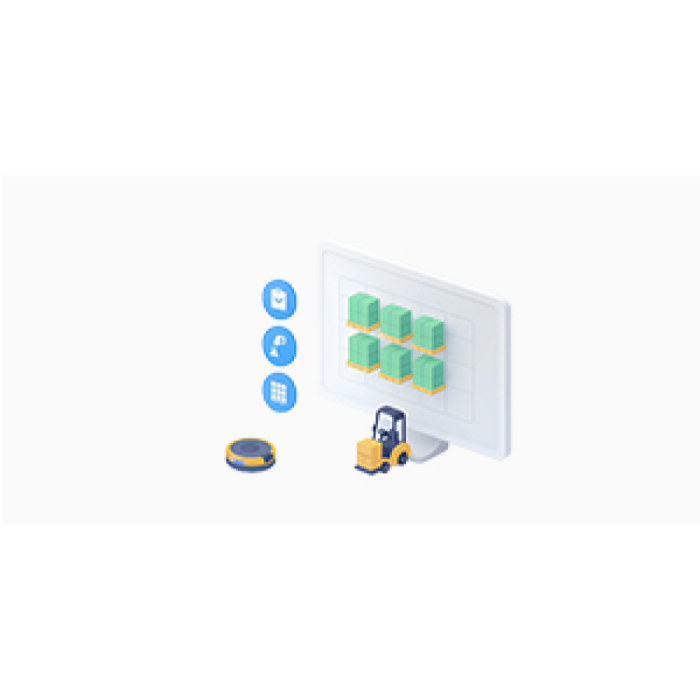
The system integrates a WMS (Warehouse Management System) with a WCS (Warehouse Control System). The WMS side handles the business of the warehouse: stock, locations, batches and orders. The WCS side handles the control of automation devices. Putting both in one system aligns warehouse business operations with device control, so the two are no longer separate worlds that need manual translation.
Inventory, material flow and equipment execution are coordinated on a single platform. The result is end-to-end visibility and automated warehouse operations. A supervisor can see where material is, where it is going and which device is carrying it, all from one place.
Within project implementation, the SIASUN Mobile Robotics Logistics and Warehousing System (LWS) is used to manage material inbound and outbound processes, inventory counting, regional transfers and in-warehouse organization. It also adds design capability, with functions for warehouse layout design, workstation design, storage location design and container design.
Technical Specifications
| Specification | Value |
|---|---|
| System type | WMS (Warehouse Management System) integrated with a WCS (Warehouse Control System) |
| Coordination | Inventory, material flow and equipment execution in a unified platform |
| Intelligent storage planning | Slotting, layout and container optimization |
| Inventory and material management | Real-time tracking with FIFO/LIFO and batch control |
| Automation linkage | Conveyors, elevators, access control and more |
| Inbound/outbound control | Multi-scenario dispatching |
| Warehouse operations managed (LWS) | Material inbound and outbound, inventory counting, regional transfers, in-warehouse organization |
| Design functions (LWS) | Warehouse layout, workstation, storage location and container design |
| Software integration | Integrates with existing software systems |
| Protocols of the related iMRS 2.0 platform | VDA5050, Alliance Protocol, SIASUN's proprietary protocol |
| Manufacturer's mobile robot history | SIASUN Mobile Robots established in 2000 |
Specifications as published by the manufacturer; confirmed against the datasheet at quotation.
The manufacturer has not published the supported robot count, the system requirements, the deployment model, the interfaces and APIs, the throughput, the package contents, the supported languages, the dimensions or the weight; they are confirmed at quotation.
What makes a combined WMS and WCS different from separate systems?
In many warehouses the management software and the equipment control software come from different suppliers and talk through hand-built connections. When an order changes, someone has to make sure both sides know. This system takes the opposite approach. Business operations and device control are aligned inside one system, so a change in stock or priority reaches the equipment through the same platform that recorded it.
The practical benefit is visibility. Because inventory, material flow and equipment execution are coordinated together, a manager sees the whole path of a pallet or a container, not just the part of it that one system happens to track. Inventory tracking runs in real time, with FIFO/LIFO rules and batch control. That matters for any operation where older stock must leave first, or where a batch has to be traced.
How does it handle storage planning and automation devices?
Storage planning is part of the system rather than a separate exercise. It supports slotting, layout and container optimization, and the LWS adds functions for designing the warehouse layout, workstations, storage locations and containers. A team that is setting up a new space, or reorganizing an existing one, can work through those decisions in the same environment it will later run in.
On the floor, the system links to conveyors, elevators, access control and more. Those are the devices that decide whether a mobile robot can actually complete a trip: a lift that must be called, a door that must open, a conveyor that must accept a load. Inbound and outbound control uses multi-scenario dispatching to lift efficiency across different kinds of jobs. The system also integrates efficiently with existing software systems, which helps customers manage processes end to end without discarding what they already run.
For wider context, the related iMRS 2.0 platform supports VDA5050, Alliance Protocol and SIASUN's proprietary protocol. That points to a vendor that treats openness between vehicles and software as a design goal. To see how this system sits beside other SIASUN software, browse the Mobile Robots category or the Logistics Robots category.
Who is the SIASUN Mobile Robot Logistics Warehouse System for?
It suits operators who already move material with mobile robots, or plan to, and want one system to manage the warehouse around them. Manufacturers in fields such as automotive, batteries, semiconductors and photovoltaics are the natural audience, given the company's history. So are logistics managers who handle inbound and outbound flows, inventory counts and transfers between zones, and who are tired of reconciling several tools.
System integrators and project teams will value the design functions, since layout, workstation, storage location and container design can be handled in the same project. Facilities that rely on existing software will care about the integration with existing systems.
Buyers whose main need is something other than warehouse management may be better served by a sibling product. For fleet dispatch and traffic, look at the Mobile Robot Transport Control System. For planning a floor before changing it, see the Mobile Robot Layout Planner Tools. For reporting on operations, the Mobile Robot Statistical Analysis System is the closer match.
What is the SIASUN Mobile Robot Logistics Warehouse System used for?
- Inbound and outbound control. Multi-scenario dispatching directs material arriving and leaving the warehouse.
- Inventory tracking. Real-time records with FIFO/LIFO rules and batch control keep stock accurate.
- Inventory counting. Counts are managed within the system rather than on separate sheets.
- Regional transfers. Material moves between areas of the warehouse under the same coordination.
- Storage planning. Slotting, layout and container optimization organize where goods are kept.
- Device coordination. Conveyors, elevators, access control and more are linked into one workflow.
Pricing and Availability
No price is shown on this page. Quotation is the way to buy: tell us about your warehouse and the processes you want to manage, and we prepare an offer around them. Delivery, customs and support are arranged with the quotation. The SIASUN Mobile Robot Logistics Warehouse System is available on this page.
Frequently Asked Questions
What does the system combine?
It integrates a WMS (Warehouse Management System) with a WCS (Warehouse Control System). This aligns warehouse business operations with the control of automation devices.
Which inventory rules does it support?
It offers real-time tracking with FIFO/LIFO and batch control. Intelligent storage planning adds slotting, layout and container optimization.
Can it work with conveyors and elevators?
Yes. The system integrates conveyors, elevators, access control and more, so those devices take part in the same workflow as the mobile robots.
Can it connect to the software we already use?
Yes. It integrates efficiently with existing software systems, which helps customers manage processes end to end.
Does it help design the warehouse?
Yes. The LWS provides warehouse layout design, workstation design, storage location design and container design.
Which protocols are supported?
The related iMRS 2.0 platform supports VDA5050, Alliance Protocol and SIASUN's proprietary protocol.
Where can I buy the SIASUN Mobile Robot Logistics Warehouse System and what does it cost?
You can buy it through this page by requesting a quotation. The cost depends on your project and is given in the quotation, not shown here.
Summary
The gap between the office plan and the floor is where warehouse time is lost. The SIASUN Mobile Robot Logistics Warehouse System narrows it by bringing the WMS and WCS together, with inventory, material flow and equipment execution on one platform. It adds storage planning, design functions, and links to conveyors, elevators and access control, from a maker with mobile robot experience dating to 2000. If you want to see how it fits your warehouse, this page is the starting point.


