
SIASUN Mobile Robot Transport Control System (Mobile Robot Transport Control System)
In stock
- BRAND:
- SIASUN
- MODEL:
- Mobile Robot Transport Control System
- PART #:
- Mobile Robot Transport Control System
- ORIGIN:
- China
- Warranty:
- 12 MONTHS
- AVAILABILITY:
- SUBJECT TO AVAILABILITY
- SKU:
- SIASUN-Mobile-Robot-Transport-Control-System
SIASUN Mobile Robot Transport Control System (Mobile Robot Transport Control System)
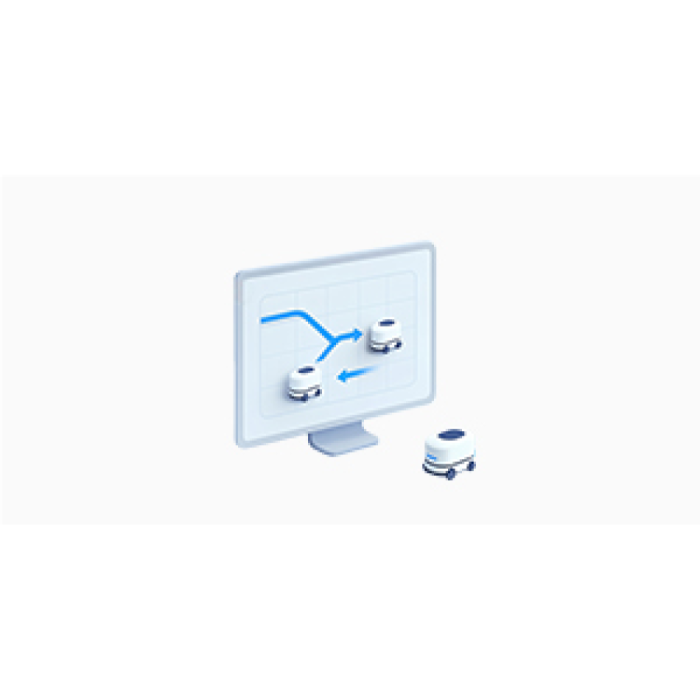
Every busy port has a control tower, and every busy robot floor needs the same thing: someone who sees all the traffic at once and decides who goes first. The SIASUN Mobile Robot Transport Control System (Mobile Robot Transport Control System) plays that part for fleets of mobile robots, using AI-powered traffic models to keep vehicles moving when the floor gets crowded.
The product is available through this page, by quotation.
Background
The company and its lineage
SIASUN Mobile Robotics was established in 2000 and has independently developed mobile robot scheduling and management systems ever since. Its work has centered on automotive manufacturing, new energy power batteries, semiconductors and photovoltaics. These are industries where material has to arrive at the right station at the right time, and where a stalled vehicle can hold up a whole line.
That long focus on dispatching and management software is the lineage behind the Transport Control System. It is one part of the iMRS platform, which covers all processes, scenarios and customer needs through six key sub-modules. The versions named in the sources are the iMRS 2.0 platform with its TCS, LWS and SAS modules, and the Transport Control System (TCS) is the module this page describes.
Positioning and key technology
The Transport Control System uses AI-powered traffic models to improve transportation efficiency. Four capabilities define it: congestion estimation, intelligent detours, intelligent obstacle avoidance and dynamic congestion resolution. Together they move the system beyond fixed routes. It anticipates where vehicles will bunch up, steers traffic around the problem and clears jams as they form.
The module sits inside a wider platform. All SIASUN solutions are supported by the iMRS 2.0 platform, which enables multi-robot dispatching, route optimization, data analytics and digital twins for end-to-end intelligent control. The aim is efficient, flexible and sustainable smart logistics. The platform is centered on mobile robotics and supports cross-platform integration, multiple languages and various vehicle models.
Technical Specifications
| Specification | Value |
|---|---|
| Product | SIASUN Mobile Robot Transport Control System (Mobile Robot Transport Control System) |
| Core function | AI-powered traffic models for congestion estimation, intelligent detours, intelligent obstacle avoidance and dynamic congestion resolution |
| Platform | iMRS 2.0 platform with TCS, LWS and SAS modules |
| Platform sub-modules | Six key sub-modules |
| Supported protocols (iMRS 2.0 platform) | VDA5050, Alliance Protocol, SIASUN's proprietary protocol |
| Scheduling scale (iMRS 2.0 platform) | Large-scale, hybrid scheduling for up to thousands of units |
| Platform capabilities | Multi-robot dispatching, route optimization, data analytics, digital twins |
| Customization services (iMRS 2.0 platform) | Secondary development, low-code development, predictive maintenance |
| Deployment time (iMRS 2.0 platform) | A relatively mature scenario within one month; more complex scenarios within two months, when customer site conditions are met |
Specifications as published by the manufacturer; confirmed against the datasheet at quotation.
The manufacturer has not published the server hardware requirements, the supported operating systems, the maximum fleet size for the Transport Control System alone, the interfaces and APIs, the licensing model, the package contents or the software version; they are confirmed at quotation.
What makes this system different from a basic fleet scheduler?
A basic scheduler hands out tasks and draws routes. It treats the floor as a static map and reacts only when two vehicles are already facing each other. The Transport Control System is built around traffic models that estimate congestion before it becomes a standstill. When a corridor is filling up, it can send vehicles by another route. When something blocks the path, intelligent obstacle avoidance and dynamic congestion resolution come into play.
The second difference is the platform behind it. Because the module belongs to the iMRS 2.0 platform, it works alongside multi-robot dispatching, route optimization, data analytics and digital twins. A buyer therefore gets a traffic layer that is part of a complete logistics software environment rather than a stand-alone tool.
How does it fit with the vehicles and systems already on site?
Mixed fleets are the norm in real plants, so openness matters. The iMRS 2.0 platform supports VDA5050, the Alliance Protocol and SIASUN's proprietary protocol, along with various vehicle models, multiple languages and cross-platform integration. For a buyer, that means the question of which vehicles can be coordinated is answered by protocol and model support. It is not answered by a single closed list.
Process changes are another concern. SIASUN offers secondary development, low-code development and predictive maintenance, so that features can be customized as processes shift. On timing, when customer site conditions are met, a relatively mature scenario can be implemented within one month, and more complex scenarios within two months.
Who is the SIASUN Mobile Robot Transport Control System for?
The first group is manufacturers in the industries SIASUN has served since 2000: automotive, new energy power batteries, semiconductors and photovoltaics. Their material flows are dense and tightly timed, and a traffic layer pays off quickly.
The second group is plant and workshop logistics managers who are growing from a handful of vehicles toward a large fleet. The iMRS 2.0 platform offers large-scale, hybrid scheduling for up to thousands of units, with an integrated solution for material storage and distribution at the plant and workshop levels.
The third group is integrators and operators in the region who need to coordinate vehicles of different types under one protocol-aware system. Those who still need to choose the vehicles can browse the Mobile Robots category or the wider Factory Robots category. Examples of SIASUN vehicles include the SIASUN 2000 Kg Under-ride Lift Mobile Robot (P-T2000D) and the SIASUN 3T Heavy-Duty Mobile Robot.
What is the SIASUN Mobile Robot Transport Control System used for?
- Congestion estimation: AI traffic models anticipate where vehicles will bunch up before it slows the line.
- Intelligent detours: traffic is rerouted around crowded or blocked stretches of the floor.
- Obstacle avoidance: vehicles are guided around obstructions so transport keeps moving.
- Dynamic congestion resolution: jams that do form are cleared by the system as they develop.
- Multi-robot dispatching: the iMRS 2.0 platform coordinates many robots from one control layer.
- Plant and workshop material distribution: storage and distribution are handled as one integrated solution at both levels.
Pricing and Availability
The SIASUN Mobile Robot Transport Control System is sold by quotation, so that the configuration matches your site, your vehicles and your processes. Delivery, customs and support are arranged together with the quotation. Send us your requirements and the product is available on this page.
Frequently Asked Questions
What does the Transport Control System actually control?
It manages the traffic of mobile robots on the floor. It uses AI-powered traffic models for congestion estimation, intelligent detours, intelligent obstacle avoidance and dynamic congestion resolution.
Which protocols does it support?
The iMRS 2.0 platform supports VDA5050, the Alliance Protocol and SIASUN's proprietary protocol. It also supports various vehicle models and cross-platform integration.
How many vehicles can it handle?
The iMRS 2.0 platform is capable of large-scale, hybrid scheduling for up to thousands of units. Tell us the size of your fleet and we will address it in your quotation.
How long does deployment take?
When customer site conditions are met, the iMRS platform can implement a relatively mature scenario within one month. More complex scenarios take up to two months.
Can the system be adapted to changing processes?
Yes. SIASUN offers secondary development, low-code development and predictive maintenance, which allow customized features as processes change.
What are the server and software requirements?
Those details are handled with your quotation. Send us your site requirements and we will take them from there.
Where can I buy the SIASUN Mobile Robot Transport Control System and what does it cost?
It is available through this page, by quotation. The cost depends on your configuration, and we do not show a price here; send us your requirements and we will prepare the quotation.
Summary
A fleet of robots is only as productive as its traffic allows, and the SIASUN Mobile Robot Transport Control System acts as the control tower that keeps the floor moving. Its AI-powered traffic models estimate congestion, detour vehicles, avoid obstacles and resolve jams, and it rests on the iMRS 2.0 platform with its multiple protocols and large-scale scheduling. If you are planning or expanding a mobile robot operation, this page is the starting point.


