
SIASUN GCR7-910 (GCR7-910)
In stock
- BRAND:
- SIASUN
- PART #:
- GCR7-910
- ORIGIN:
- China
- AVAILABILITY:
- SUBJECT TO AVAILABILITY
- SKU:
- SIASUN-GCR7-910
SIASUN GCR7-910 (GCR7-910)
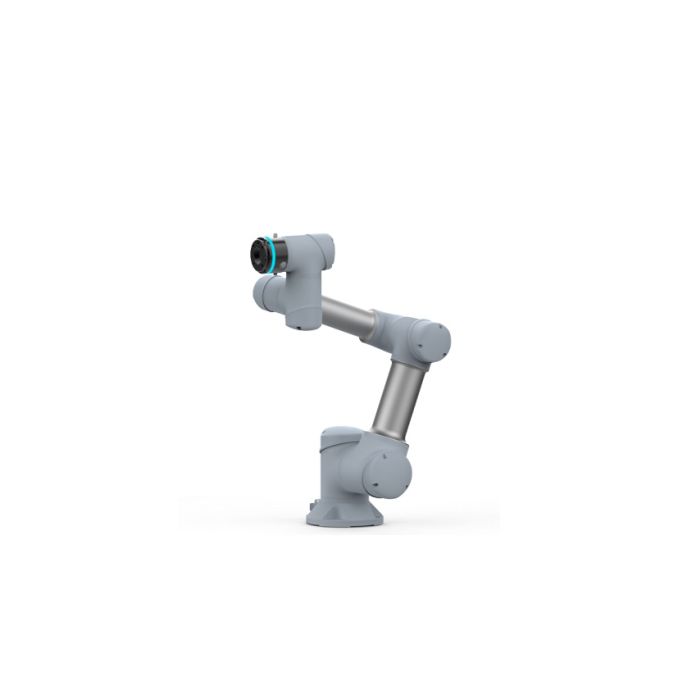
A robot arm that can stand beside a person without a fence is only useful if it can also hold its position to a few hundredths of a millimeter. The SIASUN GCR7-910 (GCR7-910) is built around that pairing: a six-axis collaborative arm that carries 7kg, reaches 917mm and repeats to ±0.02mm, while keeping people in mind at every step.
The SIASUN GCR7-910 (GCR7-910) is available through this page, by quotation.
Background
SIASUN DUCO and the GCR series
SIASUN is a robotics manufacturer, and SIASUN DUCO is its sub-brand focused on intelligent robotics. SIASUN DUCO has broken foreign technology monopolies in multiple fields, and all of its core components are independently developed. For a buyer, that matters in a practical way: the people who design the arm also design the parts inside it, which tends to make support and upgrades more straightforward.
The GCR series is the collaborative family that carries this work. It includes five versions: GCR3-618, GCR5-910, GCR7-910, GCR10-1300 and GCR12-1300. The GCR7-910 is a high-end, general-purpose collaborative robot in that series. The words general-purpose are worth noting. This arm is not tied to one narrow job; it is meant to be moved from task to task as production changes.
Positioning and key technology
Three technical ideas define this arm. The first is safety: 16 TUV-certified safety features are provided for human-machine collaboration, with a focus on safety. The second is perception: the arm integrates 2D/3D vision depth fusion with high-sensitivity force perception and control, so it can see a part and feel it. The third is ease of use: drag-and-drop teach programming lowers the usage threshold and makes operation easier.
Around the arm sits a software layer. Scenario-specific software packages and multiple external interfaces are supported, together with cloud-based robot data monitoring and remote OTA upgrades. In plain terms, the arm can be watched from a distance and improved over time without a technician standing next to it.
Technical Specifications
| Specification | Value |
|---|---|
| Product type | High-end, general-purpose collaborative robot (GCR series) |
| Degrees of freedom | 6 |
| Max payload | 7kg |
| Reach | 917mm |
| Repeatability | ±0.02mm |
| Max TCP speed | 3.6m/s |
| Max straight-line speed | 1.5m/s |
| IP class | IP54/IP65 |
| Safety | 16 TUV-certified safety features for human-machine collaboration |
| Programming | Drag-and-drop teach programming |
Specifications as published by the manufacturer; confirmed against the datasheet at quotation.
The manufacturer has not published the ambient temperature range, the control cabinet contents, the joint ranges, the noise level or the package contents; they are confirmed at quotation.
What makes the GCR7-910 different from a traditional industrial robot?
A traditional industrial robot is usually fast and strong, and it lives inside a guarded cell. A collaborative arm trades some of that raw character for the ability to work near people. The GCR7-910 keeps a good deal of performance on its side of that trade: a max TCP speed of 3.6m/s, a max straight-line speed of 1.5m/s and repeatability of ±0.02mm.
The difference also shows in how the arm is put to work. Drag-and-drop teach programming means an operator can show the arm what to do instead of writing code from scratch. That shortens the road from delivery to first useful cycle, and it makes changeovers less of an event. For a small plant that runs many different jobs in small batches, this is often the deciding factor.
Finally, the arm is connected. Cloud-based data monitoring and remote OTA upgrades mean it can be observed and updated as part of a wider operation, which a standalone traditional robot typically is not.
How does the GCR7-910 combine safety with sensing?
Safety on a collaborative robot is not one feature; it is a set of them working together. The GCR7-910 offers 16 TUV-certified safety features for human-machine collaboration, which gives a safety officer a documented base from which to assess a workcell.
Sensing adds to that. The integration of 2D/3D vision depth fusion lets the arm locate parts that are not placed in exactly the same spot each time. High-sensitivity force perception and control lets it respond to contact, which is useful for fitting one part into another or for working carefully alongside a person. Together they move the arm from repeating a path to reacting to its surroundings.
The IP class is IP54/IP65, which tells a buyer that the arm is designed with dust and moisture exposure in mind.
Who is the SIASUN GCR7-910 (GCR7-910) for?
The first group is small and mid-sized manufacturers who need flexible automation without building a fenced cell. A 7kg payload and 917mm reach cover many tending, handling and assembly-support tasks, and the teach programming suits teams without a robotics specialist.
The second group is integrators and engineering teams who build workcells for others. A general-purpose arm with multiple external interfaces and scenario-specific software packages gives them a flexible starting point, and the vision and force capabilities allow more demanding applications.
The third group is training centers, laboratories and universities, where an arm that is safe around people and easy to teach is a real advantage. In the Caribbean, where plants are often compact and product mixes change, that flexibility counts for a lot.
If your task needs a different arm in the same family, compare the GCR5-910 or the GCR10-1300, and browse the full range in the Cobots category. Keep each model's figures with that model when you compare them.
What is the SIASUN GCR7-910 (GCR7-910) used for?
- Machine tending: loading and unloading a machine so that an operator is free for other work.
- Assembly assistance: holding, placing and fitting parts, with force perception helping where contact matters.
- Material handling: moving parts between stations within the reach of the arm.
- Vision-guided picking: using 2D/3D vision depth fusion to find parts that are not always in the same place.
- Quality and inspection support: presenting parts to a camera or sensor at repeatable positions.
- Training and development: teaching operators and engineers about collaborative automation in a safe environment.
Pricing and Availability
Prices are not listed here, because the right configuration depends on your task, your site and your quantity. Request a quotation and we will respond with what your project needs. Delivery, customs and support are arranged with the quotation, so you know the full picture before you commit. The SIASUN GCR7-910 (GCR7-910) is available on this page.
Frequently Asked Questions
What payload and reach does the GCR7-910 have?
The max payload is 7kg and the reach is 917mm. The arm has 6 degrees of freedom.
How precise is the GCR7-910?
Repeatability is ±0.02mm. The max TCP speed is 3.6m/s and the max straight-line speed is 1.5m/s.
How is the GCR7-910 programmed?
It uses drag-and-drop teach programming, designed to lower the usage threshold and make operation easier. Scenario-specific software packages are also available.
What safety features does it have?
The arm has 16 TUV-certified safety features for human-machine collaboration. These are intended for work near people.
Can it be monitored and updated remotely?
Yes. The arm supports cloud-based robot data monitoring and remote OTA upgrades, along with multiple external interfaces.
What is the IP class of the GCR7-910?
The IP class is IP54/IP65.
Where can I buy the GCR7-910 and what does it cost?
You can request it through this page, by quotation. No price is listed here; the quotation covers your configuration, delivery, customs and support.
Summary
The balance between a gentle neighbor and a precise worker is the heart of the SIASUN GCR7-910 (GCR7-910). It offers 7kg of payload, 917mm of reach and ±0.02mm repeatability, with 16 TUV-certified safety features, vision and force sensing, teach programming and cloud monitoring around it. It suits teams that want flexible automation without a fenced cell, and it can be compared with other arms in the series when needs differ. For a quotation that fits your project, this page is the starting point.


