
SEER Robotics M4 Smart Logistics Management System (m4)
In stock
- BRAND:
- SEER ROBOTICS
- MODEL:
- m4
- PART #:
- m4
- ORIGIN:
- China
- Warranty:
- 12 MONTHS
- AVAILABILITY:
- SUBJECT TO AVAILABILITY
- SKU:
- SEER-Robotics-m4
SEER Robotics M4 Smart Logistics Management System (m4)
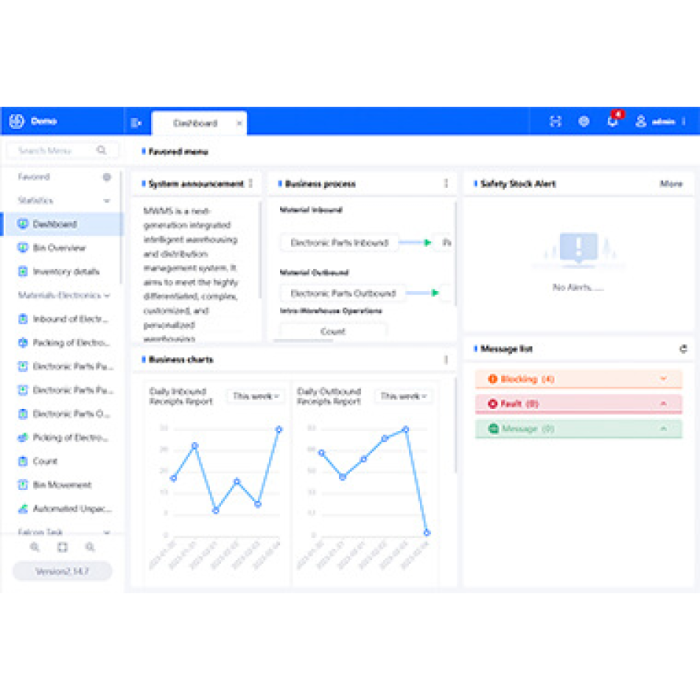
A warehouse full of robots from different makers can behave like a crowd with no one directing traffic. The SEER Robotics M4 Smart Logistics Management System (m4) is built to be that direction: one platform that decides which robot does what, where it drives, and how it gives way to the next.
The product is available through this page, by quotation.
Background
The company and its lineage
SEER Robotics is a Shanghai, China-based company working in mobile robotics and logistics automation. Its Resource Dispatch System (RDS) fleet manager is the piece of software that schedules robots across different working scenarios, and it is the foundation on which the M4 is built.
The M4 takes that dispatching heritage a step further. It is powered by its core module, the RDS Fleet Management System, and is offered as a wider solution rather than a stand-alone fleet scheduler. If you already know the dispatching layer on its own, you can read about it on the SEER Robotics RDS: Robot Management System page.
Positioning and key technology
The M4 is aimed at robot-centered automated warehouse operations. Its architecture combines the functions of a Warehouse Management System (WMS), a Warehouse Control System (WCS) and a Fleet Management System (FMS) in a single platform. In many sites these three layers are bought, installed and maintained separately. Here they are presented together, with robot dispatching joined to warehouse operations.
For scheduling, the M4 uses upgraded R-MAPF (Multi-Agent Path Finding) algorithms. Multi-agent path finding is the problem of moving many vehicles through shared space without collisions or deadlocks, and the M4 coordinates path planning and traffic control across multiple robots to manage congestion and route conflicts. The system integrates three product modules and multiple solutions, which allows efficient control of the warehouse operation as a whole.
Technical Specifications
| Specification | Value |
|---|---|
| Product | M4 Smart Logistics Management System |
| Storage locations supported | Millions |
| Robots under coordinated control | Hundreds of heterogeneous robots |
| Architecture | WMS, WCS and FMS functions in a single platform |
| Product modules | Three, with multiple solutions |
| Core module | RDS Fleet Management System |
| Path-finding algorithm | Upgraded R-MAPF (Multi-Agent Path Finding) |
| Task-allocation factors | Task type, material status, robot condition, task progress, traffic conditions |
Specifications as published by the manufacturer; confirmed against the datasheet at quotation.
The manufacturer has not published the supported operating systems, the server hardware requirements, the database requirements, the integration interfaces and protocols, the licensing model, the deployment options or the supported languages; they are confirmed at quotation.
What makes the M4 different from a stand-alone fleet manager?
A fleet manager answers one question: which robot goes where. A warehouse needs more answers than that. It must know what material is on hand, where it is stored, which order needs it and what state the equipment is in. The M4 brings those answers together, because the WMS, WCS and FMS functions sit in the same platform. Dispatching therefore works from the same picture of the warehouse that inventory and control use, and nothing has to be passed between three separate products.
The task-allocation logic shows the difference. It weighs the task type, the material status, the condition of the robot, the progress of the task and the traffic conditions. A simple scheduler might send the nearest idle robot. A system that also looks at material status and traffic can choose differently, and the choice follows what is actually happening on the floor.
How does the M4 handle a mixed fleet at scale?
The M4 supports millions of storage locations and coordinated control of hundreds of heterogeneous robots. The word heterogeneous matters. Real sites rarely run one robot type. They may have lifting robots, forklifts, tuggers and conveyors that were added over several years. A platform that controls many kinds of robot under one set of traffic rules avoids the situation where each vendor's vehicles are managed in isolation and meet only at the aisle crossings.
The upgraded R-MAPF algorithms address those crossings directly. When robots compete for the same lane, junction or station, the system plans paths and manages traffic across all of them, so that congestion and route conflicts are handled by the platform rather than by operators stepping in. For sites that run autonomous vehicles of the forklift class, the catalog includes items such as the SEER Robotics 2000 Kg Counterbalanced Autonomous Forklift (SFL-CPD20-Y), which is a separate product from the M4 and is quoted on its own page.
Who is the M4 for?
The M4 suits operators who have moved beyond a handful of robots and now need the warehouse and the fleet to work as one system. Typical buyers include:
- Distribution and fulfillment operators who run large storage areas and need dispatching tied to inventory.
- Manufacturers who move material between lines, stores and dispatch with a mix of robots, and who may also browse Factory Robots.
- Integrators who deliver automated warehouses for clients and want one platform in place of several.
- Operators planning to grow a fleet from a small start toward many robots without changing their management layer.
If you only need a dispatching layer for a fleet and have no need for the warehouse functions, the RDS: Robot Management System is the more focused product to compare. Wider equipment for warehouse automation is grouped under Logistics Robots.
What is the M4 used for?
- Dispatching mixed robot fleets. Hundreds of heterogeneous robots are coordinated from one platform.
- Allocating tasks intelligently. Assignments reflect task type, material status, robot condition, task progress and traffic.
- Controlling traffic. Path planning and traffic control across robots manage congestion and route conflicts.
- Managing storage locations. The platform supports millions of storage locations as part of its warehouse functions.
- Replacing separate software layers. WMS, WCS and FMS functions are combined in a single platform.
- Running robot-centered automated warehouses. The three product modules and multiple solutions control the operation end to end.
Pricing and Availability
The M4 is sold by quotation, and no price is listed on this page. Tell us about your site, the robots you run or plan to run, and the scale of your storage, and we will prepare a quotation that fits. Delivery, customs and support are arranged with the quotation. The SEER Robotics M4 Smart Logistics Management System (m4) is available on this page.
Frequently Asked Questions
What is the SEER Robotics M4 Smart Logistics Management System?
It is a software platform from SEER Robotics that combines WMS, WCS and FMS functions to run robot-centered automated warehouses. It is powered by the RDS Fleet Management System as its core module.
How many robots and storage locations can it handle?
It supports millions of storage locations and coordinated control of hundreds of heterogeneous robots.
How does it decide which robot takes a task?
Its task-allocation logic considers task type, material status, robot condition, task progress and traffic conditions.
How does it avoid traffic jams between robots?
It coordinates path planning and traffic control across multiple robots, using upgraded R-MAPF algorithms, to manage congestion and route conflicts.
Which operating systems and databases does it need?
We go through the operating system, server and database requirements with you when we prepare your quotation.
Can it connect to my existing systems?
Tell us which systems you run, and we go through the integration interfaces and protocols with you when we prepare the quotation.
Where can I buy the M4 and what does it cost?
You can request it through this page. It is sold by quotation, so there is no listed price; we prepare a quotation after we understand your project.
Summary
Many robots working with no common direction is a problem of coordination, and the M4 answers it with one platform that joins warehouse management, warehouse control and fleet management. It handles a mixed fleet, allocates tasks from real conditions on the floor and manages traffic so that robots keep moving. Details such as deployment options, licensing and integration interfaces are worked out with you when the quotation is prepared. If you are ready to bring order to a fleet of robots, this page is the starting point.


