
SEER Robotics RDS: Robot Management System (rds)
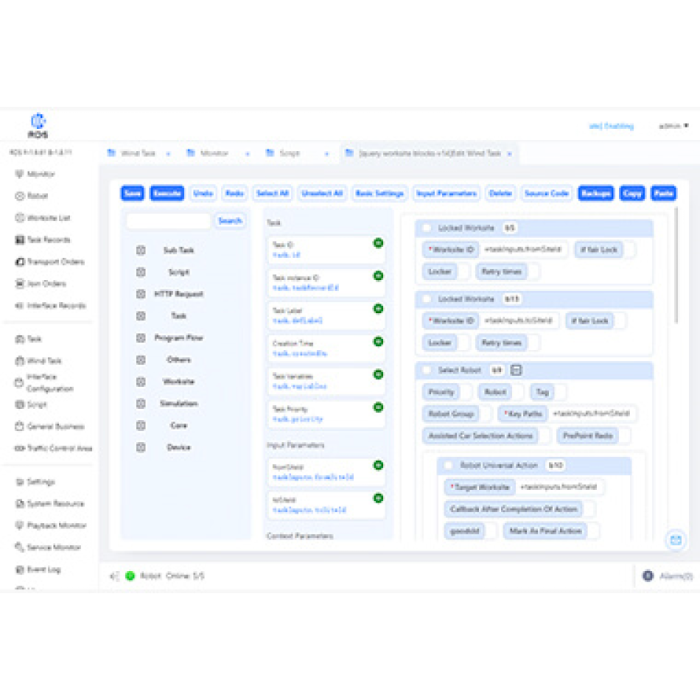
In stock
- BRAND:
- SEER ROBOTICS
- MODEL:
- rds
- PART #:
- rds
- ORIGIN:
- China
- Warranty:
- 12 MONTHS
- AVAILABILITY:
- SUBJECT TO AVAILABILITY
- SKU:
- SEER-Robotics-rds
SEER Robotics RDS: Robot Management System (rds)
A plant with one robot has a robot. A plant with twenty robots, two elevators and an MES has a traffic problem. SEER Robotics RDS: Robot Management System (rds) is built for that second situation, where the hard part is no longer the machine but the coordination between machines, doors, lifts and business software.
The product is available through this page, by quotation.
Background
The company behind RDS
SEER Robotics (06106.HK) is a platform-based embodied intelligent robotics company built around the Robot Brain. It serves 2,500+ customers worldwide with intelligent robotics solutions. That customer base matters for a dispatching system, because dispatching software is only as useful as the range of real sites it has been shaped by.
RDS sits next to SEER Robotics hardware and software in the same family. The lifting robot solution is based on the SRC controller and is integrated with SEER Robotics software, namely RDS (Robot Management System) and M4. The company's logistics software layer is covered separately on the page for the SEER Robotics M4 Smart Logistics Management System.
Where RDS fits
RDS is a new generation of dispatching system for the unified management of mobile robots and factory automation logistics devices. It supports collaborative planning and intelligent dispatching of multiple robots. Instead of treating every vehicle as an isolated unit, it treats the plant as one system.
Through a low-code business process engine, it gives customers an efficient way to build application scenarios quickly, which helps enterprises transform and upgrade their intelligent manufacturing. Its visualization module adds a 2D view of the robots, so operators can read the state of the fleet at a glance. Buyers who want to look further into that side can also see the SEER Robotics Visualization Product Series.
Technical Specifications
| Specification | Value |
|---|---|
| Product type | Dispatching system for the unified management of mobile robots and factory automation logistics devices |
| Multi-robot function | Collaborative planning and intelligent dispatching of multiple robots |
| Application building | Low-code business process engine |
| Visualization | 2D robot visualization with real-time linked updates |
| Visualization templates | 2 (Robot Exception Operation template and Robot Business Execution template) |
| Chart library | 16 types of data charts |
| Management scope | All robots and factory automation logistics equipment within the plant |
| Controller integration | SRC controller, as part of the SEER Robotics lifting robot solution |
| Manufacturer | SEER Robotics (06106.HK) |
Specifications as published by the manufacturer; confirmed against the datasheet at quotation. The manufacturer has not published the system requirements, the maximum number of robots managed, the supported communication protocols, the deployment options, the licensing model, the supported languages or the contents of the delivery; they are confirmed at quotation.
What makes RDS different from simply running robots one by one?
Running robots one by one works until two of them want the same aisle. RDS employs dynamic global planning to analyze real-time robot positions, task priorities and environmental changes. From that analysis it optimizes multi-robot pathfinding and traffic control to prevent deadlocks. The planning looks at the whole plant at once, not at one vehicle's route.
The system also introduces "ride-sharing" and "pre-loading" modes. They are aimed at how robots take on work, so that a fleet spends less of its day waiting for the next job.
The management scope is the other difference. RDS supports the unified management of all robots and factory automation logistics equipment within the plant, with stronger collaborative scheduling capabilities, higher safety levels and lower learning and development barriers. For a site that has grown its automation in stages, one dispatching layer over everything is a practical gain.
How does RDS connect robots to the rest of the factory?
Large factories increasingly run tasks that span several floors and regions. Such tasks require robots to coordinate with elevators, automated doors and other smart devices. A transport job then becomes one managed process rather than a set of hand-offs.
On the business side, RDS acts as a "central neural network" by integrating with enterprise-level business software such as manufacturing execution systems (MES). That enables data exchange and task distribution, so orders raised in the business system can reach the robots without manual re-entry.
The visualization module supports real-time linked updates. It offers two templates, the Robot Exception Operation template and the Robot Business Execution template, and a chart library of 16 types of data charts. These cover multi-dimensional key indicators such as robot status distribution, daily order volume, daily execution efficiency, task completion rate and recent task exceptions. Supervisors can see both what is running and what has gone wrong.
RDS also enables rapid simulation modeling. Companies can test robot deployment by dynamically scaling robot numbers and simulating concurrent tasks, which lets them check a plan before committing vehicles to the floor.
Who is RDS for?
RDS is for manufacturers and logistics operators who already run, or are about to run, several mobile robots and want one system in charge. Plant managers and automation engineers will find the low-code business process engine useful for building application scenarios without a long development cycle.
Operations teams that need to report on fleet performance will use the visualization module and its chart library. Integrators who plan multi-floor deployments can use the elevator and door coordination and the simulation modeling during design.
Buyers focused on the logistics software layer can compare it with the M4 Smart Logistics Management System. Those exploring the wider hardware range can browse Factory Robots and Logistics Robots.
What is RDS used for?
- Multi-robot dispatching: collaborative planning and intelligent dispatching across the whole fleet.
- Traffic control: dynamic global planning of pathfinding to prevent deadlocks.
- MES integration: data exchange and task distribution with enterprise-level business software.
- Multi-floor transport: coordination of robots with elevators, automated doors and other smart devices.
- Fleet monitoring: 2D visualization with real-time linked updates and a library of 16 chart types.
- Deployment testing: rapid simulation modeling with scalable robot numbers and concurrent tasks.
Pricing and Availability
Pricing is by quotation, and the quotation is the starting point for every project. Delivery, customs and support are arranged together with the quotation. Send us your site and fleet details, and RDS is available on this page.
Frequently Asked Questions
What is SEER Robotics RDS?
It is a new generation of dispatching system for the unified management of mobile robots and factory automation logistics devices.
Can RDS manage more than one robot at a time?
Yes. It supports collaborative planning and intelligent dispatching of multiple robots.
How does RDS prevent robots from blocking each other?
It employs dynamic global planning that analyzes real-time robot positions, task priorities and environmental changes. This optimizes multi-robot pathfinding and traffic control to prevent deadlocks.
Does RDS work with factory business software?
Yes. It integrates with enterprise-level business software such as manufacturing execution systems (MES) to enable data exchange and task distribution.
What does the visualization module show?
It provides 2D robot visualization with real-time linked updates, two templates and a library of 16 types of data charts. These cover robot status distribution, daily order volume, daily execution efficiency, task completion rate and recent task exceptions.
Are the system requirements and licensing model listed?
Not on this page. Ask for them when you request your quotation, along with the robot count and protocol questions for your site.
Where can I buy RDS and what does it cost?
RDS is available through this page by quotation. The cost depends on your project, and it is given in the quotation after we review your requirements.
Summary
The real challenge of a robot fleet is rarely a single vehicle; it is the traffic, the lifts, the doors and the orders between them. RDS answers that with multi-robot dispatching, dynamic global planning, MES integration, a 2D visualization module and simulation modeling, all from SEER Robotics. To plan a deployment around it, this page is the starting point.


