
Pudu PUDU T300 Tray (PUDU T300 Tray)
In stock
- BRAND:
- PUDU ROBOTICS
- PART #:
- PUDU T300 Tray
- ORIGIN:
- China
- AVAILABILITY:
- SUBJECT TO AVAILABILITY
- SKU:
- Pudu-PUDU-T300-Tray
Pudu PUDU T300 Tray (PUDU T300 Tray)
Three shelves, 100 kg on each, and no one pushing. The Pudu PUDU T300 Tray (PUDU T300 Tray) takes the loaded cart that staff walk across a building every day and gives it a chassis that drives itself. Anyone who has watched a skilled employee spend an hour a day pushing supplies down a corridor will see the point at once.
The product is available through this page, by quotation.
Background
The company and the T300 family
PUDU ROBOTICS builds service and transport robots, and this store carries a number of them, from delivery and cleaning machines to heavier transport platforms. The PUDU T300 Series is the company's line for moving goods. It includes the Standard, Lifting, Conveyor, Tray and Towing versions, and together they form a versatile lineup of transport robots. Each version keeps the same family idea but changes the way the load is carried.
The Tray version is the one with shelves. Where other versions lift, tow or convey, the Tray carries goods on layers that staff fill by hand. You can see the rest of the range on the Pudu category page.
Multi-layer design and tool-free modularity
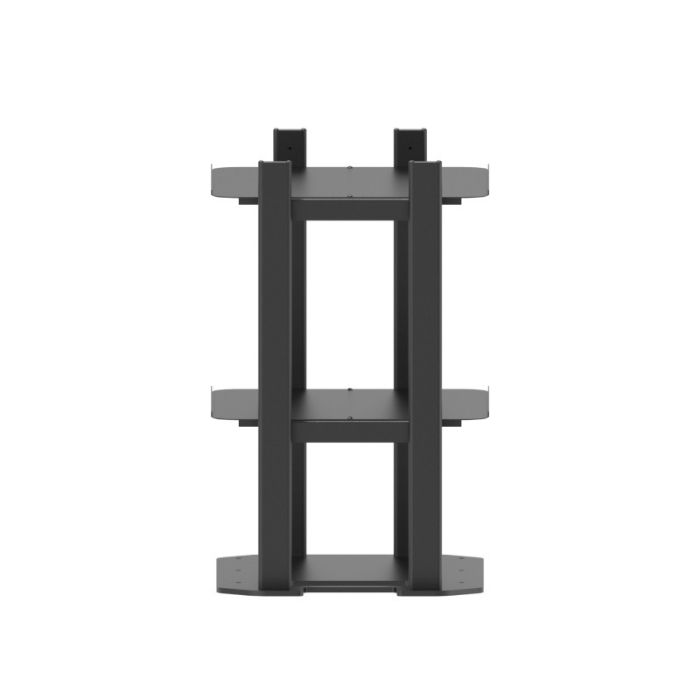
The PUDU T300 Tray has a multi-layer adjustable structure that optimizes its load capacity. Layer heights from bottom to top are 300 mm (11.8 in), 400 mm (15.7 in) and 400 mm (15.7 in). Each layer takes a maximum of 100 kg (220 lbs), and the load space measures 620 mm × 500 mm (24.4 in × 19.7 in). Tall items and small items can therefore ride on the same trip.
The second key feature is the modular design. It enables tool-free installation and disassembly, which meets the need for rapid scenario switching. A site that moves from one task to another does not need a workshop visit to reconfigure the robot.
For getting around, the platform uses VSLAM and Lidar SLAM navigation. It also carries expansive IoT capabilities: it supports elevator control, e-gate access, pagers, app-based calling and software API interfaces. Up to 20 robots can be dispatched in one environment.
Technical Specifications
| Specification | Value (T300 Tray) |
|---|---|
| Machine weight | 103kg |
| Loading capacity | 300kg |
| Total maximum load (including the tray) | 300 kg (661 lbs) |
| Maximum load per layer | 100 kg (220 lbs) |
| Load space dimensions | 620 mm × 500 mm (24.4 in × 19.7 in) |
| Layer height (bottom to top) | 300 mm (11.8 in) / 400 mm (15.7 in) / 400 mm (15.7 in) |
| Maximum speed | 1.2m/s |
| Path clearance | ≥60cm |
| Threshold overcoming height | 20mm |
| Run-time (full load) | 8h |
| Run-time (no load) | 12h |
| Charging time | 2h (0% to 90%) |
| Dimensions (series table) | 835mm * 500mm * 1350mm |
| Navigation methods | VSLAM & Lidar SLAM |
| Multi-robot scheduling | Up to 20 robots in one environment |
Specifications as published by the manufacturer; confirmed against the datasheet at quotation.
The manufacturer has not published the tray body material grade, the operating temperature for the Tray, the IP rating, the connectivity standards, the contents of the box or the noise level; they are confirmed at quotation.
What makes the T300 Tray different from the other T300 versions?
The difference is in what the robot does with the load. The T300 Series offers Standard, Lifting, Conveyor, Tray and Towing versions, and each is built around a different way of handling goods. The Tray version is the one built for loose, mixed or small items that people place by hand on shelves.
Layering is the main advantage. With 100 kg (220 lbs) allowed on each layer and 300 kg (661 lbs) in total, including the tray, the robot can carry a mixed set of goods in a single run instead of several. The layer heights of 300 mm (11.8 in), 400 mm (15.7 in) and 400 mm (15.7 in) leave room for boxes of different heights, and the adjustable structure means the layout can follow the job.
The Tray version also has some practical figures. It travels at a maximum of 1.2m/s, overcomes thresholds of 20mm and needs a path clearance of at least 60cm. Run-time at full load is 8h, and with no load it is 12h. Charging takes 2h from 0% to 90%, so a break in the day can restore much of the battery.
Tool-free installation and disassembly add another benefit. Because the modular design lets staff change the setup quickly, the robot is not tied to one use for its whole life.
How does the T300 Tray fit into a building with lifts and several robots?
A transport robot is only useful if it can leave the room it starts in. The PUDU T300 supports elevator control and e-gate access, which means it can move between floors and through controlled doors. Pagers and app-based calling let staff summon it, and software API interfaces let a site connect it to its own systems.
Navigation uses VSLAM and Lidar SLAM, so the robot finds its own way without staff guiding it. Where a site needs more than one machine, up to 20 robots can be dispatched in one environment. That makes it possible to start small and add units as the work grows.
Who is the PUDU T300 Tray for?
The Tray version suits operations that move many small and medium items on a regular route. Hotels and resorts can carry linens, supplies and stock between storerooms and floors. Hospitals and care facilities can move supplies along service corridors. Factories and workshops can bring parts and tools to the line, and warehouses and retail back-rooms can shuttle cartons and kits.
It is a good fit for buyers who want one robot to carry several loads at once, who need to change setups often, or who have lifts and controlled doors on their routes. Buyers whose main task is towing, lifting or conveying should look at the other T300 versions in the same series. Facilities that mainly need cleaning or guest-facing delivery may prefer the PUDU Bellabot Premium Delivery Robot (BL101) or the PUDU CC1 Intelligent Commercial Cleaning Robot, which are built for those jobs.
What is the PUDU T300 Tray used for?
- Internal supply runs. Staff load the layers once and the robot takes the goods to the point where they are needed.
- Parts delivery to production areas. Boxes and kits travel from the stockroom to the workstation without anyone leaving their post.
- Hospitality back-of-house logistics. Linens, amenities and stock move between storage and floors, using the elevator control the robot supports.
- Healthcare and facility supplies. Consumables travel along service corridors with a path clearance of at least 60cm.
- Mixed-load transport. Three layers let tall and short items ride together in one trip, up to 300 kg (661 lbs) in total.
- Multi-robot fleets. Up to 20 robots can be dispatched in one environment, so a site can grow its capacity step by step.
Pricing and Availability
Every project is different, so the PUDU T300 Tray is quoted on request. Tell us about your site, the routes, the loads and the lifts or gates involved, and we will prepare a quotation. Delivery, customs and support are arranged together with the quotation, so there are no surprises later. The PUDU T300 Tray is available on this page.
Frequently Asked Questions
How much can the PUDU T300 Tray carry?
The total maximum load is 300 kg (661 lbs), including the tray. Each layer takes a maximum of 100 kg (220 lbs).
How long does it run on one charge?
Run-time is 8h at full load and 12h with no load. Charging takes 2h from 0% to 90%.
Can it use elevators and controlled doors?
Yes. The PUDU T300 supports elevator control and e-gate access, along with pagers, app-based calling and software API interfaces.
How does it navigate?
It uses VSLAM and Lidar SLAM navigation, so it finds its own way through the building.
Can the setup be changed without tools?
Yes. The modular design enables tool-free installation and disassembly, which supports quick switching between scenarios.
Does the Tray have an IP rating?
No IP rating, operating temperature or noise level is listed for the Tray. Ask for them when you request your quotation.
Where can I buy the PUDU T300 Tray and what does it cost?
You can request it on this page, and it is supplied by quotation. The cost depends on your project, so we prepare the figure with you after we learn about your site.
Summary
The PUDU T300 Tray turns the pushed cart into a robot that works on its own: three adjustable layers, 100 kg (220 lbs) on each, 300 kg (661 lbs) in total, and navigation by VSLAM and Lidar SLAM. It travels at up to 1.2m/s, runs 8h at full load, and works with elevators, e-gates and fleets of up to 20 robots. If you want your staff to stop pushing trolleys and start on more skilled work, this page is the starting point.


