
PUDU Flashbot Max Buliding Delivery Robot
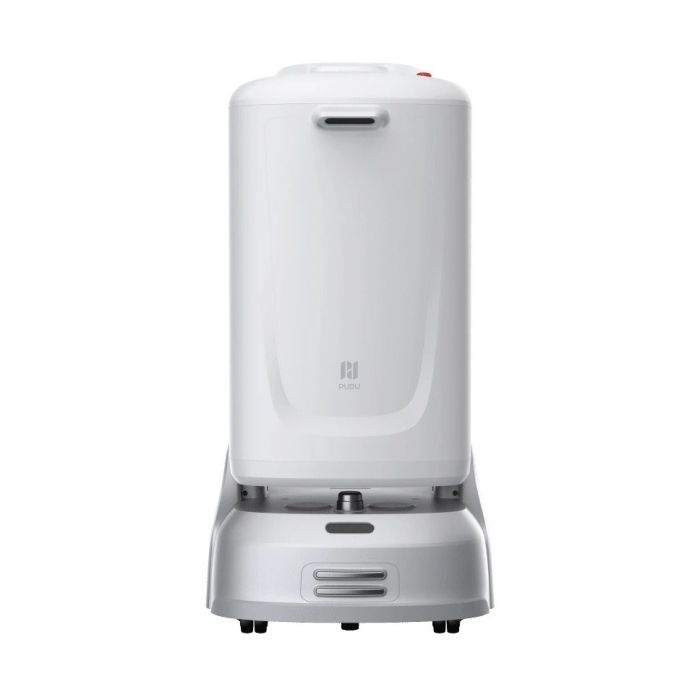
In stock
- BRAND:
- PUDU ROBOTICS
- MODEL:
- FLASHBOT MAX
- ORIGIN:
- China
- AVAILABILITY:
- SUBJECT TO AVAILABILITY
- SKU:
- Pudu-FlashBot-Max
PUDU Flashbot Max Buliding Delivery Robot
Picture a service trolley that has learned to ride the elevator by itself, lock its own doors and wait for the right guest to open them. That is the idea behind the PUDU Flashbot Max Buliding Delivery Robot, a closed-compartment courier for buildings where small items must travel between floors without tying up a staff member. It does not simply roll along a corridor. It calls lifts, passes turnstiles and hands over goods only to the person who is meant to receive them.
The product is available through this page, by quotation.
Background
Pudu Robotics and its focus on commercial service robots
Pudu Robotics was founded in 2016 and is headquartered in Shenzhen. It is a national high-tech enterprise dedicated to the design, R&D, production and sales of commercial service robots. The word commercial matters here. These machines are made for shared, working spaces rather than for the home, and the FlashBot Max reflects that in its enclosed compartments, its access verification and its ability to work with building systems instead of around them.
For Caribbean operators, that lineage is a useful signal. Hotels, resorts, offices and serviced residences all share the same daily pattern: many small requests, spread over many floors, handled by a limited number of people. A service robot from a company that builds only for that kind of setting is a natural fit for the conversation.
Positioning and key technology
The FlashBot Max sits in the delivery family as the enclosed, multi-floor option. Its navigation runs on the PUDU VSLAM+ system, which is engineered for semi-outdoor hotel environments. Multiple sensors are fused to give the robot 3D perception, so it can avoid low and overhanging obstacles rather than only those at a single sensing height.
The second pillar is connectivity inside the building. Through IoT, the robot communicates with terminal devices in the building, which allows automatic calls, turnstile access and elevator use without manual intervention. It supports cloud-based elevator systems compatible with major brands like KONE and OTIS without modifications, and it also supports a hardware solution for greater versatility across various scenarios.
Technical Specifications
| Specification | Value |
|---|---|
| Dimensions | 21.18*21.02*41.42 in (538 mm*534 mm*1052 mm) |
| Machine weight | 132.28 lbs (60 kg) |
| Payload per layer | 22.05 lbs/layer (10 kg/layer) |
| Single compartment | 7.36*16.14*11.02 in (187 mm*410 mm*280 mm) |
| Double compartment | 14.96*16.14*11.02 in (380 mm*410 mm*280 mm) |
| Run-time | 9 h |
| Charging time | 4 h |
| Cruise speed | 1.64 ft/s–3.94 ft/s (0.5 m/s ~ 1.2 m/s, adjustable) |
| Navigation system | PUDU VSLAM+ |
| Compartment access | Password, phone number and NFC |
| Compartment ventilation | Continuous fan ventilation |
Specifications as published by the manufacturer; confirmed against the datasheet at quotation.
The manufacturer has not published the IP rating, the battery capacity, the operating temperature, the connectivity specification, the noise level or the power supply input; they are confirmed at quotation.
What makes the FlashBot Max different from an open-tray delivery robot?
The first difference is what happens to the goods on the way. Instead of an open tray, the FlashBot Max carries items in enclosed compartments. Access can be verified by password, phone number or NFC sensing, which keeps item management secure from storage to retrieval. A parcel, a medical supply or a guest request is not exposed to anyone who walks past the robot.
The second difference is hygiene. A continuous fan ventilates the compartments and eliminates odors and bacteria. For a hotel moving amenities, or an office moving documents and small packages, a closed and ventilated space is a practical advantage.
The third difference is vertical movement. The robot communicates with terminal devices in the building to place automatic calls, pass turnstiles and use elevators. The task does not stop at the elevator door, and nobody has to press buttons for it. Compatibility with cloud-based elevator systems from major brands like KONE and OTIS, without modifications, shortens the path from decision to deployment, and the hardware solution is there for buildings that need another route.
How does the FlashBot Max get deployed across several floors?
Deployment is where many robot projects slow down, and the FlashBot Max addresses it directly. It supports rapid multi-floor map replication, which enables quick mapping and improves deployment efficiency and ease of operation. In a building with repeated floor layouts, that capability matters because the work of mapping does not have to be repeated from scratch on every level.
Day to day, the robot manages its own energy. It runs for 9 h and recharges in 4 h, and when the battery is low it heads to the charging station to stay ready for action. Its cruise speed is adjustable from 1.64 ft/s to 3.94 ft/s (0.5 m/s to 1.2 m/s), so the pace can be set to suit the space, whether a quiet corridor or a busy lobby.
Who is the FlashBot Max for?
Hotels are the clearest fit. The navigation system is engineered for semi-outdoor hotel environments, and the compartments suit room-service items, amenities and guest requests. A resort with a main building and outlying wings will see the benefit of reliable travel between floors.
Office buildings and serviced residences are the second group. Tenants send documents, small parcels and supplies between floors, and secure compartment access means the right person receives the right item. Property managers who already have turnstiles and elevator systems will value the robot's ability to work with them.
If your use case is different, for example open-tray serving or reception, you can compare other PUDU models such as the PUDU Bellabot Premium Delivery Robot (BL101) or the PUDU Kettybot Pro Delivery & Reception Robot with Ad Display. The wider range is listed under Delivery Robots and Commercial Robots.
What is the FlashBot Max used for?
- Room-service delivery. Carries towels, amenities and requested items from the desk to guest rooms on upper floors.
- Secure parcel handover. Opens its compartment only after password, phone number or NFC verification.
- Inter-floor office logistics. Moves documents and small supplies between departments by calling elevators on its own.
- Turnstile-controlled access areas. Passes turnstiles through IoT communication with the building's terminal devices.
- Semi-outdoor routes. Navigates with VSLAM+, engineered for semi-outdoor hotel environments.
- Freeing up staff time. Takes routine delivery runs off the front desk so people can attend to guests.
Pricing and Availability
No price is listed on this page. Quotation is the way to proceed: tell us about your building, its floors, its elevator brand and its access control, and we prepare a quotation for your project. Delivery, customs and support are arranged together with the quotation. The PUDU Flashbot Max Buliding Delivery Robot is available on this page.
Frequently Asked Questions
How does the robot keep deliveries secure?
Its compartments open through password verification, phone number verification or NFC sensing. This keeps items safe from storage to retrieval.
Can it use elevators without staff help?
Yes. Through IoT it communicates with terminal devices in the building, enabling automatic calls, turnstile access and elevator usage without manual intervention. It supports cloud-based elevator systems compatible with brands like KONE and OTIS without modifications.
How long does it run and how long does it charge?
The run-time is 9 h and the charging time is 4 h. When the battery is low, the robot heads to the charging station by itself.
What size are the compartments?
A single compartment measures 7.36*16.14*11.02 in (187 mm*410 mm*280 mm). A double compartment measures 14.96*16.14*11.02 in (380 mm*410 mm*280 mm), and the payload is 22.05 lbs/layer (10 kg/layer).
How does it avoid obstacles?
Multiple sensors are fused to give accurate 3D perception. This lets the robot avoid low and overhanging obstacles.
Can the cruise speed be adjusted?
Yes. The cruise speed is adjustable from 1.64 ft/s to 3.94 ft/s (0.5 m/s ~ 1.2 m/s), so the pace can suit a quiet corridor or a busy lobby.
Where can I buy the FlashBot Max and what does it cost?
It is available through this page, by quotation. No price is shown here; send a request and a quotation is prepared for your project.
Summary
The FlashBot Max is the trolley that learned to ride the elevator: a lockable, ventilated courier that works with the building's own gates and lifts, navigates with VSLAM+ and manages its own charging. Its 9 h run-time, replicated multi-floor maps and verified compartment access make it a practical tool for hotels and offices that want small deliveries done securely and without pulling staff away. For a quotation tailored to your building, this page is the starting point.


