
Pudu PUDU T300 Conveyor-S (PUDU T300 Conveyor-S)
In stock
- BRAND:
- PUDU ROBOTICS
- PART #:
- PUDU T300 Conveyor-S
- ORIGIN:
- China
- AVAILABILITY:
- SUBJECT TO AVAILABILITY
- SKU:
- Pudu-PUDU-T300-Conveyor-S
Pudu PUDU T300 Conveyor-S (PUDU T300 Conveyor-S)
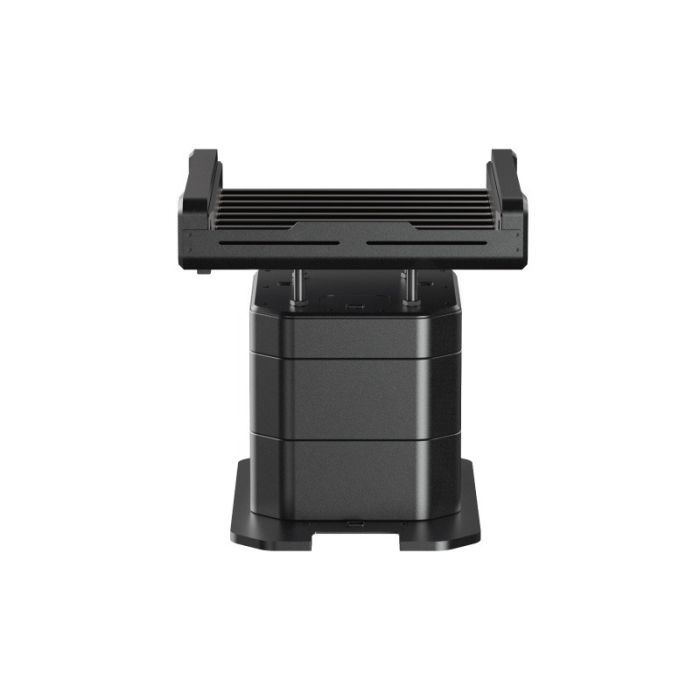
Most transfer problems are solved at the hand-off, in the last few inches between a robot and the line it serves. The PUDU T300 Conveyor-S is built for that gap: a mobile roller bed that docks with a stated accuracy of ±0.4 in (±10 mm) and ±1°, then moves goods on or off under its own power.
The product is available through this page, by quotation.
Background
PUDU ROBOTICS and the T300 family
PUDU ROBOTICS is known across the hospitality and service trade for its delivery and cleaning robots. Several of them are offered by this store group, and you can browse the full range in the Pudu category. The T300 belongs to the heavier end of that thinking. It is a transport robot designed for material delivery in industrial settings and for heavy-load delivery in commercial environments.
The T300 series is described as a lineup of versions: Standard, Lifting, Conveyor, Tray and Towing. Each version changes what the robot carries and how it hands the load over. The idea is simple. One mobile base serves different jobs, and the top module decides how goods are picked up and put down. The Conveyor version is the one that carries a roller system, so it suits sites where goods move on and off the robot without a person lifting them.
How the roller system sets it apart
The T300 Conveyor is equipped with a self-powered roller system, enabling seamless integration with automated conveyor lines and other material handling equipment. In practice, the robot behaves like a movable section of conveyor. It drives to a station, lines up with the fixed equipment, and the rollers pass the load across.
The T300 series also carries integrated PLC communication for automated material pickup and delivery notifications. For a plant engineer, that matters as much as the hardware. A transfer that is announced to the control system can be coordinated with the line instead of relying on someone watching for the robot to arrive.
The sources name two configurations of the conveyor: a Single Layer Version and a Double Layer Version. The designation Conveyor-S is not defined in the material available to us, so the table below keeps every figure with the version it belongs to.
Technical Specifications
| Specification | T300 Conveyor Single Layer Version | T300 Conveyor Double Layer Version |
|---|---|---|
| Number of layers | 1 | 2 |
| Rated load per layer | 176 lbs/layer, 80 kg/layer | 176 lbs/layer, 80 kg/layer |
| Machine weight | 265 lbs (120 kg) | 397 lbs (180 kg) |
| Run-time (no load) | 12 h | 10 h |
| Run-time (full load) | 10 h | 8 h |
| Charging time | 2 h (0-90%) | 2 h (0-90%) |
| Maximum speed | 3.9 ft/s (1.2 m/s) | 3.9 ft/s (1.2 m/s) |
| Path clearance | 29.5 in (75 cm) | 29.5 in (75 cm) |
| Docking accuracy | ±0.4 in (±10 mm), ±1° | ±0.4 in (±10 mm), ±1° |
| Conveyor depth | 25.6 in (650 mm) | 25.6 in (650 mm) |
| Conveyor width | 4.7–21.3 in (120-540 mm) adjustable | 4.7–21.3 in (120-540 mm) adjustable |
| Conveyor height | Ground clearance ≥ 12 in (305 mm) | Ground clearance ≥ 12 in (305 mm) |
Specifications as published by the manufacturer; confirmed against the datasheet at quotation.
The manufacturer has not published the battery capacity, the roller load rating, the operating temperature range, the IP rating, the connectivity interfaces or the contents of the box for the conveyor version; they are confirmed at quotation.
What makes the roller conveyor different from other T300 versions?
The other T300 versions are named Standard, Lifting, Tray and Towing. Each is built around a different way of carrying or moving a load. The Conveyor version is the one whose handling is done by the robot itself. A tray or a flat deck needs a person, or another machine, to place and remove the goods. The roller system lets the load slide on or off the robot when it is docked at a matching station.
That changes what the robot is worth to a plant. A carrier that waits for a person to load it is only as fast as that person. A robot with powered rollers can take part in a flow between two fixed points with nobody standing by. The docking figures then become the important ones, since a roller bed only passes goods cleanly when it lines up with the fixed conveyor it meets. The stated accuracy is ±0.4 in (±10 mm) and ±1°.
Two physical figures also deserve attention when planning a station. The conveyor depth is 25.6 in (650 mm), and the width is adjustable from 4.7 to 21.3 in (120-540 mm). The adjustable width means the same robot can be set for different tote or carton sizes within that range. The ground clearance is stated as at least 12 in (305 mm), which is the height reference to match against your fixed line.
What does the double layer version add?
The double layer version has two layers instead of one, and the rated load stays at 176 lbs per layer (80 kg per layer). In other words, the second layer adds carrying places rather than raising the limit of each. A second layer means one trip can serve two transfers, which is useful where a route is long and handovers are frequent.
There is a cost in weight and run-time. The machine weighs 397 lbs (180 kg) against 265 lbs (120 kg) for the single layer version. The run-time with no load is 10 h against 12 h, and with full load it is 8 h against 10 h. Charging time is stated as 2 h (0-90%) for the conveyor. If your shifts are long and your loads are single totes, the single layer version has the longer run-time. If your route is busy and each trip should carry two loads, the second layer is the reason to choose the double.
Who is the PUDU T300 Conveyor-S for?
Factory planners are the clearest buyers. Where cells are fed from conveyor lines, a mobile roller bed can link one line to another without building a fixed connection between them. Warehouse operators moving totes or cartons between staging points and picking areas have the same need. The path clearance of 29.5 in (75 cm) is worth checking against your aisles before any decision.
Integrators will also take an interest. The integrated PLC communication in the T300 series means the robot can report pickup and delivery events to a control system, so it fits into a wider automation project instead of standing alone. Plant managers who want to cut manual lifting at hand-off points have a practical reason to look as well.
For those who only need to carry items from one place to another with a person at each end, another T300 version may fit better. The Conveyor version earns its place where goods must move on and off without hands. Choose the single layer version for longer run-time and lower weight, and the double layer version for two loads per trip.
What is the PUDU T300 Conveyor-S used for?
- Line-to-line transfer. The robot carries goods between two fixed conveyor lines, acting as a movable link.
- Line-to-station feeding. Totes or cartons are brought from a line to a workstation or workcell.
- Staging point supply. Goods move between a staging area and the line that needs them.
- Reducing manual lifting. The roller system moves loads on and off, so staff spend less time bending and carrying.
- Coordinated pickup and delivery. PLC communication lets the robot announce material pickup and delivery to the control system.
- Multi-load runs. With the double layer version, one trip can serve two transfers.
Pricing and Availability
This page does not list prices. A quotation is how you get one, and it is the next step for any project. Delivery, customs and support are arranged with the quotation, so you deal with one contact from the first request to the handover. Tell us which version you need, the loads you move and the stations you serve, and the quotation will reflect that. The PUDU T300 Conveyor-S is available on this page.
Frequently Asked Questions
What does the PUDU T300 Conveyor-S carry?
It carries goods on a self-powered roller system, with a rated load of 176 lbs per layer (80 kg per layer). Totes and cartons are the usual loads in this class of robot.
How accurate is the docking?
The stated docking accuracy is ±0.4 in (±10 mm) and ±1°. That is the figure to compare against the fixed conveyor the robot will meet.
How long does it run on a charge?
The single layer version runs 12 h with no load and 10 h at full load. The double layer version runs 10 h with no load and 8 h at full load.
How long does it take to charge?
Charging time is 2 h from 0 to 90%.
Can the conveyor width be changed?
Yes, the conveyor width is adjustable from 4.7 to 21.3 in (120-540 mm). The depth is 25.6 in (650 mm).
Does it connect to a control system?
The T300 series has integrated PLC communication for automated material pickup and delivery notifications. The connectivity interfaces for the conveyor version are confirmed at quotation.
Where can I buy the PUDU T300 Conveyor-S and what does it cost?
You can buy it through this page, by quotation. The cost depends on the version and the project, so send your request and a quotation will follow.
Summary
A fixed line fixes the layout, while a mobile roller bed leaves it free to change. The PUDU T300 Conveyor-S puts the hand-off at the centre of the design, with powered rollers, adjustable width, PLC communication and docking accuracy of ±0.4 in (±10 mm). The single layer and double layer versions trade run-time and weight against capacity per trip, so the choice depends on your route and your loads. For a quotation that matches your stations and shifts, this page is the starting point.


