
Pudu PUDU T300 Conveyor-D (PUDU T300 Conveyor-D)
In stock
- BRAND:
- PUDU ROBOTICS
- PART #:
- PUDU T300 Conveyor-D
- ORIGIN:
- China
- AVAILABILITY:
- SUBJECT TO AVAILABILITY
- SKU:
- Pudu-PUDU-T300-Conveyor-D
Pudu PUDU T300 Conveyor-D (PUDU T300 Conveyor-D)
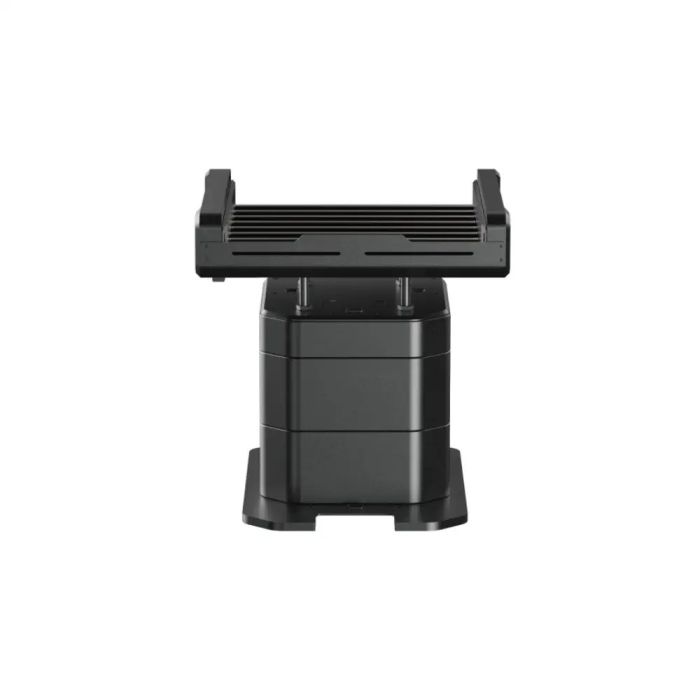
A fixed conveyor can only serve the stations it is bolted between. The PUDU T300 Conveyor-D takes the opposite approach: it is a powered conveyor deck with two layers that travels on an autonomous base, so the line goes to the work instead of the work going to the line. Where a facility needs loads to move between stations without anyone lifting, pushing or straightening them, this is the kind of machine that fills the gap.
The PUDU T300 Conveyor-D is available through this page, by quotation.
Background
Pudu Robotics and the T300 family
PUDU ROBOTICS is best known in our catalog for service robots: the Bellabot delivery robots, the CC1 cleaning robots and the BG1 scrubber-dryers all carry its name. The T300 series carries that experience into industrial work. You can see the wider range on the Pudu category page.
The T300 series is described by its source as meeting the ISO 3691-4 guidelines for industrial vehicles. That matters to anyone who has to put a mobile machine into a working plant and explain it to a safety officer. The T300 Conveyor is the member of the family built to move loads rather than people or liquids, and it comes in two versions: the Single Layer Version and the Double Layer Version.
Positioning and key technology
The Conveyor-D is the Double Layer Version. It carries two conveyor layers on one robot, each with a rated load of 176 lbs (80 kg). The idea is simple. One trip moves two decks of material, so the robot does more work for every run between stations.
The machine docks with a stated accuracy of ±0.4 in (±10 mm) and ±1°. That is the figure that decides whether a carton lands squarely on a fixed conveyor or needs a person to correct it. It also has integrated PLC communication for automated material pickup and delivery notifications, so the robot can tell the surrounding equipment when a load is ready or has arrived.
Technical Specifications
| Specification | Single Layer Version | Double Layer Version (Conveyor-D) |
|---|---|---|
| Number of layers | 1 | 2 |
| Machine weight | 265 lbs (120 kg) | 397 lbs (180 kg) |
| Run-time (no load) | 12 h | 10 h |
| Run-time (full load) | 10 h | 8 h |
| Rated load per layer | 176 lbs/layer, 80 kg/layer | 176 lbs/layer, 80 kg/layer |
| Dimensions (front/rear) | 32.9×26.2×53.1 in (835*665*1350 mm) | 32.9×26.2×53.1 in (835*665*1350 mm) |
| Dimensions (left/right) | 32.9×25.6×53.1 in (835*650*1350 mm) | 32.9×25.6×53.1 in (835*650*1350 mm) |
| Conveyor depth | 25.6 in (650 mm) | 25.6 in (650 mm) |
| Conveyor width | 4.7–21.3 in (120-540 mm) adjustable | 4.7–21.3 in (120-540 mm) adjustable |
| Conveyor height | Ground clearance ≥ 12 in (305mm) | Ground clearance ≥ 12 in (305mm) |
| Path clearance | 29.5 in (75 cm) | 29.5 in (75 cm) |
| Docking accuracy | ±0.4 in (±10 mm), ±1° | ±0.4 in (±10 mm), ±1° |
| Charging time | 2 h (0-90%) | 2 h (0-90%) |
| Safety standard | Meets ISO 3691-4 guidelines for industrial vehicles (T300 series) | Meets ISO 3691-4 guidelines for industrial vehicles (T300 series) |
| Connectivity | Integrated PLC communication for automated material pickup/delivery notifications | Integrated PLC communication for automated material pickup/delivery notifications |
Specifications as published by the manufacturer; confirmed against the datasheet at quotation.
The manufacturer has not published the battery capacity, the weight of the tray or conveyor module, the IP rating, the operating temperature, the conveyor belt speed or the contents of the box; these are confirmed at quotation.
What does the double layer add over the single layer version?
The most visible difference is capacity per trip. The Double Layer Version has two layers where the Single Layer Version has one, and each layer is rated for 176 lbs (80 kg). If your process hands over small, frequent loads, a second deck lets the robot collect or deliver two of them in one journey instead of two journeys.
That capacity has a cost, and the figures show it plainly. The Double Layer Version weighs 397 lbs (180 kg) against 265 lbs (120 kg) for the single layer. Its run-time is 10 h with no load and 8 h at full load, against 12 h and 10 h for the single layer. Both versions need 2 h to charge from 0 to 90%.
So the choice is a trade between throughput and endurance. If your shift is long and your loads are light, the single layer keeps working longer. If the bottleneck is how many loads you can move per trip, the second layer earns its place.
Why does docking accuracy matter on a conveyor robot?
A conveyor robot is only as useful as its last few inches. The transfer to a fixed conveyor, roller bench or rack fails if the decks are even slightly out of line. The T300 Conveyor states a docking accuracy of ±0.4 in (±10 mm) and ±1°, which is the tolerance a hand-off to fixed equipment depends on.
The adjustable conveyor width, from 4.7 to 21.3 in (120-540 mm), lets the deck be set to the size of the item carried. The ground clearance of the conveyor of at least 12 in (305mm) is the figure to check against the height of the equipment you plan to dock with. A path clearance of 29.5 in (75 cm) tells you how much aisle width the robot needs.
Who is the PUDU T300 Conveyor-D for?
Factories with fixed conveyor lines are the first segment. They often have gaps between lines or cells that people fill by walking loads across. A robot that docks and transfers automatically replaces that walking, and PLC communication lets it report pickups and deliveries to the system around it.
Warehouses and distribution sites with staging areas are the second. Moving standardized totes, cartons or trays between a receiving point and a staging rack is repetitive, and a two-layer machine suits operations where load volume is the constraint rather than shift length.
Integrators and project teams are the third. They need a machine with stated clearances, dimensions and a recognized safety guideline to design a layout around. If your loads are lighter or your shifts run long, the Single Layer Version of the T300 Conveyor may suit you better; ask us for it when you request a quotation. For other Pudu machines, see the Pudu range.
What is the PUDU T300 Conveyor-D used for?
- Station-to-station transfer. Carrying loads between workstations without an operator walking them across the floor.
- Feeding fixed conveyors. Docking at a fixed conveyor and handing the load over square and in line.
- Two-load trips. Using both layers to move more material per journey between a source and a destination.
- Linking separate production cells. Bridging the gap between cells that are not joined by a permanent conveyor.
- Staging for shipping or assembly. Delivering totes, cartons or trays to a staging point ready for the next step.
- Automated pickup alerts. Using PLC communication to notify the line when a load has been picked up or delivered.
Pricing and Availability
We do not publish prices for the PUDU T300 Conveyor-D. Every project differs in version, quantity and site, so quotation is how we proceed: tell us what you plan to move and where, and we will respond with a proposal. Delivery, customs and support are arranged together with the quotation. The PUDU T300 Conveyor-D is available on this page.
Frequently Asked Questions
What is the difference between the T300 Conveyor-D and the single layer version?
The Conveyor-D is the Double Layer Version, with two layers instead of one. It weighs 397 lbs (180 kg) against 265 lbs (120 kg) and runs 10 h with no load and 8 h at full load.
How much can each layer carry?
The rated load is 176 lbs (80 kg) per layer.
How accurately does the robot dock?
The docking accuracy is ±0.4 in (±10 mm) and ±1°.
How long does it take to charge?
Charging takes 2 h from 0 to 90%.
Can it communicate with my plant systems?
Yes. It has integrated PLC communication for automated material pickup and delivery notifications.
Does it meet a safety standard?
The T300 series meets the ISO 3691-4 guidelines for industrial vehicles.
Where can I buy the PUDU T300 Conveyor-D and what does it cost?
You can request it through this page, by quotation. The cost depends on version, quantity and site, so we give it in the quotation and not as a listed price.
Summary
The PUDU T300 Conveyor-D is a conveyor that moves: two layers of 176 lbs (80 kg) rated load each, a docking accuracy of ±0.4 in (±10 mm), and PLC communication to tell the line what it has done. It suits sites where fixed conveyors stop short and people fill the gap. If that describes your plant, this page is the starting point.


