
Galileo GH1 Humanoid Robot
In stock
- BRAND:
- GALILEO
- MODEL:
- GH1
- ORIGIN:
- China
- Warranty:
- 12 MONTHS
- AVAILABILITY:
- SUBJECT TO AVAILABILITY
- SKU:
- GALILEO-GH1
Galileo GH1 Humanoid Robot
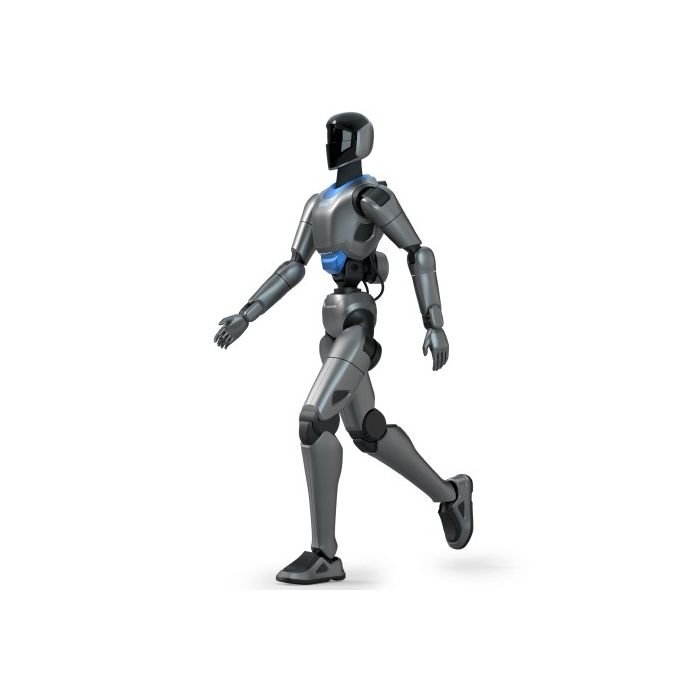
Most robots are built to do one job well; a humanoid is built to fit into a world that was designed for people. The Galileo GH1 Humanoid Robot takes that idea seriously: it walks on two legs, works with two arms, looks through a depth camera and talks back. For teams that have long wanted a machine able to share stairs, counters and workbenches with their staff, it is a practical starting point.
The product is available through this page, by quotation.
Background
The company behind the GH1
The GH1 comes from Galileo (Tianjin) Technology Co., Ltd., a robotics manufacturer that also builds quadruped robot dogs, a wheeled dual arm humanoid and 4D millimeter wave radar. That range tells you something about the approach: the company develops its own core parts instead of assembling them from catalog components. In the GH1 this shows in the joint motors, which are self-developed, high torque density units, and in the AI platform, which is also developed in house.
For buyers in the Caribbean, a maker with a broad family of platforms has a practical advantage. A team that starts with a walking humanoid can later look at wheeled or four-legged machines from the same company. The Galileo SH1 Dual Arm Wheeled Humanoid Robot is one example of a sibling that suits work where walking is not needed.
Where the GH1 sits among humanoids
The GH1 is an intelligent, high-performance humanoid robot that combines strong power output with advanced artificial intelligence. It is aimed at three areas: industrial operation, commercial public services and cutting-edge scientific research. You can browse comparable machines in the Bipedal Humanoids category, or see the wider field of laboratory platforms under Research Robots.
The key technology is the pairing of a full-body mechanical frame with a self-developed embodied intelligent brain platform. That platform can be integrated into any large model scenario, which means the robot is meant to be a body for whichever AI system a project chooses to run, not a closed device with a fixed list of behaviors.
Technical Specifications
| Specification | Value |
|---|---|
| Key dimensions (LWH) | 500*255*1550mm |
| Weight | 45kg |
| Thigh length | 350mm |
| Calf length | 412mm |
| Arm length (single) | 615mm |
| Total degrees of freedom | 31 |
| Head DOF | 2 |
| Single arm DOF | 7 (Shoulder: 3; Elbow: 1; Wrist: 3) |
| Single leg DOF | 6 (Hip: 3; Knee: 1; Ankle: 2) |
| Waist DOF | 3 |
| Material | Aluminum Alloy + Industrial Plastic |
| Battery capacity | 10Ah (444Wh) |
| Battery charging time | 2h |
| Charger input | 100-240V |
| External interfaces | 48V; 24V; 5V (USB) |
| External communication interfaces | Ethernet; USB |
| Auto-charging function | Optional |
| Core joint motors | Self-developed High Torque Density Joint Motors |
| Movement speed | 4m/s |
| Environmental perception | High-precision Depth Camera |
| Computing unit | Onboard Edge Computing Unit |
| Dexterous hand | Optional |
Specifications as published by the manufacturer; confirmed against the datasheet at quotation.
The manufacturer has not published the battery runtime, the payload, the IP rating, the operating temperature range, the wireless connectivity, the package contents, the operating system or SDK, or the height as a separate figure; they are confirmed at quotation.
What makes the GH1 different from a wheeled or four-legged robot?
A wheeled platform is efficient on flat floors, and a quadruped is steady on rough ground. A biped answers a different question: can the machine work in spaces built around the human body? The GH1 has six degrees of freedom in each leg, split into three at the hip, one at the knee and two at the ankle. With thigh and calf lengths of 350mm and 412mm, the legs are proportioned for a human-like stride, and the robot moves at 4m/s.
The upper body matters just as much. Each arm has seven degrees of freedom, with three at the shoulder, one at the elbow and three at the wrist, and the waist adds three more. Together with two in the head, the robot reaches 31 degrees of freedom in total. This lets the torso lean, turn and reach, which is what makes tasks at counters, shelves and workstations possible. A dexterous hand is available as an option for teams whose work needs finer manipulation.
If your work is on a flat floor and needs two arms more than legs, the dual arm wheeled humanoid mentioned above is worth a look. If you need to cover rough ground, the Galileo C1 Small Quadruped Robot Dog is the other direction. The GH1 is the choice when the human shape itself is the point.
How does the GH1 see, think and talk?
For perception, the GH1 carries a high-precision depth camera, which gives it a view of distance and shape in front of it. The onboard edge computing unit processes data on the robot itself, so basic decisions do not depend on a constant link to a remote server. That is useful in places where connectivity is uneven.
On the interaction side, the robot supports voice and facial interaction, with multilingual and multi-emotional expression meant to make communication feel more human. For public-facing roles such as reception, guidance or demonstration, this is a central feature. Because the AI platform can be integrated into any large model scenario, a project team can decide what the robot says and how it reasons, within the limits of its hardware.
For hardware integration, the external interfaces are 48V, 24V and 5V (USB), and the communication interfaces are Ethernet and USB. These give developers a direct path to connect sensors, tools or computers to the platform.
Who is the GH1 for?
The first group is university and institute laboratories. A 31-degree-of-freedom body with Ethernet and USB access is a workable base for studies in locomotion, manipulation and embodied AI, and the open large model integration suits teams that bring their own software.
The second group is industrial operators who want to test humanoid labor in spaces designed for people. The GH1 comes in a Consumer Grade and an Industrial Grade version, so buyers in this segment should state their grade requirement when requesting a quote.
The third group is commercial and public-service organizations, such as hotels, exhibition halls, visitor centers and showrooms, where a robot that speaks several languages and shows expression can draw attention and help guests. Training institutes and technology centers that want a hands-on demonstration of embodied intelligence also fit here.
What is the GH1 used for?
- Scientific research: a full-body platform for studies in walking, balance, manipulation and human-robot interaction.
- Industrial operation: a human-shaped worker for trials in stations and aisles designed around people.
- Public service: a greeter or guide that speaks several languages and responds with expression.
- AI development: a physical body for testing large model software in the real world.
- Teaching and training: a visible, working example of embodied intelligence for classrooms and technical courses.
- Demonstration and exhibition: a walking, talking showpiece for fairs, showrooms and innovation events.
Pricing and Availability
Prices are not listed here, because each GH1 is configured to the project. Options such as the dexterous hand and the auto-charging function, along with the grade of the robot, are settled when you request a quotation. Delivery, customs and support are arranged with the quotation. The Galileo GH1 Humanoid Robot is available on this page.
Frequently Asked Questions
How many degrees of freedom does the GH1 have?
It has 31 in total: 2 in the head, 7 in each arm, 6 in each leg and 3 in the waist.
How much does the GH1 weigh?
The GH1 weighs 45kg.
How is the GH1 powered and how long does it take to charge?
It uses a battery of 10Ah (444Wh), which takes 2h to charge. The charger accepts 100-240V input, and auto-charging is an option.
Can the GH1 use large AI models?
Yes. Its self-developed embodied intelligent brain platform can be integrated into any large model scenario, and an onboard edge computing unit handles processing on the robot.
Does the GH1 come with hands?
A dexterous hand is available as an option. Tell us at the quotation stage whether your tasks need it.
What can I connect to the GH1?
The external interfaces are 48V, 24V and 5V (USB), and the communication interfaces are Ethernet and USB.
Where can I buy the GH1 and what does it cost?
You can request it through this page, by quotation. The cost depends on the grade, the options and the delivery arrangements, so it is given in the quotation and not listed here.
Summary
The Galileo GH1 Humanoid Robot is built on one idea: that a machine shaped like a person can work where people work. It brings 31 degrees of freedom, self-developed joint motors, a depth camera, an onboard edge computing unit and an open AI platform into a 45kg body, with a dexterous hand as an option. Laboratories, industrial teams and public-service operators each gain something different from it. If a humanoid belongs in your plans, this page is the starting point.


