
BMR Floor Screeding Robot
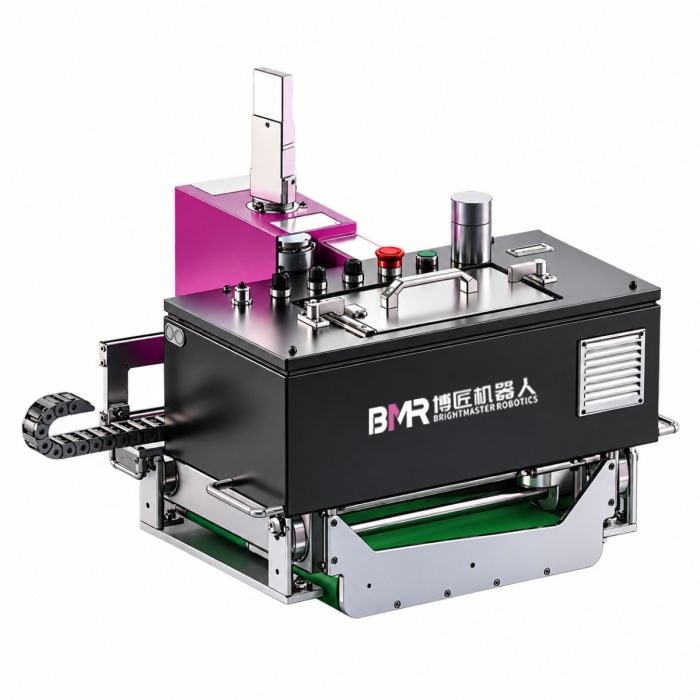
In stock
- BRAND:
- BMR
- ORIGIN:
- China
- Warranty:
- 12 MONTHS
- AVAILABILITY:
- SUBJECT TO AVAILABILITY
- SKU:
- BMR-Floor-Screeding-Robot
BMR Floor Screeding Robot
Every flat floor is a promise made a few millimeters at a time, and screeding is where that promise is usually kept by hand. The BMR Floor Screeding Robot moves that work from a bent back to a remote controller: one operator, one touch, and a machine that carries out dry-mixed mortar screeding automatically across the floor plate.
The product is available through this page, by quotation.
Background
The company behind the machine
The robot comes from Shenzhen BrightMaster Robotics Co., Ltd., a high-tech enterprise rooted in the intelligent construction sector. The company specializes in full-stack independent R&D of construction robots, large-scale on-site deployment and full-lifecycle construction services. The BMR name on the product is the short form of that lineage, and it sits alongside other machines for floors and slabs, such as the BMR 2.5 Meter Concrete Leveling Robot and the BMR Concrete Finishing Robot.
That full-stack approach matters to a buyer. A manufacturer that develops its own motion control, measurement and real-time control software is not assembling third-party parts around a frame. It is building one system for one job, and the job here is a level screed bed that the final floor finish can rely on.
Positioning and key technology
The Floor Screeding Robot is designed for dry-mixed mortar screeding operations. It is operated through a remote controller and achieves one-touch, fully automatic operation. Three technologies are named as its highlights: independently developed integrated intelligent motion control algorithms, laser measurement and positioning technology, and real-time control technology.
In plain terms, the laser tells the machine where it is and where the surface should be. The control algorithms decide how it moves, and the real-time control keeps the two in step while it works. The result is a construction accuracy of approximately 3 mm within 2 meters, which helps reduce uneven surfaces and repeated correction work.
The machine is also built to be moved. Its dimensions are no more than 790 × 730 × 660 mm and it weighs approximately 65 kg, which makes it easier to transport through indoor passages, elevators and between floors. For a contractor working on multi-storey buildings, that is a practical point, not a footnote.
Technical Specifications
| Specification | Value |
|---|---|
| Function | Dry-mixed mortar screeding, one-touch fully automatic operation by remote controller |
| Dimensions | No more than 790 × 730 × 660 mm |
| Weight | Approximately 65 kg |
| Construction accuracy | Approximately 3 mm within 2 meters |
| Screeding thickness | 0–10 cm |
| Theoretical productivity | ≥130 m²/h |
| Power supply | 48V 25AH |
| Operating power | 300W |
| Operating endurance | At least six hours of operation |
| Fast charging time | ≤3h |
| IP rating | IP54 |
| Operating environment | -5~40℃ |
Specifications as published by the manufacturer; confirmed against the datasheet at quotation.
The manufacturer has not published the drive type, the travel speed, the remote control range, the laser system brand, the contents of the box, the noise level, the certifications or the limits on mortar type; they are confirmed at quotation.
What makes the BMR Floor Screeding Robot different from manual screeding?
Manual screeding depends on people. A skilled crew can produce excellent work, but the quality of the floor follows the energy of the workers, and the last room of the day rarely matches the first. The robot replaces that variable with a measured one. Laser positioning and real-time control hold the surface to a stated accuracy of approximately 3 mm within 2 meters, and they hold it for as long as the battery runs, which is at least six hours of operation.
The second difference is labor. One operator can control the machine remotely, which helps construction companies reduce labor intensity and their dependence on experienced screeding workers. That is not a promise that skill no longer matters on site. It means the physically punishing part of the trade is carried by the machine, and the crew can be smaller and less worn down.
The third difference is range. The machine supports a screeding thickness of 0–10 cm, so one robot can serve different floor structures and project requirements without a change of method. Add a theoretical productivity of ≥130 m²/h and the case for a contractor with large floor areas becomes straightforward to evaluate.
How does the robot handle the working conditions on site?
A construction site is not a workshop. Dust, splashes and heat are part of the day. The robot carries an IP54 rating and an operating environment of -5~40℃, which covers a wide span of conditions. The 48V 25AH rechargeable battery supports at least six hours of operation, and a fast charge takes ≤3h, so a charging break fits naturally into a shift pattern. Operating power is 300W.
Transport is part of site conditions too. With dimensions of no more than 790 × 730 × 660 mm and a weight of approximately 65 kg, the machine can go through indoor passages and elevators and move from floor to floor. That removes a common headache on tall buildings, where heavy equipment needs a crane or a long wait.
Who is the BMR Floor Screeding Robot for?
The first group is the general contractor on residential projects. Apartment blocks mean many identical floors, and a machine that repeats the same accuracy on each one is worth a close look. The second is the contractor on public buildings and metro stations, where large areas and strict flatness expectations come together.
The third group is the specialist flooring firm that screeds over underfloor heating. Floor screeding after underfloor heating installation is a named application for this robot, and it is work where consistent thickness and a flat surface matter a great deal.
Fourth, there are owners and managers who are short of experienced screeding workers. Because one operator controls the machine remotely, a small team can cover work that once needed a larger one.
If your project also involves slab leveling or surface finishing, the leveling and finishing robots mentioned above are worth a look. For the wider range, the Flooring Robots and Construction Robots categories show what else is available.
What is the BMR Floor Screeding Robot used for?
- Residential construction. Screeding floors across apartment and housing projects, storey after storey.
- Public building flooring. Preparing level screed beds in large public spaces where surface quality is inspected closely.
- Metro station flooring. Covering the wide floor areas of transit stations with consistent, remotely controlled work.
- Screeding after underfloor heating. Laying the screed over heating installations at thicknesses within the 0–10 cm range.
- Dry-mixed mortar screeding. The core task the machine is designed for, carried out through one-touch automatic operation.
- Reducing correction work. Holding approximately 3 mm accuracy within 2 meters so fewer uneven areas need to be revisited.
Pricing and Availability
Pricing is arranged by quotation, since configuration and project needs shape what a buyer requires. Delivery, customs and support are arranged with the quotation, so the whole path from request to site is settled in one conversation. Send your project details and the BMR Floor Screeding Robot is available on this page.
Frequently Asked Questions
What type of mortar does the robot work with?
It is designed to perform dry-mixed mortar screeding operations.
How thick can the screed be?
The machine supports a screeding thickness of 0–10 cm. That makes it suitable for different floor structures and project requirements.
How accurate is the finished surface?
The robot achieves a construction accuracy of approximately 3 mm within 2 meters. This helps reduce uneven surfaces and repeated correction work.
How long does the battery last, and how fast does it charge?
The rechargeable 48V 25AH battery supports at least six hours of operation. A fast charge takes ≤3h.
Can it be carried between floors?
Yes, it is designed for that. At no more than 790 × 730 × 660 mm and approximately 65 kg, it is easier to transport through indoor passages, elevators and between floors.
How many people does it take to run it?
One operator can control the machine remotely. This helps reduce labor intensity and dependence on experienced screeding workers.
Where can I buy the BMR Floor Screeding Robot and what does it cost?
It is available through this page, by quotation. Send your project details and the quotation covers the price, delivery, customs and support.
Summary
Flat floors have always been made a few millimeters at a time, and for most of building history that meant tired people on their knees. The BMR Floor Screeding Robot gives the job to a machine guided by laser positioning and real-time control, with approximately 3 mm accuracy within 2 meters, a 0–10 cm thickness range and at least six hours of battery operation. One operator runs it by remote, and it travels easily between floors. For a quotation on your project, this page is the starting point.