
Agilex PIKA (PIKA)
In stock
- BRAND:
- AGILEX
- PART #:
- PIKA
- ORIGIN:
- China
- AVAILABILITY:
- SUBJECT TO AVAILABILITY
- SKU:
- AgileX-PIKA
Agilex PIKA (PIKA)
Picture a hand-held gripper carried across a workshop floor, then out into a yard, collecting the evidence a robot needs to learn a task, with no fixed rig to set up first. That is the idea behind Agilex PIKA (PIKA): a data collection system that goes where the work is, instead of asking the work to come to the lab.
The product is available through this page, by quotation.
Background
The company and its lineage
Agilex PIKA (PIKA) is made by AgileX Robotics CO,.ltd., a manufacturer based in China. The brand is known across the robotics trade for mobile platforms and for tools that help research teams and industrial users put robots to work. You can browse the wider range on the AgileX category page.
PIKA belongs to the data side of that range. Mobile bases and arms get most of the attention in robotics, but they only become useful once someone has shown them what to do. PIKA addresses that earlier step: gathering good demonstrations in a form that robot-learning software can use.
Positioning and key technology
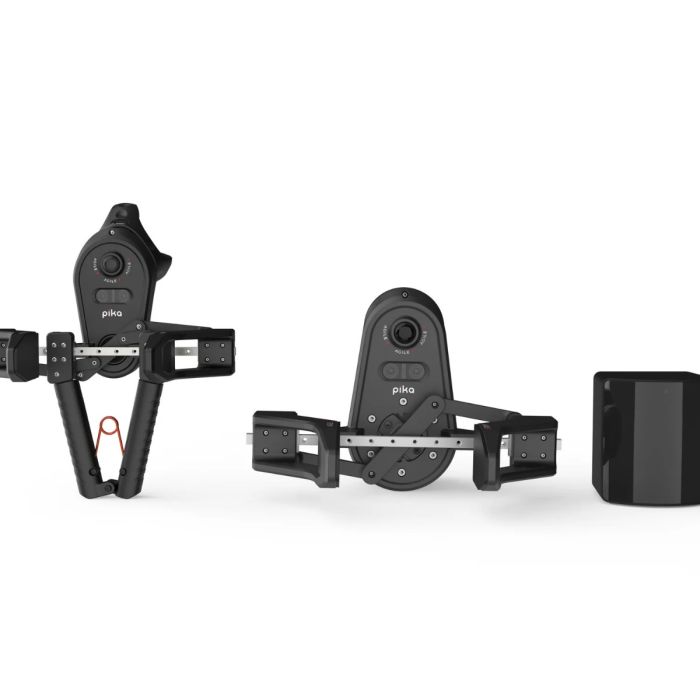
PIKA is a compact, versatile data collection system for indoor and outdoor operation. It captures egocentric data, meaning what the operator sees from a first-person view, together with information from UMI-based handheld grippers. In practice, a person performs the task by hand, and the system records the motion, the imagery and the gripper state along the way.
Several design choices matter for field use. The system is calibration-free and stays reliable with weak textures, low-light conditions and distractions. It supports ROS1, ROS2 and URDF through a Type-C interface, so it fits into the software stacks that research and industrial teams already run. It also covers the full path from collection to training: data collection, management, annotation and training workflows, with support for multi-device collaboration and task management.
The hardware is organized as a set of parts. Pika Sense is a lightweight, ergonomically designed hand-held unit for intuitive manual operation. Pika Gripper is a robotic end effector that delivers 6D spatial data, RGB imagery, depth and IMU outputs. Pika EGO is a first-person headset for synchronized ego-centric collection that outputs depth and RGB streams. Pika Package is the computing and storage core, providing data processing, storage and scheduling. The Pika Station completes the package version with a tripod and a long-life battery.
Technical Specifications
Two versions are named: Pika Pro, and Pika as a package of Gripper, Sense and Station. Each figure below stays with the version that carries it; a dash means no figure is listed for that version.
| Specification | Pika Pro | Pika (Package: Gripper, Sense & Station) |
|---|---|---|
| Pika Sense weight | 460 g | 550 g |
| Pika Sense dimensions | — | 215 × 220 × 257 mm |
| Gripper spatial positioning accuracy | ±1.5 mm | — |
| Gripping force | Up to 2 kg | Max force 2 kg |
| Gripper type and jaw range | — | Two-finger, 0–95 mm |
| Pika Gripper dimensions | — | 215 × 191 × 143 mm |
| Pika Gripper weight | — | 690 g |
| Depth camera | — | FOV 87° × 58°, accuracy ±2% at 50 cm, 90 FPS |
| Wide-angle camera | — | Diagonal FOV 200°, 90 FPS |
| IMU | — | 9-axis, 100 Hz |
| Pika Station battery life | — | Up to 30 hours |
| Pika Station tripod | — | Max height 2.1 m, adjustable tilt |
| Software and interface | ROS1, ROS2 and URDF via Type-C | ROS1/ROS2 environments |
| Calibration | Calibration-free | — |
Specifications as published by the manufacturer; confirmed against the datasheet at quotation.
The manufacturer has not published the Pika Station dimensions and weight, the Pika Ego specifications, the Pika Package storage capacity, the power requirements, the operating temperature range, the IP rating or the wireless connectivity; they are confirmed at quotation.
What makes Agilex PIKA (PIKA) different from a fixed teleoperation setup?
A fixed setup ties the operator to one cell, one table and one set of cameras. PIKA moves the other way. The operator holds the unit, and the sensing goes wherever the hands go, indoors or outdoors. That matters when the task you want a robot to learn happens in a kitchen, a warehouse aisle or a field, and not on a laboratory bench.
The second difference is weight and handling. Pika Sense is a lightweight, ergonomic hand-held unit, and the Pro version lists it at 460 g. A light unit is easier to hold through long sessions, and natural motion produces better demonstrations than motion bent around a heavy tool.
The third difference is what comes out. The gripper delivers 6D spatial data, RGB imagery, depth and IMU outputs together, and the EGO headset adds a first-person view with depth and RGB streams. Having these streams synchronized in one system saves a team from stitching together separate recorders afterward. Because the system is calibration-free and holds up under weak textures and low light, there is less setup work before each session.
What is the difference between Pika Pro and the Pika package?
The two versions are presented in different ways, so it helps to read them side by side. Pika Pro centers on the whole data collection system: the Sense unit at 460 g, a gripper with ±1.5 mm spatial positioning accuracy and up to 2 kg of gripping force, the EGO headset, the Package computing core, and the integrated workflow from collection to training.
The Pika package version is laid out part by part. It lists the gripper at 215 × 191 × 143 mm and 690 g with a two-finger jaw range of 0–95 mm, a depth camera, a wide-angle camera with a 200° diagonal field of view, a 9-axis IMU, a Sense unit at 550 g, and a Station with a tripod and battery life of up to 30 hours. Note that the Sense weight differs between the two versions, 460 g for Pika Pro and 550 g for the package, so name the exact version you intend to order.
If you need a particular figure, such as the camera field of view or the tripod height, tell us the version you want. Each figure belongs to its own version and not to the other.
Who is Agilex PIKA (PIKA) for?
University and corporate research labs working on embodied intelligence and imitation learning are the clearest fit. They need many demonstrations, collected consistently, in a format their ROS-based tools can read. Support for ROS1, ROS2 and URDF through Type-C speaks directly to that need.
Industrial automation teams are a second group. When a manual task such as sorting, inserting or handling parts has to be turned into robot behavior, a portable system lets engineers record the task at the workstation where it actually happens. The data management and annotation workflow helps them move from raw recordings to training without building their own pipeline.
Integrators and training centers across the Caribbean can also use it to show students and clients how robot learning works from the first demonstration to the finished dataset. Teams that want a complete workflow from collection to training will find Pika Pro the closer match, while those who want the hardware listed part by part, with Station battery and tripod, will find the package version easier to specify. Teams looking for other AgileX equipment can start from the AgileX category.
What is Agilex PIKA (PIKA) used for?
- Capturing egocentric demonstrations: the EGO headset records a first-person view with depth and RGB streams while the operator works.
- Recording hand-held gripper motion: UMI-based handheld grippers and the Pika Gripper provide 6D spatial data, RGB, depth and IMU outputs.
- Training robot-learning models: the integrated system carries data from collection and management through annotation to training.
- Testing on a robot arm: the gripper is a robotic end effector, so the same sensing can be used on a robot platform as well as in the hand.
- Working in demanding conditions: calibration-free operation copes with weak textures, low light and distractions, indoors or outdoors.
- Coordinating larger projects: multi-device collaboration and task management support teams that collect data across several units.
Pricing and Availability
Prices are not listed on this page. Please request a quotation, and tell us which version you need, Pika Pro or the Pika package, so the quotation matches your project. Delivery, customs and support are arranged together with the quotation. Agilex PIKA (PIKA) is available on this page.
Frequently Asked Questions
What does Agilex PIKA (PIKA) record?
It records egocentric data and information from UMI-based handheld grippers. The gripper provides 6D spatial data, RGB imagery, depth and IMU outputs, and the EGO headset provides depth and RGB streams.
Does it work with ROS?
Yes. Pika Pro supports ROS1, ROS2 and URDF through a Type-C interface, and the Pika package works with ROS1/ROS2 environments.
Does it need calibration?
No, the system is calibration-free. It also stays reliable with weak textures, low-light conditions and distractions.
How strong is the gripper?
The Pika Pro gripper reaches up to 2 kg of gripping force with ±1.5 mm spatial positioning accuracy. The package version has a two-finger gripper with a 0–95 mm range and a maximum force of 2 kg.
How long does the Pika Station battery last?
The Pika package lists Station battery life of up to 30 hours, with a tripod that reaches a maximum height of 2.1 m and adjustable tilt.
Can it be used outdoors?
Yes. Pika Pro is engineered for operation in both indoor and outdoor environments. If your site has specific dust, water or temperature demands, mention them in your quotation request.
Where can I buy Agilex PIKA (PIKA) and what does it cost?
It is available through this page, by quotation. The cost depends on the version and the scope of supply, so please send a quotation request and we will respond with the details.
Summary
Agilex PIKA (PIKA) takes the data lab out of the building. A light hand-held unit, a gripper that returns spatial, visual and inertial data, a first-person headset and a computing core combine into one workflow from collection to training, with ROS1, ROS2 and URDF support. Pika Pro and the Pika package present the system in different ways, so choose by the figures that matter to your project. If you are ready to gather demonstrations where the work actually happens, this page is the starting point.


