
Unitree H2-D Ultimate E Humanoid Robot
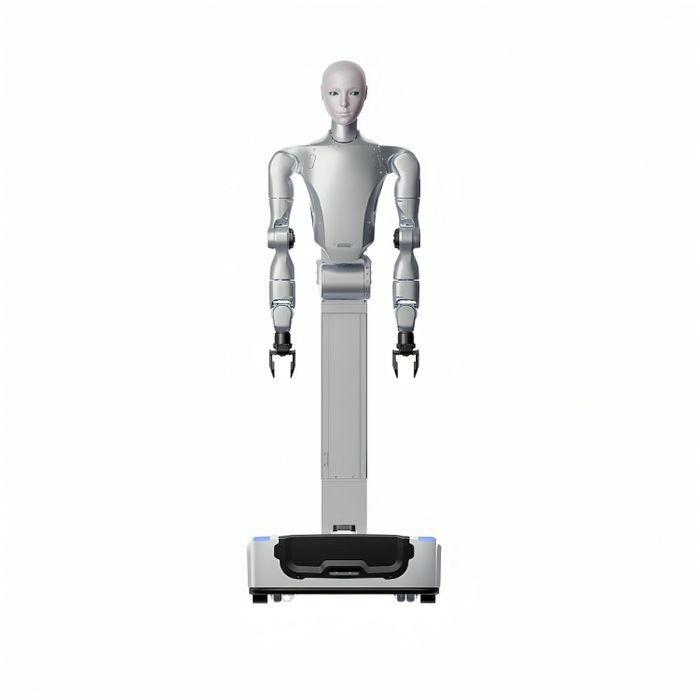
In stock
- BRAND:
- UNITREE ROBOTICS
- MODEL:
- H2-D-Ultimate-E
- PART #:
- H2-D-Ultimate-E
- ORIGIN:
- China
- Warranty:
- 12 MONTHS
- AVAILABILITY:
- SUBJECT TO AVAILABILITY
- SKU:
- Unitree-H2-D-Ultimate-E
Unitree H2-D Ultimate E Humanoid Robot
A part sits in a bin at floor level, and the next one belongs on a shelf above head height. Most automation is built for one of those heights. The Unitree H2-D Ultimate E Humanoid Robot is built for both, with two arms on a mobile base that can bend, lift and reach through the whole range.
The product is available through this page, by quotation.
Background
Unitree Robotics and the H2 family
Unitree Robotics is the brand behind this machine. The H2 Series Dual-Arm Humanoid Robot includes two product lines, H2-D and H2-A. Three versions are named across them: H2-A Standard, H2-D Standard and H2-D Flagship. The Ultimate E robot sits in the H2-D line, whose other Ultimate variants are listed in the H2-D Ultimate category.
The figures below come from the H2-D family, and each one keeps the version it belongs to. The content of the Ultimate E package is set out in the quotation.
Positioning and key technology
The H2-D is a working humanoid for manipulation, not a showpiece. Its reach comes from several parts working together: waist pitch adjustment, a vertical lift column and whole-body coordination algorithms. Together they extend the operational workspace, so the robot can work from ground level up to 2 meters.
The body supports 0–115° of pitch. That lets it pick from the floor and handle items overhead in a natural, ergonomic posture. The mobile platform integrates LiDAR, depth cameras and multiple sensors for autonomous navigation and intelligent obstacle avoidance.
For developers, Unitree offers comprehensive SDKs and APIs together with a mature navigation software stack, which reduce development cycles from months to weeks. The materials are aerospace-grade aluminum, titanium alloy and high-strength engineering plastics.
Technical Specifications
| Specification | Value |
|---|---|
| Product family | H2 Series Dual-Arm Humanoid Robot (H2-D and H2-A lines) |
| Rated arm payload | Up to 7 kg per arm |
| Operating workspace | From ground level up to 2 meters |
| Body pitch | 0–115° |
| Lift speed | Up to 200 mm/s (H2-D Standard and H2-D Flagship) |
| Drive system | Servo motors, dual-wheel differential drive, 360° in-place rotation (H2-D Flagship) |
| Maximum mobility speed | Up to 1.5 m/s (H2-D Flagship) |
| Navigation sensing | LiDAR, depth cameras and multiple sensors |
| End-effectors | Grippers, three-finger hands, five-finger dexterous hands; quick-change design |
| Platform computing (PC1) | Intel Core i5 (Platform Capabilities) |
| Development computing (PC2) | Intel Core i7 (Custom Development) |
| Voice interaction | Microphone array and high-power speaker |
| Wireless connectivity | WiFi 6 and Bluetooth 5.2 |
| Quick-release base battery | 48V/30Ah (1.44 kWh) on H2-D Flagship; 48V/18Ah (864Wh) on H2-D Standard |
| Battery power supply | Approx. 5 h, replaceable battery with auto charging (H2-D Flagship) |
| Materials | Aerospace-grade aluminum, titanium alloy, high-strength engineering plastics |
| Software | Comprehensive SDKs and APIs, mature navigation software stack |
Specifications as published by the manufacturer; confirmed against the datasheet at quotation.
The manufacturer has not published the definition of the Ultimate E trim, the IP rating, the camera resolution, the model of the included end-effector, the noise level or the charging time; they are confirmed at quotation.
What makes the H2-D different from a fixed industrial arm?
A fixed arm is excellent at repeating one motion at one station. Its limits are reach and position: it stays where it is bolted, and it usually works within a narrow height band. The H2-D answers that with a mobile platform, a vertical lift column and a body that pitches from 0 to 115°. It can move to a task and then adjust its posture to suit it.
Two arms add another difference. Each arm has a rated payload of up to 7 kg, so the robot can handle and assemble heavy industrial components. The quick-change end-effector design lets you fit grippers, three-finger hands or five-finger dexterous hands, depending on the precision and workload the job calls for.
Navigation is part of the package as well. LiDAR, depth cameras and multiple sensors support autonomous navigation and obstacle avoidance, so the robot can move between stations without a fixed track. In that sense it is a mobile manipulation system, closer to a coworker than to a machine tool.
How does the Ultimate E relate to the Standard and Flagship versions?
Some figures differ by version. The H2-D Flagship carries a 48V/30Ah (1.44 kWh) quick-release base battery with approx. 5 h of battery power supply, a replaceable battery and auto charging. It also lists a maximum mobility speed of up to 1.5 m/s. The H2-D Standard carries a 48V/18Ah (864Wh) battery. Lift speed of up to 200 mm/s is given for both.
None of these version figures is assigned to the Ultimate E here. If a specific figure matters to your project, name it when you request a quotation. Buyers who want a plain fixed-base configuration can also look at the Unitree H2-D Standard Fixed Base Dual-Arm Humanoid Robot, and sibling trims such as the Unitree H2-D Ultimate F Humanoid Robot sit alongside this one.
Who is the Unitree H2-D Ultimate E Humanoid Robot for?
Research laboratories and universities are the first segment. The SDKs, the APIs and the second computing unit (PC2, Intel Core i7, listed for custom development) give teams room to build their own applications on a real mobile manipulator.
System integrators are the second. They can fit a humanoid into a line, a warehouse or a test cell, choosing the hand that suits the part. The quick-change design helps when one robot has to serve several tasks.
Industrial teams evaluating flexible automation are the third. A robot that reaches from the floor to 2 meters and carries up to 7 kg per arm can be tested against real handling and assembly jobs before a larger commitment.
Training and demonstration programs make up the last group. Voice interaction through a microphone array and high-power speaker, plus WiFi 6 and Bluetooth 5.2, make the robot easy to connect and to show. Buyers who want to compare the siblings can browse the Unitree H2-D category.
What is the Unitree H2-D Ultimate E Humanoid Robot used for?
- Floor-level picking. Body pitch up to 115° lets the robot reach items placed low without a separate lifting aid.
- Overhead handling. The lift column and waist adjustment extend the workspace up to 2 meters for shelf work.
- Component assembly. Two arms, each rated up to 7 kg, handle and assemble heavier industrial parts.
- Precision handling with changeable hands. Quick-change grippers, three-finger hands and five-finger dexterous hands match the end-effector to the task.
- Autonomous movement between stations. LiDAR, depth cameras and other sensors support navigation and obstacle avoidance.
- Application development. SDKs, APIs and a navigation software stack let teams build and test their own robotic applications.
Pricing and Availability
No price is listed on this page, because the final configuration decides the offer. A quotation sets out the trim content, the end-effector and the accessories. Delivery, customs and support are arranged with the quotation. Send your requirements and the offer follows; the Unitree H2-D Ultimate E Humanoid Robot is available on this page.
Frequently Asked Questions
What payload can each arm carry?
The rated payload is up to 7 kg per arm. It is intended for handling and assembling heavy industrial components.
How high and how low can the robot work?
The operational workspace runs from ground level up to 2 meters. This comes from waist pitch adjustment, the vertical lift column and whole-body coordination algorithms.
Which hands can be fitted?
The platform supports grippers, three-finger hands and five-finger dexterous hands. The quick-change design allows fast adaptation to different precision requirements and workloads.
How does it navigate?
The mobile platform integrates LiDAR, depth cameras and multiple sensors. They enable autonomous navigation and intelligent obstacle avoidance.
What battery and runtime does it have?
The H2-D Flagship uses a 48V/30Ah (1.44 kWh) quick-release base battery with approx. 5 h of battery power supply. The H2-D Standard uses a 48V/18Ah (864Wh) battery.
Can developers program it?
Yes. Comprehensive SDKs and APIs come with a mature navigation software stack, which reduces development cycles from months to weeks.
Where can I buy the Unitree H2-D Ultimate E Humanoid Robot and what does it cost?
You can request it through this page. The cost depends on the configuration and is given in a quotation, and no price is shown here.
Summary
The question at the start was how one machine can serve both the bin at the floor and the shelf above head height. The H2-D answers it with body pitch of 0–115°, a lift column, two arms rated up to 7 kg each, interchangeable hands and onboard navigation sensing. The exact content of the Ultimate E trim is settled in the quotation. For a quotation, this page is the starting point.


