
Unitree H2-A Standard F Humanoid Robot
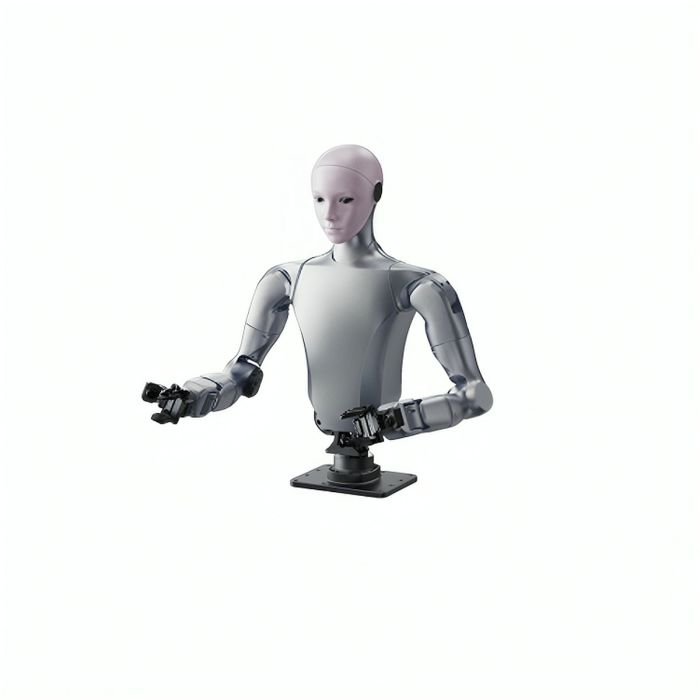
In stock
- BRAND:
- UNITREE ROBOTICS
- MODEL:
- H2-A-Standard-F
- PART #:
- H2-A-Standard-F
- ORIGIN:
- China
- Warranty:
- 12 MONTHS
- AVAILABILITY:
- SUBJECT TO AVAILABILITY
- SKU:
- Unitree-H2-A-Standard-F
Unitree H2-A Standard F Humanoid Robot
Most people picture a humanoid robot as a machine that has to prove it can walk. The harder question for a buyer is what the robot can do once it is standing, and whether its arms, its vision and its software access match the work you have in mind. The Unitree H2-A Standard F Humanoid Robot is a full-size platform with 31 degrees of freedom, seven-joint arms and a bionic head, built for teams that want to put a humanoid to real use.
The product is available through this page, by quotation.
Background
Unitree Robotics and the humanoid line
Unitree Robotics is a robotics manufacturer known for legged machines and humanoids that research labs, universities and integrators use as working platforms. The H2 family is its full-size humanoid line. Three versions sit within that family: H2, H2 EDU and H2 Plus. Each is aimed at a different level of access and hardware.
For a buyer in the Caribbean, this matters because a humanoid is a long-term investment in a platform, not a one-off purchase. Knowing which version you are looking at, and what it leaves out, saves a great deal of back-and-forth later.
Positioning and key technology
The H2 is built around articulated limbs and a structure of aerospace-grade aluminum, titanium alloy and high-strength engineering plastics. Six degrees of freedom in each leg and seven in each arm give it a human-like range of motion. A wide-angle humanoid binocular camera handles vision, and an Intel Core i5 module (PC1) provides the basic onboard computing. Wi-Fi 6 and Bluetooth 5.2 cover wireless connectivity.
The head is a bionic head with facial features, which matters wherever people will interact with the robot, such as demonstrations, exhibitions and reception settings. The robot ships with a charger and a manual remote controller.
Technical Specifications
| Specification | Value |
|---|---|
| Standing dimensions | 1820 x 456 x 218 mm |
| Weight with battery | Approximately 70 kg |
| Total degrees of freedom | 31 |
| Degrees of freedom per leg | 6 |
| Degrees of freedom per arm | 7 |
| Max. arm joint torque | 120 N.m |
| Max. leg joint torque | 360 N.m |
| Arm payload | Peak: ~15 kg; nominal: ~7 kg |
| Battery | 15 Ah (0.972 kWh) |
| Battery life | Approximately 3 h |
| Basic onboard computing | PC1: Intel Core i5 |
| Vision sensor | Wide-angle humanoid binocular camera |
| Connectivity | Wi-Fi 6, Bluetooth 5.2 |
| Materials | Aerospace-grade aluminum + titanium alloy + high-strength engineering plastics |
| Bionic head with facial features | Yes |
| Included | Charger and manual remote controller |
Specifications as published by the manufacturer; confirmed against the datasheet at quotation.
The manufacturer has not published the walking speed, the IP rating, the operating temperature, the charging time, the lidar details or the noise level; they are confirmed at quotation.
What does the H2 offer in its arms and legs?
The numbers describe a robot built for strength as well as shape. The legs reach a maximum joint torque of 360 N.m, three times the 120 N.m of the arm joints. That split is typical of a bipedal machine: the legs carry the full 70 kg of the robot and keep it balanced, while the arms are tuned for reach and handling.
Each arm has seven degrees of freedom, the same count as a human arm, which lets the hand approach an object from several angles instead of only straight on. The arm payload is about 15 kg at peak and about 7 kg nominal. In practice, the nominal figure is the one to plan around for continuous tasks, and the peak figure describes short bursts.
With 31 degrees of freedom in total, the robot has joints beyond the limbs. That is what allows it to move as a whole body, which suits work in spaces designed for people: doorways, benches, shelves and corridors.
What is the difference between the H2, the H2 EDU and the H2 Plus?
Two points separate the versions for a buyer. First, dexterous hands: they are not offered on the H2, while the H2 EDU offers several hand model options. Second, secondary development: it is not supported on the H2 and is supported on the H2 EDU.
So the H2 suits a team that wants the robot as delivered, to demonstrate, study or evaluate its movement and interaction. The H2 EDU suits a team that wants to write its own software on the platform or fit a hand for manipulation research. The H2 Plus is the third version in the family, and this page makes no claims about what it adds.
The figures in the table above are those for the H2. If your project depends on hands or on your own code, say so when you send your request so the right version is offered.
Who is the Unitree H2-A Standard F Humanoid Robot for?
Universities and research institutes are the clearest group. A full-size humanoid with 31 degrees of freedom gives students and researchers a platform to study whole-body movement, balance and human-robot interaction. Teams that need to write their own control software should say so in their request, since that is a feature of the H2 EDU and not of the H2.
Integrators and engineering firms can use it to evaluate how a humanoid fits spaces built for people before committing to a larger program. Tourism, hospitality and exhibition operators in the region may value the bionic head and the human scale for showcases and visitor-facing demonstrations. Technical colleges can use it to bring advanced robotics into the classroom.
The Standard line is also listed as lettered packages. If you are comparing, the Unitree H2-A Standard E Humanoid Robot and the Unitree H2-A Standard G Humanoid Robot each have their own page, and the Unitree H2-A Standard A Humanoid Robot is listed there as well. Look at each page before you choose.
What is the Unitree H2-A Standard F Humanoid Robot used for?
- University research. A platform for studying bipedal locomotion, balance and whole-body control.
- Teaching. A hands-on example of advanced robotics for engineering and technical students.
- Human-robot interaction studies. The bionic head with facial features supports work on how people react to a humanoid.
- Demonstrations and exhibitions. A full-size robot that draws attention at trade shows, visitor centers and public events.
- Integration trials. A way to test how a humanoid fits a workspace built for people, using the arms with their nominal payload of about 7 kg.
- Operational evaluation. A first step for organizations judging whether humanoids belong in their future plans.
Pricing and Availability
No price is printed on this page. Every order is handled by quotation, so that the version, the options and the details of your project are settled first. Delivery, customs and support are arranged with the quotation, which matters for island destinations where import steps differ from place to place. Send your request with the use you have in mind, the version you want and your delivery location, and the Unitree H2-A Standard F Humanoid Robot is available on this page.
Frequently Asked Questions
How tall is the Unitree H2-A Standard F Humanoid Robot?
The standing dimensions are 1820 x 456 x 218 mm.
How heavy is it?
The weight with battery is approximately 70 kg.
How long does the battery last?
The battery is 15 Ah (0.972 kWh) and the battery life is approximately 3 h.
What can its arms carry?
The arm payload is about 15 kg at peak and about 7 kg nominal. The arm joints reach a maximum torque of 120 N.m.
Does it come with dexterous hands?
No. Dexterous hands are not offered on the H2. They are offered on the H2 EDU, with several model options.
Can I write my own software for it?
Secondary development is not supported on the H2. It is supported on the H2 EDU, so mention this need when you send your request.
Where can I buy the Unitree H2-A Standard F Humanoid Robot and what does it cost?
You can request it through this page. The cost is given by quotation and depends on the version and options you choose, so no price is shown here.
Summary
A humanoid is judged by what it does after the first impression has faded. The Unitree H2-A Standard F Humanoid Robot offers a full-size body with 31 degrees of freedom, leg joints reaching 360 N.m, seven-joint arms, binocular vision and a bionic head. The H2 leaves out dexterous hands and secondary development, which the H2 EDU adds, so the choice of version is the decision that matters most. When you are ready to move from reading to planning, this page is the starting point.


