
Unitree H2-A Standard G Humanoid Robot
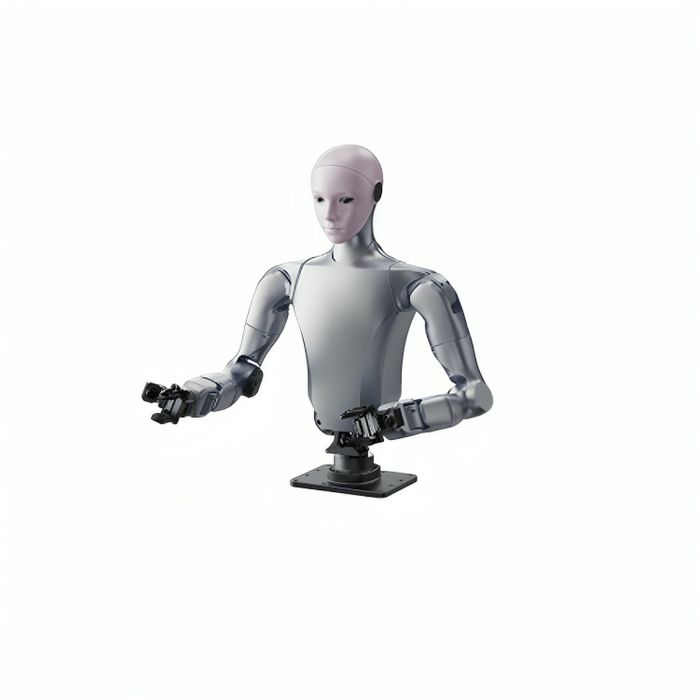
In stock
- BRAND:
- UNITREE ROBOTICS
- MODEL:
- H2-A-Standard-G
- PART #:
- H2-A-Standard-G
- ORIGIN:
- China
- Warranty:
- 12 MONTHS
- AVAILABILITY:
- SUBJECT TO AVAILABILITY
- SKU:
- Unitree-H2-A-Standard-G
Unitree H2-A Standard G Humanoid Robot
Most robots are designed around a task and then placed in a building. A humanoid works the other way around: it is designed around the building, with its doors, stairs, shelves and workbenches. The Unitree H2-A Standard G Humanoid Robot belongs to that second group, a full-size platform from UNITREE ROBOTICS for teams that want a machine able to share human space and use human-scale reach.
The product is available through this page, by quotation.
Background
Unitree Robotics and the H2 lineage
UNITREE ROBOTICS is a robotics manufacturer known for legged machines and humanoid platforms. Its sources describe an H2 family in which several versions sit side by side: H2, H2 EDU, H2 EDU Standard and H2 Plus. The Unitree H2-A Standard G Humanoid Robot is listed in the store beside a series of lettered siblings, and the figures in this article come from the H2 documentation for the family.
The family logic is simple to follow. The base H2 is an operating platform with a basic onboard computer. The H2 EDU adds the option of a high-performance computing module and supports secondary development. Buyers who compare versions should keep each figure with the version that carries it, and should state the configuration they need when they request a quotation.
Positioning and key technology
The H2 is a full-size bipedal humanoid. It stands 1820 mm tall and carries 31 degrees of freedom in total, of which 7 are in each arm and 6 in each leg. Its joints use industrial-grade crossed roller bearings, and its motors are inner-rotor PMSM units with low inertia and high speed. In practice that combination points to a design aimed at dynamic movement and at carrying a load through the arms, rather than at display alone.
The structure is built from aerospace-grade aluminum, titanium alloy and high-strength engineering plastics. For the buyer this means a machine intended for repeated handling, transport between sites and hours of operation, rather than a one-day exhibit piece.
Technical Specifications
| Specification | Value (H2 documentation) |
|---|---|
| Standing dimensions | 1820 x 456 x 218 mm |
| Weight with battery | Approximately 70 kg |
| Total degrees of freedom | 31 |
| DoF per arm | 7 |
| DoF per leg | 6 |
| Joint bearings | Industrial-grade crossed roller bearings |
| Motor type | Inner-rotor PMSM, low inertia, high speed |
| Max. leg joint torque | 360 N.m |
| Max. arm joint torque | 120 N.m |
| Max. arm payload | Peak: ~15 kg; nominal: ~7 kg |
| Materials | Aerospace-grade aluminum + titanium alloy + high-strength engineering plastics |
| Battery | 15 Ah (0.972 kWh) |
| Battery life | Approximately 3 h |
| Basic onboard computing | PC1: Intel Core i5 |
| Vision sensor | Wide-angle humanoid binocular camera |
| Voice interaction | Array microphones + high-power speaker |
| Connectivity | Wi-Fi 6, Bluetooth 5.2 |
| Included accessories | Charger and manual remote controller (removable smart battery) |
Specifications as published by the manufacturer; confirmed against the datasheet at quotation.
The manufacturer has not published the top walking speed, the IP rating, the camera resolution, the charging time, the operating temperature range, the wired ports, the lidar or the noise level; they are confirmed at quotation.
What makes the H2 different from a research arm or a wheeled platform?
A fixed arm or a wheeled base solves one part of a problem. The H2 combines two arms of 7 degrees of freedom each with two legs of 6 degrees of freedom each, so the same machine can walk to a location and then work there. The maximum arm joint torque is 120 N.m, and the arm payload is listed as a peak of about 15 kg with a nominal figure of about 7 kg. The distinction between those two figures matters in planning: the nominal figure describes the working load, and the peak describes the limit.
The legs are the stronger part of the machine, with a maximum leg joint torque of 360 N.m. That reserve is what a 70 kg body needs to stand, step and recover its balance while the arms are occupied.
Sensing and interaction are built in. A wide-angle humanoid binocular camera handles vision, and array microphones with a high-power speaker handle voice. Wi-Fi 6 and Bluetooth 5.2 cover connectivity. The base H2 comes with no robotic hands included, so any task that depends on fingers should be raised when you request a quotation.
What does the EDU route add to the base H2?
The difference is mainly in computing and development. The base H2 carries the PC1 with an Intel Core i5 and does not offer a high-performance computing module. The H2 EDU offers a module of up to Jetson AGX Thor (2070 TOPS), and it supports secondary development, which the base H2 does not.
This is the question to settle before ordering. A team that wants to run the robot as delivered needs a different configuration from a team that intends to write its own perception or motion software. The store lists the Unitree H2-A Standard G Humanoid Robot beside lettered siblings such as Unitree H2-A Standard A Humanoid Robot, Unitree H2-A Standard B Humanoid Robot and Unitree H2-A Standard C Humanoid Robot, and you can compare them side by side.
Who is the Unitree H2-A Standard G Humanoid Robot for?
Universities and research institutes form the first group. A full-size humanoid gives laboratories a platform for studying locomotion, manipulation and human-robot interaction on hardware rather than in simulation. Where students or researchers will write their own software, the secondary development support of the EDU route is the feature to ask about.
Training centers and technical colleges form the second group. A humanoid with voice interaction and a visible, human-scale body holds the attention of a class and lets learners see robotics concepts at work.
System integrators and corporate innovation teams are the third group. They use the robot to test whether a humanoid form can serve a site that was built for people, before committing to any larger program. The roughly 3 h of battery life suits trial sessions and structured demonstrations, and the removable smart battery helps when a session must continue.
Exhibition and visitor-experience operators form the last group. They value presence and interaction, though they should note that no robotic hands are included on the base H2. Buyers who would rather compare neighboring configurations can look at Unitree H2-A Standard D Humanoid Robot or Unitree H2-A Standard E Humanoid Robot.
What is the Unitree H2-A Standard G Humanoid Robot used for?
- Locomotion research: studying walking and balance on a 31-degree-of-freedom body with high-torque leg joints.
- Manipulation studies: testing reach and carrying with two 7-DoF arms and a nominal payload of about 7 kg.
- Software development: building custom applications on the EDU route, which supports secondary development and a high-performance computing module.
- Human-robot interaction: using the array microphones, speaker and binocular camera for voice and visual exchanges.
- Teaching and training: giving students a full-size humanoid to operate with the manual remote controller.
- Operational trials: evaluating how a humanoid performs in a workplace built for people, over sessions of about 3 h.
Pricing and Availability
No price is printed on this page, because the configuration decides the offer. Request a quotation and state the version, the computing option, the intended use and your location. Delivery, customs and support are arranged with the quotation. The Unitree H2-A Standard G Humanoid Robot is available on this page.
Frequently Asked Questions
How tall is the H2 and how much does it weigh?
The standing dimensions are 1820 x 456 x 218 mm. The weight with battery is approximately 70 kg.
How many degrees of freedom does it have?
The total is 31. Each arm has 7 and each leg has 6.
How long does the battery last?
The battery is 15 Ah (0.972 kWh), and the battery life is approximately 3 h. The smart battery is removable, and a charger is included.
What can the arms carry?
The arm payload is a peak of about 15 kg and a nominal figure of about 7 kg. The maximum arm joint torque is 120 N.m.
Can I develop my own software on it?
Secondary development is supported on the H2 EDU and not on the base H2. The EDU also offers a computing module of up to Jetson AGX Thor (2070 TOPS).
Does it come with robotic hands?
No robotic hands are included on the base H2. Ask about hands when you request your quotation.
Where can I buy the Unitree H2-A Standard G Humanoid Robot and what does it cost?
You can buy it through this page by requesting a quotation. The cost depends on the configuration and is given in the quotation, together with delivery, customs and support.
Summary
The Unitree H2-A Standard G Humanoid Robot is a machine built around the human environment: 1820 mm tall, 31 degrees of freedom, strong legs, two capable arms and built-in vision and voice. Its base configuration suits operation and study, while the EDU route opens the way to custom development. To settle the version and the computing option for your project, this page is the starting point.


