
Unitree G1 EDU Ultimate G (U13) Humanoid Robot
In stock
- BRAND:
- UNITREE ROBOTICS
- MODEL:
- G1edu-U13
- PART #:
- G1edu-U13
- ORIGIN:
- China
- Warranty:
- 12 MONTHS
- AVAILABILITY:
- SUBJECT TO AVAILABILITY
- SKU:
- Unitree-G1edu-U13
Unitree G1 EDU Ultimate G (U13) Humanoid Robot
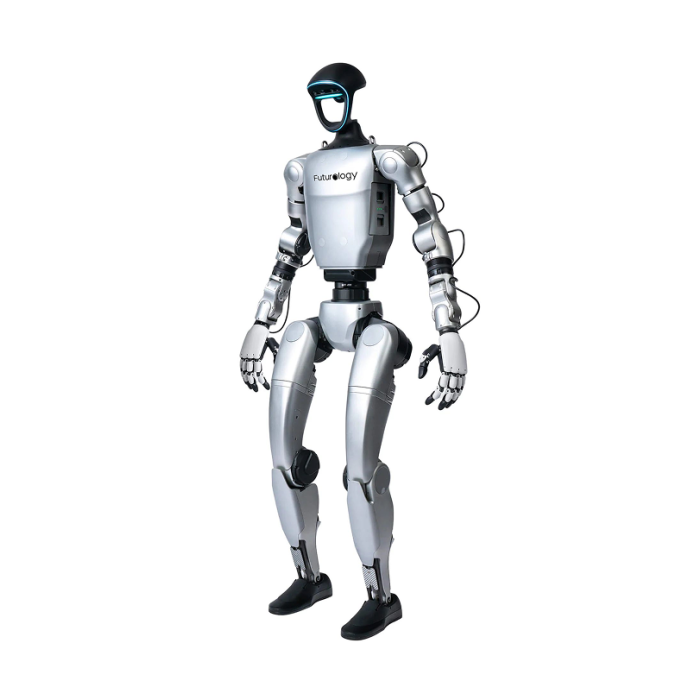
A humanoid that can walk is a demonstration. A humanoid that can walk and then use its hands is a research tool. The Unitree G1 EDU Ultimate G (U13) Humanoid Robot is built around that second idea: the development-ready G1 EDU body, fitted with a pair of DEX2-5 dexterous hands, so a team can study reaching, gripping and handling on the same machine that balances and moves.
The product is available through this page, by quotation.
Background
Unitree and the G1 line
Unitree Robotics is the brand behind the G1 family of humanoid robots. The family is sold in several versions, among them the G1, the G1 EDU and a range of EDU configurations that differ mainly in the hands and the extras fitted to the body. What matters here is how the G1 EDU level is positioned: it is the version that supports secondary development, meaning that a team can write its own software for the robot instead of only running what ships with it.
That matters in the Caribbean as much as anywhere. Universities, technical institutes and engineering firms in the region often buy one platform and share it among many students and projects. A robot that accepts new code and receives over-the-air upgrades fits that way of working well.
Where the Ultimate G (U13) sits
The Ultimate G configuration takes the G1 EDU body and adds two DEX2-5 hands. This is what sets it apart. The DEX2-5 is a 5-finger, tendon-driven dexterous hand with 10 degrees of freedom, 2 of them actuated, and it is compatible with the G1 and R1 models. Each hand weighs 365g as an accessory. The body is the same compact frame as the other G1 EDU versions, so the hands are the real change. If you are comparing configurations, the Unitree G1 category page lists the versions side by side.
Technical Specifications
| Specification | Value |
|---|---|
| Standing dimensions (H x W x D), G1 EDU | 1320x450x200mm |
| Folded dimensions (H x W x D), G1 EDU | 690x450x300mm |
| Weight with battery, G1 EDU | About 35kg+ |
| Power supply | 13 string lithium battery |
| Battery life | About 2h |
| Basic computing power | 8-core high-performance CPU |
| Sensing sensors | Depth Camera+3D LiDAR |
| Joint encoder | Dual encoder |
| Cooling system | Local air cooling |
| Full joint hollow electrical routing | YES |
| 4 Microphone Array | YES |
| 5W Speaker | YES |
| WiFi 6, Bluetooth 5.2 | YES |
| Upgraded Intelligent OTA | YES |
| Secondary development, G1 EDU | YES |
| Warranty period, G1 EDU | 18 months |
| Hands in the Ultimate G configuration | 2× DEX2-5 hands |
| DEX2-5 hand type | 10-DOF (2 actuated) 5-finger tendon-driven dexterous hand |
| DEX2-5 hand weight (accessory) | 365g |
Specifications as published by the manufacturer; confirmed against the datasheet at quotation.
The manufacturer has not published the total degrees of freedom, the arm payload or the knee torque of the Ultimate G configuration, nor the included compute module model, the contents of the box, the IP rating or the walking speed; they are confirmed at quotation.
What makes the Ultimate G different from the other G1 EDU versions?
The body, the sensors and the software stack are shared across the G1 EDU family. The difference is at the wrists. Where some versions carry simple placeholder hands, the Ultimate G carries two DEX2-5 hands, each a 5-finger, tendon-driven design. That changes the kind of project you can run. With a basic hand you can study walking, balance and navigation. With a dexterous hand you can start on grasp planning, in-hand manipulation and learning from demonstration.
If your work stays on locomotion or on perception, a lighter configuration may serve you better. The Unitree G1 Edu Plus Humanoid Robot with Fake Hands (G1EDU-U2) is one such option, and the Unitree G1 Edu Pro F (U12) Humanoid Robot is another version to put beside this one when you compare. Ask us to set the configurations out for your use case.
Is the G1 EDU body suited to a shared lab?
Several details point that way. The robot stands 1320x450x200mm and folds to 690x450x300mm, so it can be stored and moved more easily than a full-size humanoid. The joints use dual encoders, and the electrical routing runs hollow through every joint, which keeps cabling inside the frame. Local air cooling manages heat at the joints. For development, the 8-core CPU, WiFi 6 and Bluetooth 5.2 give you the connections a software team expects, and OTA upgrades allow updates without a workshop visit.
Runtime is the limit to plan around. Battery life is about 2h, so a busy class or test day is best run with a charging schedule in mind. The robot weighs about 35kg+ with the battery, and two people should plan to lift it together.
Who is the Unitree G1 EDU Ultimate G (U13) for?
The first group is university research labs working on manipulation, embodied AI or human-robot interaction. They need a humanoid whose hands can be programmed, and the EDU level's support for secondary development covers that. The second group is technical colleges and engineering schools that want one showpiece platform for teaching robotics, control and computer vision. The depth camera and 3D LiDAR give students real perception data to work with.
The third group is integrators and innovation centers evaluating humanoids for service, inspection or demonstration work. They can test hand-based tasks on the Ultimate G before committing to a larger program. Teams whose projects do not need dexterous hands may find a sibling better value, for example the Unitree G1 Edu Pro A U9 Humanoid Robot (G1EDU-U9). Our Research Robots category shows the wider field.
What is the Unitree G1 EDU Ultimate G (U13) used for?
- Manipulation research. Two tendon-driven dexterous hands let teams test grasping and object handling on a humanoid frame.
- Embodied AI development. Secondary development support lets researchers run their own learning and control software on the robot.
- Perception and mapping. The depth camera and 3D LiDAR supply data for navigation, scene understanding and obstacle work.
- Teaching robotics. One platform covers mechanics, sensing, control and programming for engineering students.
- Human-robot interaction. The 4 microphone array and 5W speaker support voice and sound experiments.
- Demonstration and evaluation. Integrators and innovation centers can show what a humanoid does and test it against real tasks.
Pricing and Availability
We do not print prices on this page. Every order starts with a quotation, which sets out the configuration you need and what comes with it. Delivery, customs and support are arranged with the quotation, so you know the whole process before you commit. To start, send us your requirements and the Unitree G1 EDU Ultimate G (U13) Humanoid Robot is available on this page.
Frequently Asked Questions
What hands does the Ultimate G (U13) include?
It is configured with 2× DEX2-5 hands. Each is a 10-DOF (2 actuated) 5-finger tendon-driven dexterous hand weighing 365g.
Can I write my own software for it?
Yes. Secondary development is listed as YES for the G1 EDU, and the robot also supports intelligent OTA upgrades.
How long does the battery last?
Battery life is about 2h. The power supply is a 13 string lithium battery.
What sensors does it carry?
The sensing package is a depth camera plus 3D LiDAR. It also has a 4 microphone array and a 5W speaker.
What size is it, and can it be folded?
It stands 1320x450x200mm and folds to 690x450x300mm. It weighs about 35kg+ with the battery.
How does it connect wirelessly?
It supports WiFi 6 and Bluetooth 5.2, which suits remote development and updates.
Where can I buy the Unitree G1 EDU Ultimate G (U13) Humanoid Robot and what does it cost?
You can buy it through this page by requesting a quotation. The cost depends on the configuration and the delivery arrangements, so it is given in the quotation and not printed here.
Summary
Many humanoids can stand and walk; fewer give a team hands it can actually program. The Unitree G1 EDU Ultimate G (U13) Humanoid Robot joins a compact, development-ready G1 EDU body with two DEX2-5 dexterous hands, a depth camera and 3D LiDAR, an 8-core CPU and OTA upgrades. For a lab, college or integrator that wants manipulation research on a humanoid, this page is the starting point.


