
Unitree B2-W Industry Grade Quadruped Robot Dog with Wheels Basic B2-W Kit with Battery, Navigation Kit
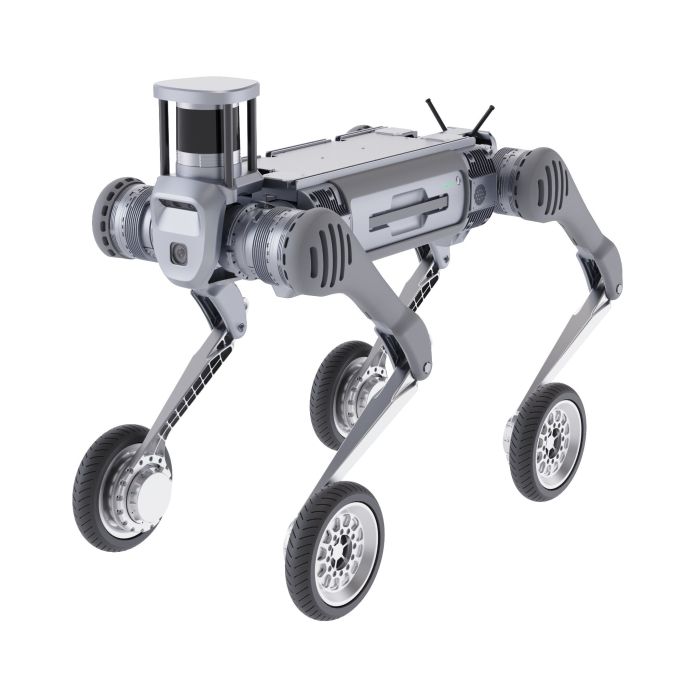
In stock
- BRAND:
- UNITREE ROBOTICS
- MODEL:
- B2-W-ROBOT-KIT
- PART #:
- B2-W-ROBOT-KIT
- ORIGIN:
- China
- Warranty:
- 12 MONTHS
- AVAILABILITY:
- SUBJECT TO AVAILABILITY
- SKU:
- Unitree-B2-W-ROBOT-KIT
Unitree B2-W Industry Grade Quadruped Robot Dog with Wheels Basic B2-W Kit with Battery, Navigation Kit
Heat, sudden downpours and a long walk between buildings: that is a normal working day for a machine that inspects or carries in the tropics. The Unitree B2-W Industry Grade Quadruped Robot Dog with Wheels Basic B2-W Kit with Battery, Navigation Kit is built around that kind of day. It is a wheeled quadruped, so it can cover distance on its wheels and still step over obstacles on its legs. The ingress protection is IP67 and the operating temperature runs from -20 ℃ to 55 ℃.
The product is available through this page, by quotation.
Background
The company and the B2 lineage
Unitree Robotics is the brand behind this robot, and legged machines are the center of its catalog. The model names show how the family is organized. The B2 is the legged platform, and the B2-W adds driven wheels at the feet. Around the B2-W there are three packages: the B2-W itself, the B2-W with SLAM Kit-Basic, and the B2-W with Nav Kit.
This page covers the kit with battery and Navigation Kit. It sits in the industrial end of the quadruped world, where the buyer is not a hobbyist but a facility, an integrator or a research group with a route to cover and a payload to move.
Positioning and key technology
The idea behind the B2-W is simple to state. A legged robot is good at stairs and uneven ground but spends energy on every step. A wheeled robot is efficient on flat floors but stops at the first obstacle. The B2-W combines both. It has a wheel diameter of 225 mm and a maximum wheel torque of 40 N.m. The knee joint reaches a maximum torque of 360N.m.
For perception, the robot carries 1 3D LiDAR, 2 depth cameras and 2 optical cameras. For computing, it uses an Intel Core i5 for platform functions and an Intel Core i7 for user development. It supports WiFi 6 and Bluetooth 5.2. A battery of more than 2 kWh at 58 V powers the whole machine.
Technical Specifications
| Specification | Value |
|---|---|
| Product type | Wheeled quadruped robot |
| Dimensions (standing) | ≈ 1098 mm × 550 mm × 758 mm |
| Dimensions (lying prone) | ≈ 950 mm × 550 mm × 450 mm |
| Weight | ≈ 85 kg (battery included) |
| Battery capacity | > 2 kWh, voltage 58 V |
| Speed | 15 km/h |
| Endurance (with 40 kg load) | up to 25 km |
| Maximum static load (standing) | 120 kg |
| Load while walking | > 40 kg |
| Wheel diameter | 225 mm |
| Maximum wheel torque | 40 N.m |
| Maximum torque of knee joint | 360N.m |
| Continuous stair climbing | Steps of 20 to 25 cm |
| Operating temperature | -20 ℃ to 55 ℃ |
| Ingress protection | IP67 |
| Computing | Intel Core i5 (platform functions), Intel Core i7 (user development) |
| Perception sensors | 1 3D LiDAR, 2 depth cameras, 2 optical cameras |
| Wireless connectivity | WiFi 6, Bluetooth 5.2 |
Specifications as published by the manufacturer; confirmed against the datasheet at quotation.
The manufacturer has not published the Wi-Fi and Bluetooth range, the camera resolution, the LiDAR range, the charging time, the noise level or the contents of the Navigation Kit; they are confirmed at quotation.
What makes the B2-W different from a purely legged or purely wheeled robot?
The difference shows in how the robot spends its battery. On a flat corridor or a paved yard, the B2-W rolls on its wheels at up to 15 km/h. With a 40 kg load, it travels up to 25 km. When the route meets a flight of stairs, the legs take over, and the robot climbs continuous steps of 20 to 25 cm.
A purely wheeled platform would need a ramp or a lift. A purely legged platform would manage the stairs but would be slower and use more energy over the long flat stretches. The B2-W is meant to avoid both compromises.
The load figures follow the same logic. The robot holds a maximum static load of 120 kg while standing, and it carries more than 40 kg while walking. These are two different jobs, and the specification table keeps them apart so that you can size your payload against the right number.
What does the Navigation Kit add to this package?
The name of this package says Basic B2-W Kit with Battery, Navigation Kit. Other packages carry the names B2-W with SLAM Kit-Basic and B2-W with Nav Kit. This page does not describe the kit itself, and the exact contents are best asked for when you request your quotation.
What the robot carries on its own is a sensor suite of 1 3D LiDAR, 2 depth cameras and 2 optical cameras. Together with the Intel Core i7 provided for user development, this gives a development team a clear starting point for mapping and route work. Tell us your project, and the package can be matched to it.
Who is the Unitree B2-W for?
The first group is facility operators. Plants, warehouses, utility sites and large campuses have long routes with occasional stairs. An inspection robot that can roll along the route and climb at the end is a natural fit, and IP67 protection with a temperature range of -20 ℃ to 55 ℃ speaks to outdoor and semi-outdoor work.
The second group is integrators. They need a mobile base that can carry equipment, and the 120 kg static load and the load of more than 40 kg while walking are the figures they will check first. The Intel Core i7 meant for user development gives them room to add their own software.
The third group is research and university labs working on legged and hybrid locomotion, navigation and perception. If you want the base B2-W without the extra navigation package, see the Unitree B2-W Wheeled Quadruped Robot page. If you want to compare it with a smaller wheeled quadruped aimed at education and development, look at the Unitree As2-W EDU Wheeled Quadruped Robot Dog.
What is the Unitree B2-W used for?
- Industrial inspection. Long routes through plants and yards, with the sensor suite recording the way.
- Payload transport. Carrying equipment along a route, with more than 40 kg while walking and endurance of up to 25 km with a 40 kg load.
- Stair-bearing patrols. Moving between floors by climbing continuous steps of 20 to 25 cm.
- Navigation and mapping development. Using the LiDAR, the depth cameras and the Intel Core i7 as a base for custom software.
- Research in legged and wheeled locomotion. Studying how a hybrid platform behaves on flat ground and rough terrain.
- Training and demonstration. Showing students and clients what a wheeled quadruped does in real conditions.
Pricing and Availability
This page shows no price, because the final figure depends on the exact package and the quantity. Quotation is the way to proceed: send your request, tell us the application and the payload, and we will answer with a quotation. Delivery, customs and support are arranged with the quotation. The Unitree B2-W Industry Grade Quadruped Robot Dog with Wheels Basic B2-W Kit with Battery, Navigation Kit is available on this page.
Frequently Asked Questions
How fast is the Unitree B2-W?
The speed is 15 km/h. With a 40 kg load, the endurance is up to 25 km.
What load can it carry?
The maximum static load while standing is 120 kg. While walking, it carries more than 40 kg.
Can it climb stairs?
Yes. It climbs continuous stairs with steps of 20 to 25 cm.
Is it protected against water and dust?
The ingress protection is IP67, and the operating temperature runs from -20 ℃ to 55 ℃.
What sensors and computing does it have?
It has 1 3D LiDAR, 2 depth cameras and 2 optical cameras. The computing is an Intel Core i5 for platform functions and an Intel Core i7 for user development.
What does the Navigation Kit contain?
Its contents are not described on this page. Ask for them when you request your quotation.
Where can I buy the Unitree B2-W and what does it cost?
You can request it through this page. The cost is given by quotation after we know your package and quantity, and no price is printed here.
Summary
The Unitree B2-W answers a plain question: how do you cover a long route and still deal with stairs and rough spots? Wheels do the distance, with a speed of 15 km/h and endurance of up to 25 km with a 40 kg load. Legs handle the obstacles, and the robot climbs steps of 20 to 25 cm. IP67 protection and a range of -20 ℃ to 55 ℃ suit working in heat and rain. With the sensor suite and the Intel Core i7, it is also a base for your own development. If this matches your project, this page is the starting point.


