
Sanctuary AI Phoenix Humanoid Robot
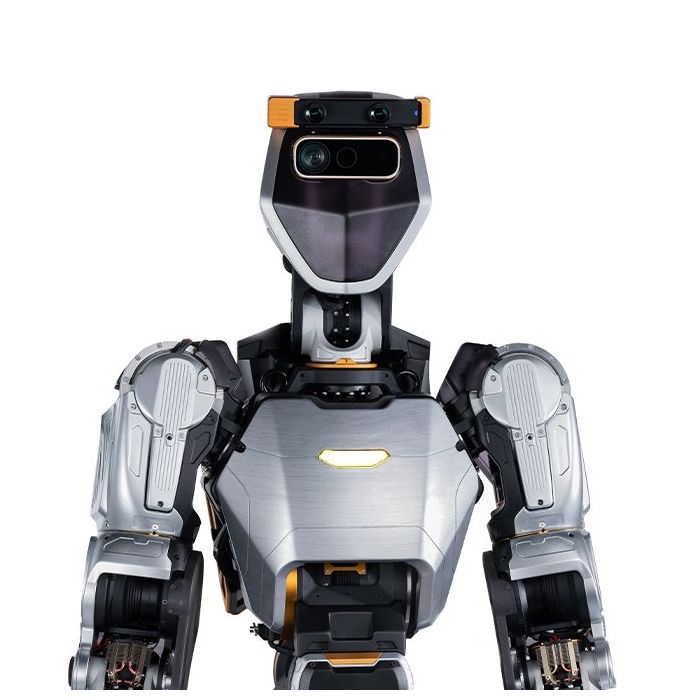
In stock
- BRAND:
- SANCTUARY AI
- MODEL:
- PHOENIX
- ORIGIN:
- Canada
- AVAILABILITY:
- SUBJECT TO AVAILABILITY
- SKU:
- Sanctuary-AI-Phoenix
Sanctuary AI Phoenix Humanoid Robot
What if you could hand a robot a job the way you hand it to a new colleague, by explaining it in plain English? That is the idea behind the Sanctuary AI Phoenix Humanoid Robot, a sixth-generation, general purpose robot unveiled in 2023 and controlled by the Carbon artificial intelligence system. Phoenix is built around a simple belief: much of the world's useful work is done with the hands, so a machine that wants to help must first learn to use them.
The Sanctuary AI Phoenix Humanoid Robot is available through this page, by quotation.
Background
Sanctuary AI and its mission
Phoenix comes from Sanctuary AI, formally Sanctuary Cognitive Systems Corp., a company based in Vancouver, British Columbia. Its mission is to create the world's-first humanlike intelligence in general-purpose robots. That is a bold sentence, and it explains the shape of the product. Sanctuary AI is not mainly a maker of mechanical parts that happens to add software later. It treats intelligence as the main goal and the body as the way that intelligence reaches the physical world.
Phoenix is the sixth generation of that effort. The company designed it to have human-like intelligence and to carry out a wide range of tasks. It is a bipedal humanoid robot made to do manual labor, meaning work that depends on the hands. Choosing the human form is a practical decision as well as a philosophical one: workplaces, tools, shelves and workbenches are already made for people, and a robot with a similar shape and similar hands can in principle step into them without the space being rebuilt around it.
Carbon, the control system behind Phoenix
The software side of Phoenix is called Carbon. It is a cognitive architecture and software platform for humanoid general-purpose robots. Carbon integrates modern AI technologies to translate natural language into action in the real world, and it uses deep learning and reinforcement learning. In everyday terms, the aim is that an instruction given in words can become a sequence of physical movements.
Carbon also includes human-in-the-loop supervision, teleoperation and fleet management. Those three features matter to anyone who is thinking about real deployment rather than a demonstration. A person can supervise the robot, take over control by teleoperation when a task calls for it, and manage several machines together as a fleet.
Buyers comparing platforms in this field will also want to browse the wider Bipedal Humanoids category and the broader Humanoids category to see how Phoenix sits among them.
Technical Specifications
| Specification | Value |
|---|---|
| Generation | Sixth generation, general purpose robot |
| Form | Bipedal humanoid robot designed to do manual (hand-dependent) labor |
| Height | 5' 7" |
| Weight | 155 pounds (70.3 kilograms) |
| Maximum payload | 55 pounds (24.9 kg) |
| Maximum speed | 3 miles per hour (4.8 kilometers per hour) |
| Hand degrees of freedom | 20 in total |
| Hand sensing | Proprietary haptic technology that mimics the sense of touch |
| Locomotion at launch | Not currently walking; mobile thanks to a small wheeled autonomous base |
| Control software | Carbon cognitive architecture and software platform |
| Operation supervision | Human-in-the-loop supervision, teleoperation and fleet management |
Specifications as published by the manufacturer; confirmed against the datasheet at quotation.
The manufacturer has not published the battery capacity, the runtime, the charging time, the connectivity, the sensor list, the IP rating, the operating temperature, what is in the box, the software SDK or any dimensions beyond height; they are confirmed at quotation.
What makes Phoenix different from other humanoid robots?
Many humanoid robots are introduced through their legs: how far they walk, how they balance, how they recover. Phoenix draws attention somewhere else. Its hands have 20 degrees of freedom in total, built to rival human hand dexterity and fine manipulation, with proprietary haptic technology that mimics the sense of touch. For work that involves picking up, holding and placing objects, that is where a buyer should look first.
The second difference is how plainly the machine is described at launch. Phoenix is a bipedal design, but it is not currently walking. It is mobile thanks to a small wheeled autonomous base. A buyer who needs a robot to walk up and down stairs should take note of that. A buyer whose work happens mostly at a station, a counter or along an aisle may find that a wheeled base is a sensible way to move a skilled pair of hands from place to place.
The third difference is the control system. Carbon turns natural language into action and relies on deep learning and reinforcement learning, with a person able to supervise or take over through teleoperation. That mix of autonomy and human oversight is a practical answer to the question every operator asks: what happens when the robot meets something it does not know?
How strong and how fast is Phoenix?
Phoenix stands 5' 7" tall and weighs 155 pounds (70.3 kilograms), so it is built at human scale. Its maximum payload is 55 pounds (24.9 kg), and its maximum speed is 3 miles per hour (4.8 kilometers per hour). Those figures describe a machine meant to work alongside people at a human pace, handling everyday loads, not a fast mover of heavy goods.
Each figure belongs to the sixth generation, the version this page covers. If your task depends on a particular load, reach or duty cycle, state it when you request a quotation.
Who is the Sanctuary AI Phoenix for?
Phoenix is for organizations that want to evaluate humanoid robotics for hand-dependent work. The most natural fit is a team with a clear manual task, a workplace built for people and the patience to treat a new technology as a program, not a quick purchase.
Research groups and universities will find a platform whose control layer is a cognitive architecture using deep learning and reinforcement learning. Innovation teams in logistics, retail, hospitality or light industry can use it to study what a general-purpose robot might do in their own spaces. Operations managers who like the idea of supervised autonomy, with human-in-the-loop control and fleet management, will see the appeal of a system that does not ask them to give up oversight.
Phoenix is less suited to a buyer whose first requirement is walking. At launch the robot is not currently walking, so anyone who needs legged movement across uneven ground should say so early. Those still comparing legged platforms can look through the Bipedal Humanoids category, or the wider Humanoids range.
What is the Sanctuary AI Phoenix used for?
- Manual labor trials: Phoenix is designed to do work that depends on the hands, so it suits evaluating tasks currently done manually.
- Fine manipulation work: Its 20 degrees of freedom in the hands and its haptic technology are meant for handling objects with care.
- Instruction-driven tasks: Carbon translates natural language into action, so tasks can be described in words.
- Supervised operation: Human-in-the-loop supervision and teleoperation let a person guide or take over the work.
- Multi-robot management: Fleet management supports organizations that look beyond a single unit.
- Research and development: A cognitive architecture using deep learning and reinforcement learning gives teams a platform for studying embodied AI.
Pricing and Availability
We do not print prices for this robot. Each Phoenix is quoted individually, so the first step is to send us your requirements: the tasks, the site and the number of units you have in mind. Delivery, customs and support are arranged together with the quotation, so you know the whole picture before you decide. The Sanctuary AI Phoenix Humanoid Robot is available on this page.
Frequently Asked Questions
Can the Phoenix walk?
Phoenix is a bipedal humanoid by design, but at launch it is not currently walking. It is mobile thanks to a small wheeled autonomous base.
How tall is the Phoenix and how much does it weigh?
It stands 5' 7" tall and weighs 155 pounds (70.3 kilograms).
How much can it carry, and how fast does it move?
The maximum payload is 55 pounds (24.9 kg), and the maximum speed is 3 miles per hour (4.8 kilometers per hour).
What is Carbon?
Carbon is Sanctuary AI's cognitive architecture and software platform for humanoid general-purpose robots. It integrates modern AI technologies to translate natural language into action and uses deep learning and reinforcement learning.
Can a person supervise or control the robot?
Yes. The platform includes human-in-the-loop supervision, teleoperation and fleet management.
How dexterous are the hands?
The hands have 20 degrees of freedom in total, with proprietary haptic technology that mimics the sense of touch.
Where can I buy the Sanctuary AI Phoenix Humanoid Robot and what does it cost?
You can request it through this page. The cost is given in a quotation prepared for your requirements, with delivery, customs and support arranged alongside it.
Summary
Phoenix starts from a simple idea: tell the robot what you need in words, and let skilled hands do the work. A sixth-generation machine of 5' 7" and 155 pounds (70.3 kilograms), with 20 degrees of freedom in its hands, haptic sensing and the Carbon control system, it puts manipulation and cognition ahead of locomotion, and at launch it is not currently walking. For teams ready to study what a humanoid can do with its hands, with people supervising, this page is the starting point.


