
SIASUN SA20A-20/0.80 (SA20A-20/0.80)
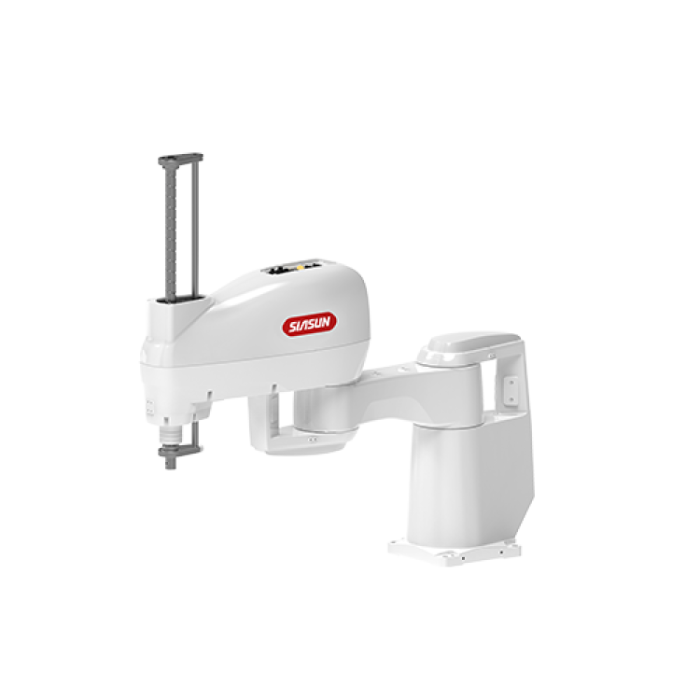
In stock
- BRAND:
- SIASUN
- MODEL:
- SA20A-20/0.80
- PART #:
- SA20A-20/0.80
- ORIGIN:
- China
- Warranty:
- 12 MONTHS
- AVAILABILITY:
- SUBJECT TO AVAILABILITY
- SKU:
- SIASUN-SA20A-20-0-80
SIASUN SA20A-20/0.80 (SA20A-20/0.80)
A SCARA arm is usually pictured handling small parts at speed, but some benches ask for something heavier. The SIASUN SA20A-20/0.80 (SA20A-20/0.80) answers that call: a horizontal-motion robot built around rigidity and inertia, for loads that would unsettle a lighter arm.
The SIASUN SA20A-20/0.80 (SA20A-20/0.80) is available through this page, by quotation.
Background
Siasun and the SA20A series
Siasun is a robotics maker whose catalog covers industrial robots, among them a range of SCARA arms. The SA20A series is a new generation of SCARA robots, featuring high inertia, strong rigidity and high precision. Other series in the same SCARA family carry names such as SA4A, SA7A and SA10A, and the SA20A sits at the heavier end of that line-up. If you are comparing the wider range, the SCARA category and the Industrial Robots category show what else is on offer.
The SA20A-20/0.80 is one of two versions named for this series. The other is the SIASUN SA20A-20/1.00 (SA20A-20/1.00). Every figure in this article belongs to the SA20A-20/0.80 only.
Key technology: rigidity, modularity and clean wiring
Three design choices define this robot. First, both the X and Y axes carry a double-support structure, which further enhances rigidity. A stiff arm matters when the load is large, because any flex shows up as lost position accuracy at the tool.
Second, the robot adopts a modular design. This meets more automation scenarios while reducing maintenance costs. For a plant manager, that means one arm family can be adapted to several jobs rather than needing a new platform for each.
Third, internal wiring eliminates the need for corrugated tubes, reducing spatial constraints. Cables run inside the arm instead of hanging outside it, which leaves the work area tidier and gives the arm more room to move around fixtures and neighboring equipment.
Technical Specifications
| Specification | SA20A-20/0.80 |
|---|---|
| Payload | 20 kg (44 lbs) |
| Reach | 800mm |
| Repeatability J1+J2 | ±0.025mm |
| Repeatability J3 | ±0.01mm |
| Repeatability J4 | ±0.01° |
| Press-fit force of the 3rd joint | 250 N |
| Protection | IP20 |
Specifications as published by the manufacturer; confirmed against the datasheet at quotation.
The manufacturer has not published the power supply requirements, the controller model, the communication interfaces, the operating temperature range, the mounting orientation or the package contents; they are confirmed at quotation.
What makes the SA20A-20/0.80 different from a typical SCARA robot?
The first difference is the load it is meant to carry. Many SCARA arms are chosen for light, quick work. This one has a 20 kg (44 lbs) payload and is positioned for large component pick-and-place, handling and mechanical assembly under high-load conditions. That is a different job from moving small parts across a bench.
The second difference is how the arm is built to stay accurate under that load. The double-support structure on both the X and Y axes is there to raise rigidity, and the series features high inertia, strong rigidity and high precision. The repeatability figures show where that effort lands: ±0.025mm for the combined J1 and J2 motion, ±0.01mm on J3 and ±0.01° on J4.
The third difference is the press-fit capability. The 3rd joint has a press-fit force of 250 N, which is relevant when assembly means pushing a part home rather than just placing it. Buyers whose work includes pressing in bearings, pins or similar components should weigh this figure against their own process.
How is the SA20A-20/0.80 programmed and taught?
Several programming and teaching methods are supported. These include a newly independently developed programming software called SN, a teach pendant, a virtual teach pendant, and drag-to-teach functionality.
In practice, this gives different people on a site different ways in. An engineer can build programs in the software, a technician can work at the arm with the teach pendant, and an operator can guide the arm by hand to record positions with drag-to-teach. The virtual teach pendant allows teaching without standing at the physical device. Which of these suit your team is a matter of habit and workflow, and the range of options lets you choose.
Combined with the internal wiring and modular design, this makes for easier deployment: fewer obstacles in the work area, and more than one way to get the robot working.
Who is the SIASUN SA20A-20/0.80 for?
This robot suits manufacturers whose parts are large or heavy for a SCARA arm. Lithium battery manufacturing and automotive parts manufacturing are typical examples, and both involve components that call for a stiff, high-load arm.
It also suits integrators who build cells for handling and assembly and want a platform that can be adapted. The modular design is aimed at exactly that kind of flexibility, and the lower maintenance cost matters to anyone who must keep a line running over years.
Plants in the Caribbean that are moving from manual handling of heavier components to automation may find a SCARA arm with a clear payload rating a sensible first step. The protection rating is IP20, so the arm is suited to clean, dry production areas rather than washdown or dusty conditions.
If your application needs a longer reach than 800mm, look at the SIASUN SA20A-20/1.00 (SA20A-20/1.00), the other version in the series, and ask for its details separately. If your parts are lighter, the smaller models such as the SIASUN SA10A-10/0.80 (SA10A-10/0.80) may be a better fit.
What is the SIASUN SA20A-20/0.80 used for?
- Large component pick-and-place. Moving bulky parts from one position to another where a lighter SCARA would struggle.
- Handling. Transferring heavy items between stations, fixtures or conveyors in a production line.
- Mechanical assembly under high load. Fitting components together where the load on the arm is significant.
- Press-fit operations. Using the listed 250 N press-fit force at the 3rd joint for pressing parts into place.
- Lithium battery manufacturing. A sector where this series is widely used.
- Automotive parts manufacturing. Another sector for this series, covering handling and assembly of heavier parts.
Pricing and Availability
We do not publish prices on this page. A quotation is the way to proceed: tell us your application, the parts you handle and the quantity, and we will respond with an offer. Delivery, customs and support are arranged with the quotation. The SIASUN SA20A-20/0.80 (SA20A-20/0.80) is available on this page.
Frequently Asked Questions
What payload can the SA20A-20/0.80 carry?
The payload is 20 kg (44 lbs). This is the rated figure for the SA20A-20/0.80 version.
What is the reach of the SA20A-20/0.80?
The reach is 800mm. The other version in the series, the SA20A-20/1.00, has its own figures.
How precise is the robot?
Repeatability is ±0.025mm for J1+J2, ±0.01mm for J3 and ±0.01° for J4.
What protection rating does it have?
The protection rating is IP20. That suits clean, dry indoor production areas.
How can the robot be programmed?
You can use the SN programming software, a teach pendant, a virtual teach pendant or drag-to-teach. Teams can choose the method that fits how they already work.
What is the press-fit force of the 3rd joint?
The press-fit force of the 3rd joint is 250 N. It is useful where assembly means pressing a part into place.
Where can I buy the SA20A-20/0.80 and what does it cost?
You can request it through this page, by quotation. We do not list prices here; the offer is prepared once we know your application and quantity.
Summary
Most SCARA arms are picked for lightness and speed, but the SA20A-20/0.80 is picked for strength. A 20 kg (44 lbs) payload, an 800mm reach, a double-support structure on both the X and Y axes, tight repeatability and a 250 N press-fit force at the 3rd joint make it a robot for heavy, bulky work in sectors such as lithium battery and automotive parts manufacturing. Modular design, internal wiring and several teaching methods help it fit into real production lines. For a quotation tailored to your application, this page is the starting point.