
SIASUN GCR10-1300-W (GCR10-1300-W)
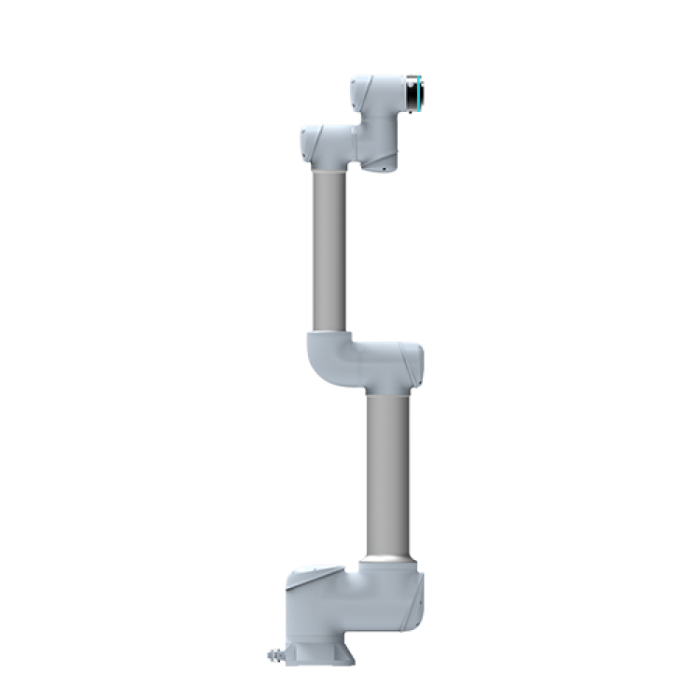
In stock
- BRAND:
- SIASUN
- MODEL:
- GCR10-1300-W
- PART #:
- GCR10-1300-W
- ORIGIN:
- China
- Warranty:
- 12 MONTHS
- AVAILABILITY:
- SUBJECT TO AVAILABILITY
- SKU:
- SIASUN-GCR10-1300-W
SIASUN GCR10-1300-W (GCR10-1300-W)
A welding robot has traditionally come with a safety cage, a programmer and a long commissioning period. The SIASUN GCR10-1300-W (GCR10-1300-W) starts from a different question: what if the person who knows the weld could teach the robot directly? It is a collaborative welding robot that combines graphical interaction with drag teaching, and it comes standard with a welding process package.
The product is available through this page, by quotation.
Background
SIASUN DUCO and its lineage
The GCR10-1300-W belongs to SIASUN DUCO, a sub-brand of SIASUN focused on intelligent robotics. All of its core components are independently developed, which matters to buyers who want a clear line of responsibility for the hardware and software they depend on every day. For a workshop in the Caribbean, where service visits and spare parts must be planned with care, a manufacturer that controls its own core technology is a practical point in its favor.
SIASUN DUCO builds collaborative robots, which are arms designed to work in closer reach of people than traditional industrial robots. The welding versions, marked with a W at the end of the model code, take that platform and prepare it for seam work. The welding line includes three versions: the GCR10-1300-W described here, the GCR3-618-W and the GCR5-910-W.
Positioning and key technology
The GCR10-1300-W is positioned as a welding robot that balances specialization and ease of use. Two core functions define it: graphical interaction and drag teaching. Graphical interaction lets an operator build and adjust a welding job on screen instead of typing code. Drag teaching lets the operator move the arm by hand through the path, so the robot learns the seam from the person who understands it best.
The second pillar is the welding process package that comes standard. It lets users carry out a range of welding tasks quickly, among them spot welding, corner welding, oscillation welding, reciprocating welding, cladding, and multi-layer and multi-pass welding. An optional external axis plugin package extends the robot to additional welding applications and to different types of welding workstations.
Around the arm sits a set of connection options. The robot offers a wide range of communication interfaces and is compatible with mainstream brands and welding machine brands, so that it works plug-and-play. Precise vision integration enables a variety of functions, and comprehensive development interfaces make it easier to build different welding workstations. Together these features aim at one result: high-quality weld seam output without a long engineering project.
Technical Specifications
| Specification | GCR10-1300-W |
|---|---|
| Max payload | 10kg |
| Reach | 1300mm |
| Repeatability | ±0.03mm |
| Max TCP speed | 3.8m/s |
| IP class | IP54/IP65 |
| Degrees of freedom | 6 |
Specifications as published by the manufacturer; confirmed against the datasheet at quotation.
The manufacturer has not published the weight, the power consumption, the robot dimensions, the mounting options, the controller details, the operating temperature, the contents of the box, the joint ranges or the noise level; they are confirmed at quotation.
What makes the GCR10-1300-W different from a conventional welding robot?
The first difference is how the robot learns its work. A conventional welding robot is typically programmed by a specialist, often away from the weld itself. Here the welder can guide the arm by hand and use the graphical interface to refine the job. The knowledge stays with the person who knows the part, and the robot becomes a tool the shop floor can operate rather than a project owned by an outside engineer.
The second difference is the standard welding process package. Many robot arms are sold as general-purpose machines, and the welding know-how must be added afterward. In this version the process package is part of the product, covering spot, corner, oscillation, reciprocating, cladding and multi-layer, multi-pass welding. A shop can therefore move toward production work without first building its own process library.
The third difference is openness. With a wide range of communication interfaces, compatibility with mainstream brands and welding machine brands, and plug-and-play behavior, the robot is meant to join the welding equipment a shop already trusts instead of replacing it. The comprehensive development interfaces and the optional external axis plugin package then let the shop grow the cell step by step into a customized welding workstation.
What do these figures mean for a welding cell?
A payload of 10kg gives room for a welding torch and the accessories that travel with it at the end of the arm. A reach of 1300mm sets the working envelope around the robot, which helps when a workpiece is larger than a small bracket. Repeatability of ±0.03mm describes how closely the arm returns to a taught position, and that is the figure that matters when a seam must be laid in the same place again and again.
The maximum TCP speed of 3.8m/s is the speed of the tool center point at its limit. Actual welding travel speeds depend on the process, and the figure mainly shows how quickly the arm can reposition between seams. The IP class of IP54/IP65 speaks to protection against dust and moisture, an important consideration in a workshop where spatter, dust and humidity are part of the day. The six degrees of freedom let the torch reach a seam at the angle the weld requires.
Who is the GCR10-1300-W for?
The robot suits small and medium fabrication shops that have skilled welders but too few hours in the day. Repetitive seams that tie up an experienced person can be taught once and repeated, while the welder turns to work that needs judgment. Because teaching is done by hand and on screen, shops without a dedicated robot programmer are a natural fit.
Integrators and workshop builders form a second group. The development interfaces, the communication options and the optional external axis plugin package are aimed at those who assemble welding workstations for others or who customize a cell for a specific part. Training institutions that want to show students modern collaborative welding are a third group, since the drag teaching approach is easy to demonstrate.
If your parts are smaller or your workspace is tighter, look at the sibling versions, the SIASUN GCR3-618-W and the SIASUN GCR5-910-W. For a wider view of the range, browse the Robot Arms and Industrial Robots categories. Shops that want a complete arc welding setup can also review the SIASUN Arc welding robotic solution.
What is the GCR10-1300-W used for?
- Spot welding. The standard process package covers spot welding tasks on sheet and fabricated parts.
- Corner welding. Corner seams on frames and enclosures can be taught by hand and repeated.
- Oscillation and reciprocating welding. Weaving and back-and-forth motions are included in the process package.
- Cladding. The package supports cladding work where a layer of material is applied to a surface.
- Multi-layer and multi-pass welding. Thicker joints that need several passes are part of the supported tasks.
- Custom welding workstations. The development interfaces and the optional external axis plugin package allow cells built around a specific part.
Pricing and Availability
Prices are not listed on this page. Quotation is the way to proceed: send us your application, the welding processes you run and the equipment you already own, and we will prepare an offer. Delivery, customs and support are arranged together with the quotation. The SIASUN GCR10-1300-W is available on this page.
Frequently Asked Questions
What is the maximum payload of the GCR10-1300-W?
The maximum payload is 10kg for this version.
How far can the arm reach?
The reach is 1300mm. The working envelope around the base is set by this figure.
How is the robot programmed?
It has two core functions: graphical interaction and drag teaching. The operator can guide the arm by hand and refine the job on screen.
Which welding processes are included?
A welding process package comes standard. It covers spot welding, corner welding, oscillation welding, reciprocating welding, cladding, and multi-layer and multi-pass welding.
Can the robot work with my existing welding machine?
The robot offers a wide range of communication interfaces and is compatible with mainstream brands and welding machine brands, working plug-and-play. Tell us your welding machine brand when you request a quotation.
What protection class does it have?
The IP class is IP54/IP65, which speaks to protection against dust and moisture.
Where can I buy the GCR10-1300-W and what does it cost?
It is available through this page by quotation. No price is listed; send your request and we will prepare an offer that includes delivery, customs and support.
Summary
The GCR10-1300-W answers the old welding-cell problem from the other side: instead of asking the shop to adapt to the robot, it lets the welder teach the robot by hand and on screen. A standard welding process package, open communication interfaces, an optional external axis plugin package and six degrees of freedom around a 10kg payload and 1300mm reach make it a practical base for a welding workstation. If that fits your work, this page is the starting point.


