
SIASUN Axle Base Line Assisted Assembly Mobile Robot (Axle Base Line Assisted Assembly Mobile Robot)
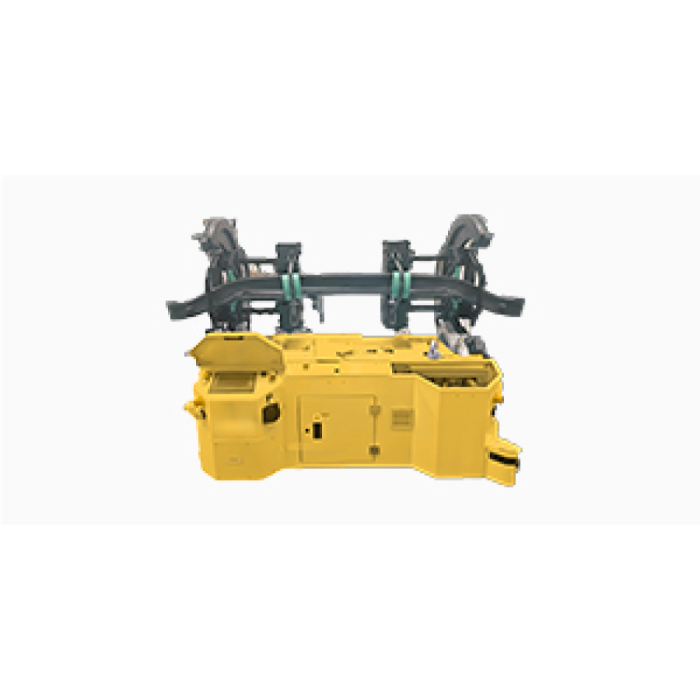
In stock
- BRAND:
- SIASUN
- MODEL:
- Axle Base Line Assisted Assembly Mobile Robot
- PART #:
- Axle Base Line Assisted Assembly Mobile Robot
- ORIGIN:
- China
- Warranty:
- 12 MONTHS
- AVAILABILITY:
- SUBJECT TO AVAILABILITY
- SKU:
- SIASUN-Axle-Base-Line-Assembly-Mobile-Robot
SIASUN Axle Base Line Assisted Assembly Mobile Robot (Axle Base Line Assisted Assembly Mobile Robot)
Most axle lines ask the operator to walk around the work. This SIASUN Axle Base Line Assisted Assembly Mobile Robot turns that around: the axle is carried, rotated and held where the operator already stands. It is a mobile assembly aid built for one job in automotive manufacturing, and it is built around that job rather than adapted to it.
The product is available through this page, by quotation.
Background
SIASUN and its place in factory automation
SIASUN is a robotics brand with a broad range of industrial machines, and its mobile robots sit alongside heavy-duty transport platforms and assembly assistants. This store lists them in the Mobile Robots category and, more widely, among Factory Robots. Within that family, some machines move loads from point to point. Others, like this one, take part in the assembly process itself.
That distinction matters for buyers. A transport robot is judged by what it carries and where it goes. An assembly-assist robot is judged by how well it presents the work to the people and tools at the station. The axle base-line robot belongs to the second group.
What the robot is designed to do
This robot was developed for axle base-line operations in automotive manufacturing. Its two defining features are a 700 kg payload and a ±90° flipping function. Together they allow axle components to be turned and positioned precisely, which is the step that normally calls for a hoist, a fixture or several people.
The flipping motion is powered by a chain-and-sprocket drive, which keeps the turning smooth and reliable. The structure is compact, combining stability with agility. The result is less manual workload and an efficient, intelligent and flexible solution for axle assembly.
Technical Specifications
| Specification | Value |
|---|---|
| Intended use | Axle base-line operations in automotive manufacturing |
| Payload capacity | 700 kg |
| Flipping function | ±90° |
| Flipping drive | Chain-and-sprocket drive |
| Drive system | 1 drive wheel + 2 caster wheels |
| Navigation method | Color tape + QR code tape; magnetic strip optional |
| Positioning accuracy | ±5 mm |
| Navigation accuracy | ±10 mm |
| Braking system | Servo motor + mechanical brake |
| Structure | Compact, combining stability with agility |
| Application area | Automotive manufacturing |
Specifications as published by the manufacturer; confirmed against the datasheet at quotation.
The manufacturer has not published the dimensions, the weight, the battery type and capacity, the travel speed, the runtime, the charging time, the safety sensors, the IP rating, the operating temperature, the supply voltage, the contents of the box or the software and dispatch system; they are confirmed at quotation.
What makes this robot different from a general transport AGV?
A general transport AGV moves a load and stops. Its job ends when the pallet arrives. This robot has to do more at the end of the trip, because the axle must be rotated and held in a useful position for assembly work. That is why the flipping function, with its ±90° range, is the center of the design and not an accessory.
The flipping drive is a chain-and-sprocket arrangement. For a buyer, the practical point is that the rotation is mechanical and positive, and the process is smooth and reliable. A load of 700 kg is not something to turn with improvisation, and a purpose-built mechanism is easier to plan around than a lifting aid used for something it was not meant to do.
The drive layout is also specific: one drive wheel and two caster wheels. Together with the compact structure, this gives a platform that combines stability with agility. In a crowded assembly area, a small footprint and good maneuverability matter as much as the load rating, so size is a point to raise when you request your quotation.
Navigation follows the same practical logic. The robot follows color tape and QR code tape, with a magnetic strip as an option. This is a floor-guided approach, which suits a defined line where the route is known and repeated. The navigation accuracy is ±10 mm and the positioning accuracy is ±5 mm, so the robot can be stopped where the station expects it.
How precise is it, and how does it stop?
Two accuracy figures describe the robot, and they answer different questions. Navigation accuracy of ±10 mm concerns how closely the robot follows its path. Positioning accuracy of ±5 mm concerns how closely it stops at the working point. For an axle station, the second figure is usually the one that decides whether an operator or a tool can work without adjusting.
Braking combines a servo motor with a mechanical brake. In plain terms, the motor controls the motion and the brake holds the robot. That pairing matters when a heavy axle is on board and the platform must stay put during assembly work.
Who is the SIASUN Axle Base Line Assisted Assembly Mobile Robot for?
The first segment is the automotive plant with an axle sub-assembly or base line where axles are still turned by hoist or by hand. For these teams, the robot offers a defined way to present the axle to the operator, and the benefit is reduced manual workload.
The second segment is the production engineer who plans line upgrades in steps. A floor-tape navigation method with an optional magnetic strip is easy to understand and to extend, so the robot can be introduced at one station without redesigning the whole line.
The third segment is the maintenance and safety manager, whose concern is the repeated manual handling of heavy parts. Moving the turning task to a machine with a mechanical brake and a mechanical drive addresses that concern directly, and the safety sensors fitted should be reviewed when you request a quotation.
Buyers whose work is closer to full vehicle assembly may find the SIASUN Commercial Vehicle Assembly Mobile Robot a better starting point. Buyers who only need to move very heavy loads, with no turning step, can look at the SIASUN 10,000 Kg Heavy-Duty Mobile Robot or the other heavy-duty models in the same range.
What is the SIASUN Axle Base Line Assisted Assembly Mobile Robot used for?
- Turning axle components. The ±90° flipping function rotates the load so that the underside or the far side can be reached.
- Positioning for assembly. Stopping accuracy of ±5 mm presents the axle at the point where the operator or tool expects it.
- Carrying heavy axle parts. The 700 kg payload covers the axle components this robot was developed for.
- Following a fixed route. Color tape and QR code tape guide the robot along the base line, with a magnetic strip available as an option.
- Reducing manual workload. The robot takes over effort that would otherwise fall to operators.
- Supporting flexible axle assembly. The compact structure fits a working line where space and maneuverability are limited.
Pricing and Availability
This robot is supplied by quotation, and no price is shown on this page. A quotation is the right step because the configuration, the navigation option and the integration with your line are agreed together. Delivery, customs and support are arranged with the quotation. Send us your application details and the robot is available on this page.
Frequently Asked Questions
What load can the robot carry?
The payload capacity is 700 kg. That covers the axle components it was developed for.
How far can the robot flip an axle?
It has a ±90° flipping function. The flipping is powered by a chain-and-sprocket drive.
How does the robot navigate?
It uses color tape and QR code tape, and a magnetic strip is optional. Navigation accuracy is ±10 mm.
How accurately does it stop at a station?
The positioning accuracy is ±5 mm. This is separate from the navigation accuracy of ±10 mm.
How is the robot braked?
The braking system combines a servo motor with a mechanical brake.
Are battery, speed and IP rating figures available?
These figures are confirmed at quotation, together with the dimensions and weight.
Where can I buy the SIASUN Axle Base Line Assisted Assembly Mobile Robot and what does it cost?
It is available through this page, by quotation. The cost depends on the configuration and the integration, so please send your requirements to receive a quotation.
Summary
Where the axle usually forces people to work around it, this robot brings the axle to the person. A 700 kg payload, a ±90° flip driven by a chain and sprocket, floor-tape navigation and a servo-plus-mechanical brake make it a focused tool for automotive axle lines. Battery, speed and IP rating are details to raise when you request a quotation. If an axle base line is on your plan, this page is the starting point.


