
SEER Robotics Controller for Dual-steering-wheel Robot (SRC-R10)
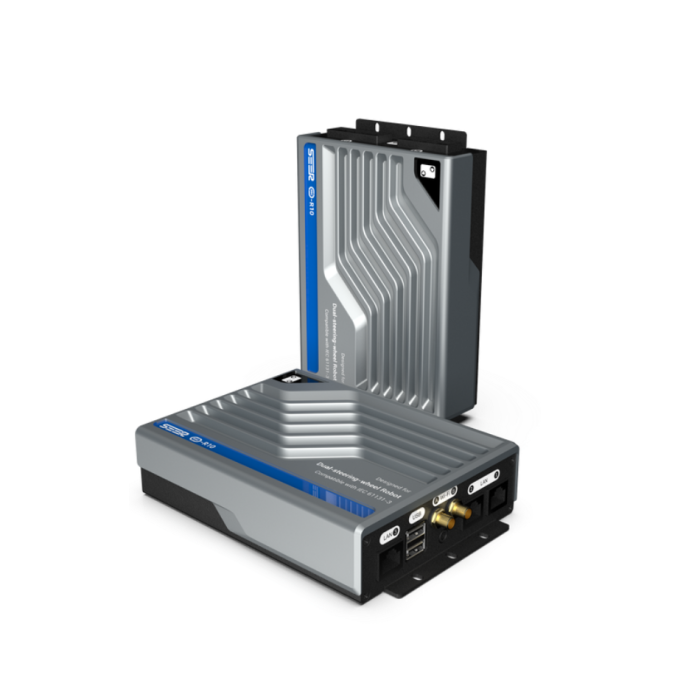
In stock
- BRAND:
- SEER ROBOTICS
- MODEL:
- SRC-R10
- PART #:
- SRC-R10
- ORIGIN:
- China
- Warranty:
- 12 MONTHS
- AVAILABILITY:
- SUBJECT TO AVAILABILITY
- SKU:
- SEER-Robotics-SRC-R10
SEER Robotics Controller for Dual-steering-wheel Robot (SRC-R10)
Most robot controllers are built to be everything to everyone, and the dual-steering-wheel chassis pays the price for that. Two driven and steered wheels need steering and traction commands that stay in step, and a generic board has to be coaxed into doing it. The SEER Robotics Controller for Dual-steering-wheel Robot (SRC-R10) takes the opposite route: it is a controller named for one motion model, Dual Steering Drive, and everything else about it follows from that choice.
The SRC-R10 is available through this page, by quotation.
Background
SEER Robotics and its controller family
SEER Robotics builds mobile robot technology, and its controllers sit at the center of that work. They are the units that take in sensor data, decide where the robot should go and send commands to the drives. The range is broad. It includes an entry-level controller, a general-purpose controller, safety controllers and controllers specified for autonomous forklifts and pallet-handling robots. Each is written for a particular kind of vehicle rather than for every vehicle at once.
The SRC-R10 is the member of the family made for dual-steering-wheel robots. If you are comparing it with its relatives, the Controllers category lists the whole range side by side, and the factory robots category shows the kind of machines these controllers end up inside.
Positioning: a dedicated controller with EtherCAT
The SRC-R10 is a dedicated dual-steering-wheel robot controller with real-time performance via EtherCAT. Two points stand out in that line. The first is dedication: the motion model is Dual Steering Drive, so the unit is meant for robots of exactly that layout. The second is EtherCAT, an industrial fieldbus that engineers choose when drives must react on a tight, predictable schedule.
Around that core, the controller offers a practical set of interfaces and navigation methods. It supports SLAM, QR Code and NFL navigation. It speaks CANopen to drives and Modbus RTU to peripherals. It also offers an optional Codesys plugin that complies with IEC 61131-3, which is the language family many PLC engineers already know. The result is a controller that robot builders can fit into a project without learning an entirely new toolchain.
Technical Specifications
| Specification | Value |
|---|---|
| Product name | Controller for Dual-steering-wheel Robot |
| Motion model | Dual Steering Drive |
| Navigation type | SLAM, QR Code, NFL |
| Positioning accuracy | ±5 mm, ±1° (±0.2 in, ±1°) |
| Driving speed | ≤2 m/s (≤6.56 ft/s) |
| Map area (single frame) | ≤400000 m² (≤4,305,560 sq.ft) |
| CAN | 2-Way |
| RS485 | 4-Way |
| Ethernet | 2-Way Gbps+1-Way 100 Mbps |
| Wi-Fi | Wi-Fi 6: Dual-band 2.4G / 5G 802.11ax 2T2R |
| USB 3.0 | 2-Way |
| Working voltage | 24 V |
| IP rating | IP20 |
| Dimensions (L x W x H) | 171 × 118.5 × 38 mm (6.73 × 4.67 × 1.50 in) |
| Weight | 0.75 kg (1.65 lb) |
| Codesys | Optional; plugin complies with IEC 61131-3 |
| Drives and peripherals | CANopen drives; Modbus RTU peripherals (e.g., light strips, batteries, speakers) |
| Certifications | CE-EMC, CE-LVD, and UL |
Specifications as published by the manufacturer; confirmed against the datasheet at quotation.
The manufacturer has not published the processor model, the memory and storage, the mounting method or the contents of the box; they are confirmed at quotation.
What makes the SRC-R10 different from a general-purpose controller?
A general-purpose controller has to cover many chassis types, and it does so by staying neutral about how the robot moves. The SRC-R10 gives up that neutrality. Its motion model is Dual Steering Drive, and it is a dedicated controller for dual-steering-wheel robots. For a team that has already chosen that chassis, this means the controller and the vehicle are described in the same terms from the first day of design work.
The second difference is the way the unit talks to the rest of the machine. EtherCAT is part of the design, and the interface list is generous for a unit this size: 2-way CAN, 4-way RS485, two gigabit Ethernet ports plus one 100 Mbps port, and 2-way USB 3.0. Drives can be CANopen devices, and peripherals such as light strips, batteries and speakers can be added over Modbus RTU. That makes it straightforward to exchange a drive or add a peripheral without reworking the whole controller.
The third difference is who can work with it. The optional Codesys plugin complies with IEC 61131-3, so PLC engineers can bring their existing habits to a mobile robot project. If you need a broader controller for vehicles that are not dual-steering, the SEER Robotics General-purpose Robot Controller (SRC-2000-I(S)) is the page to open next.
How does the SRC-R10 navigate and connect?
The navigation types are SLAM, QR Code and NFL. Positioning accuracy is ±5 mm and ±1°, driving speed is up to 2 m/s, and a single map frame can cover up to 400000 m². Those figures describe the navigation envelope of a robot built around this controller; they do not describe the whole vehicle, which also depends on its drives, sensors and mechanics.
On the connectivity side, Wi-Fi 6 is built in, with dual-band 2.4G and 5G operation on 802.11ax 2T2R. Together with the Ethernet ports, this gives integrators more than one way to link the robot to a fleet system or a service laptop. The working voltage is 24 V, a common level in battery-powered mobile robots, so power planning stays familiar.
The unit is rated IP20. In plain terms, it is meant to sit inside the robot body, protected by the chassis, rather than out in the weather. At 0.75 kg and 171 × 118.5 × 38 mm, it is compact enough to be placed with some flexibility, and we go through mounting with you when we prepare the offer.
Who is the SRC-R10 for?
The first group is robot manufacturers who have settled on a dual-steering-wheel chassis and want a controller matched to it. They get a named motion model, an EtherCAT-based design and a set of ports that suits typical drive and peripheral choices.
The second group is system integrators who build automated guided vehicles for factories and warehouses. They will value the mix of SLAM, QR Code and NFL navigation, the CANopen and Modbus RTU support, and the certifications: CE-EMC, CE-LVD and UL support projects that travel across borders. The Caribbean's trade often works with equipment that has to clear customs in several markets, so documented certification matters.
The third group is PLC-minded engineers and research teams. The optional Codesys plugin lets them work in IEC 61131-3 and adapt quickly, without first becoming specialists in a new environment.
Not every project fits. If your robot lifts pallets, look at the SEER Robotics Controller for Pallet-handling Robot (SRC-F10). For forklift work with a safety focus, the SEER Robotics Safety Controller for Autonomous Forklift (SRC-3000FS (Forklift)) is the closer match. For a simpler starting point, the SEER Robotics Entry-level Robot Controller (SRC-880) is worth a look.
What is the SRC-R10 used for?
- Driving dual-steering-wheel robots: it is the controller for the Dual Steering Drive motion model.
- Autonomous navigation: SLAM, QR Code and NFL navigation are supported for robots that must find their way.
- Real-time drive control: EtherCAT gives the design real-time performance and room for more drives.
- Adding peripherals: Modbus RTU lets integrators connect light strips, batteries and speakers.
- Swapping drives: CANopen drives can be exchanged without redesigning the controller around them.
- PLC-style development: the optional Codesys plugin follows IEC 61131-3 for engineers who program that way.
Pricing and Availability
Pricing for the SRC-R10 is provided by quotation. Send us your project details, and we will prepare an offer. Delivery, customs and support are arranged together with the quotation, so you know the full picture before you commit. The SRC-R10 is available on this page.
Frequently Asked Questions
What robot layout is the SRC-R10 made for?
It is made for dual-steering-wheel robots. Its motion model is Dual Steering Drive.
Which navigation methods does it support?
It supports SLAM, QR Code and NFL. Positioning accuracy is ±5 mm and ±1°.
What ports does it have?
It has 2-way CAN, 4-way RS485, 2-way gigabit Ethernet plus 1-way 100 Mbps Ethernet, and 2-way USB 3.0. Wi-Fi 6 is built in as well, dual-band 2.4G and 5G.
Can PLC engineers program it?
Yes, through the optional Codesys plugin, which complies with IEC 61131-3. Please tell us if you need it when you request your quotation.
Which certifications does it carry?
It carries CE-EMC, CE-LVD and UL.
Is it suitable for outdoor use on its own?
It is rated IP20, so it is intended to be installed inside the robot body. Plan for protection from dust and water at the vehicle level.
Where can I buy the SRC-R10 and what does it cost?
You can buy it through this page by requesting a quotation. We do not list a price here; the offer is prepared once we know your project.
Summary
The tension at the start was simple: a generic controller can run a two-wheel steering chassis, but a dedicated one is made for it. The SRC-R10 is the dedicated choice, with Dual Steering Drive as its motion model, EtherCAT-based real-time performance, three navigation methods, a rich set of CAN, RS485, Ethernet, Wi-Fi 6 and USB ports, an optional Codesys plugin and CE and UL certification. It is compact, runs on 24 V and is rated IP20 for installation inside the robot. If this is the controller your chassis has been waiting for, this page is the starting point.


